
29th anniversary of the crime in Grabovica
uto, 13. rujna 2022. 14:39
In Grabovica near Mostar on Friday, September 9th, the 29th anniversary of the crime against 33 murdered Croatian civilians was marked. The Holy Mass was led by the bishop of Mostar-Duvno and the apostolic administrator of Trebinje-Mrkan, Msgr. Petar Palić.
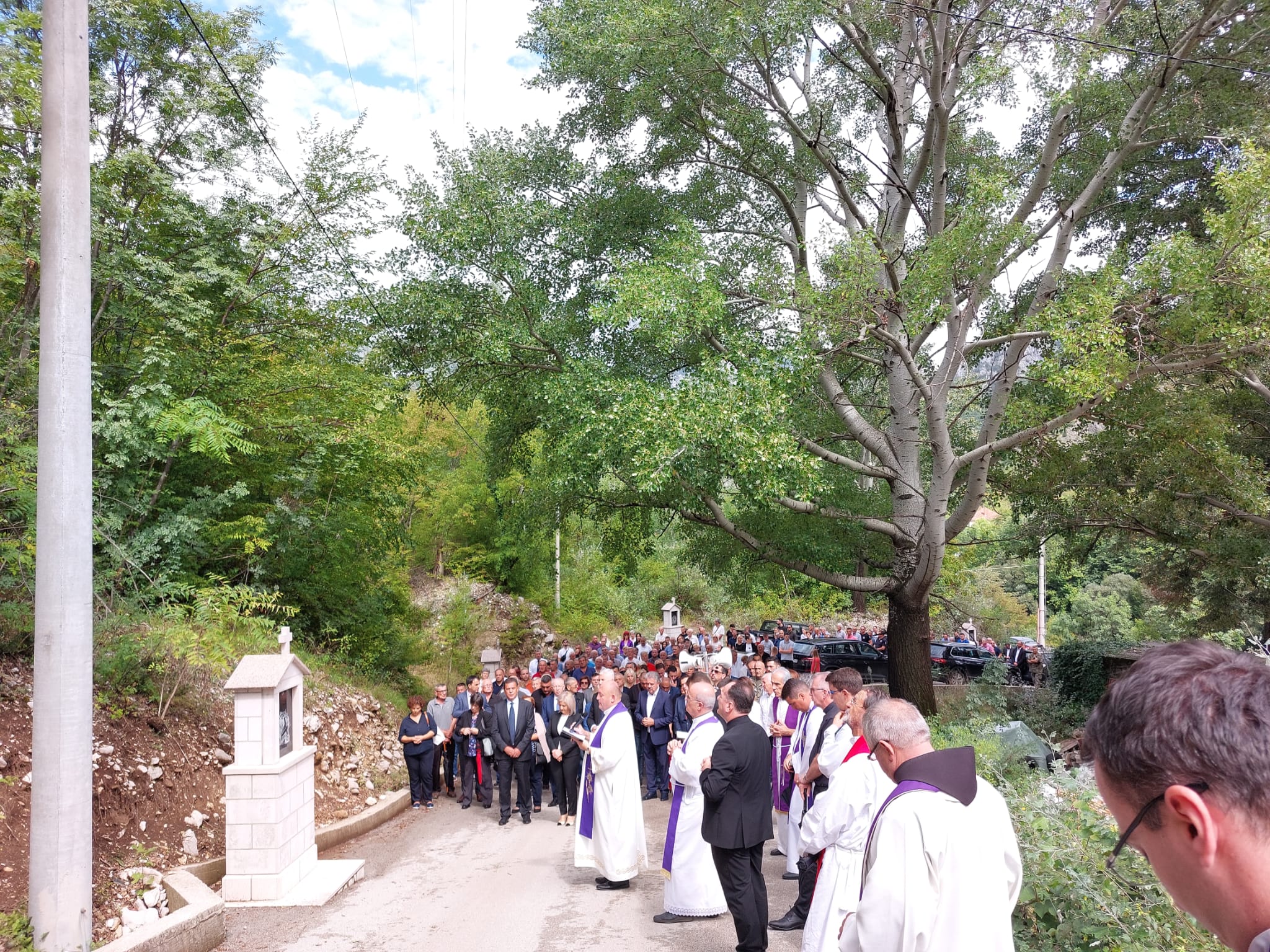
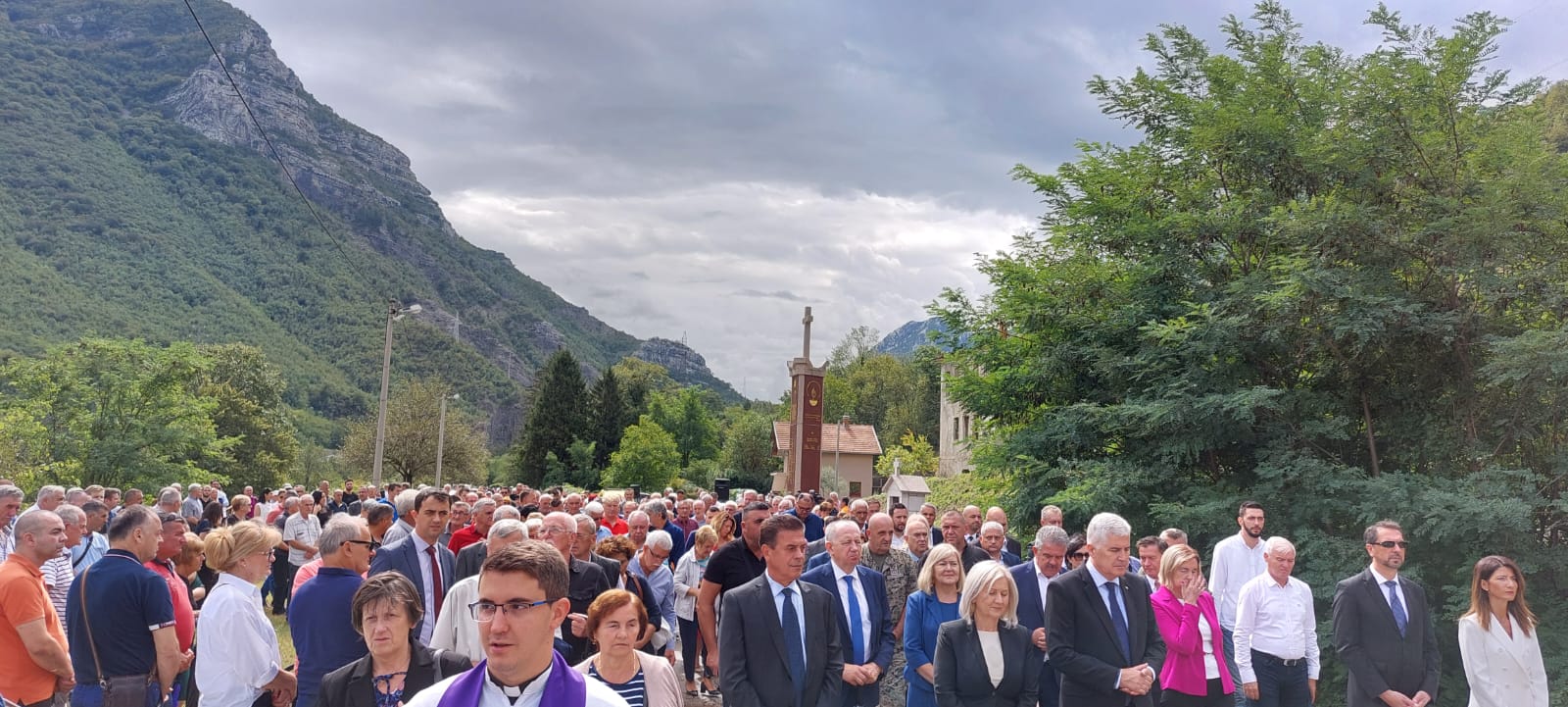
The commemoration began with the laying of wreaths at the memorial and the reading of the names of the 33 killed civilians. Afterwards, the president of the Association of Croatian Victims of Grabovica '93, Josip Drežnjak, greeted those present, among whom were the President of the HNS BiH Dragan Čović, the President of the Federation of BiH Marinko Čavara and other high officials from the Croatian nation. He reminded that 17 bodies of the victims are still being searched for and that even after 29 years there is nothing new to say about it. After laying the wreaths, rev. Drago Ćurković, administrator of the parish of Drežnica, prayed the prayer of absolution, who also led the devotion of the Way of the Cross.
The importance of memory
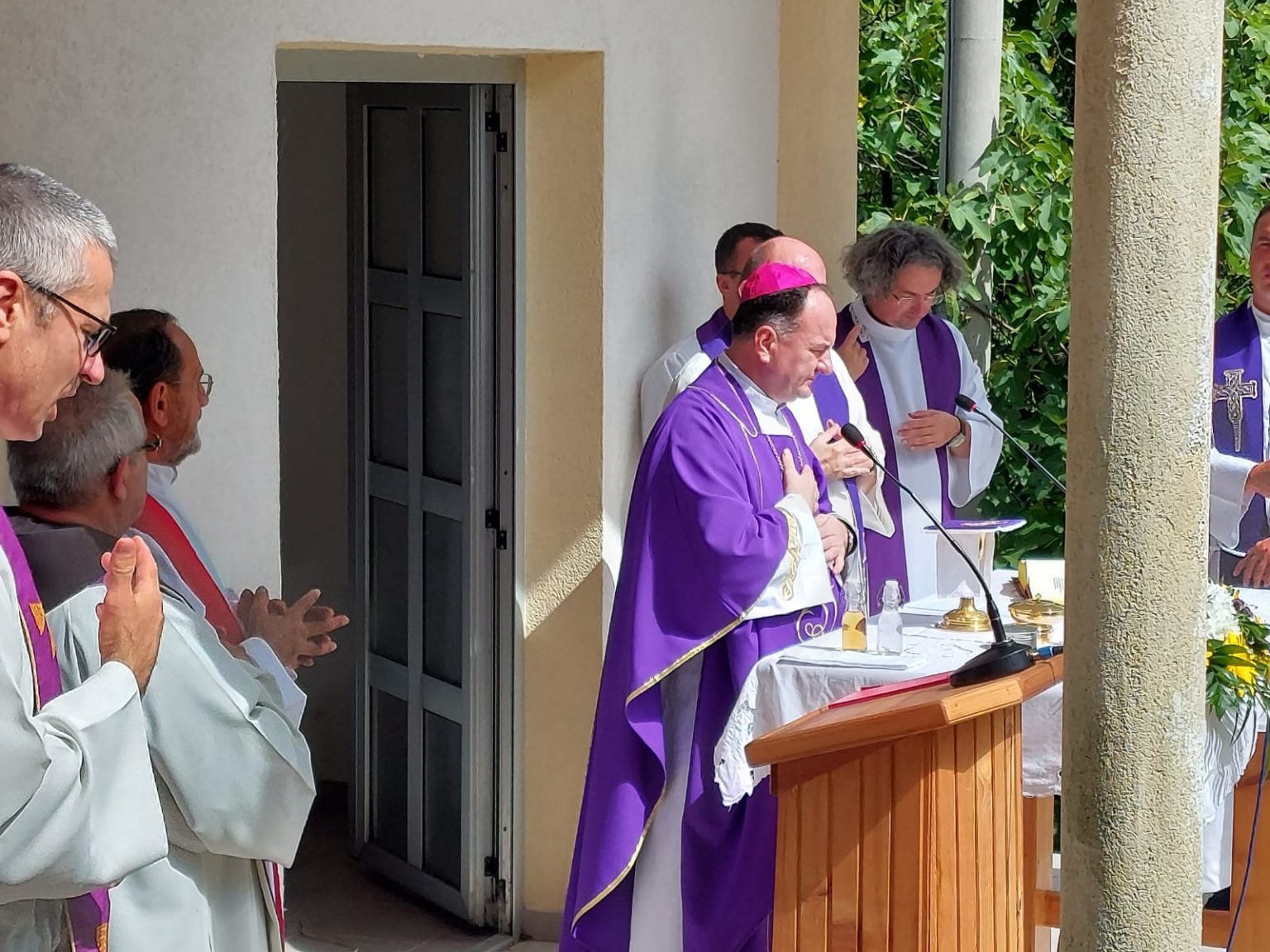
A Holy Mass followed, during which Msgr. Palić, in his sermon emphasized the memory, but not in order to feed hatred, but in order to warn that such a crime never happens again. He also warned that man should never forget God, because that makes him ready for anything, even murder. “Therefore, guard diligently your whole being, so that you do not forget the things that your eyes have seen and that these things do not disappear from your heart for the rest of your life. Listen, be careful and take care in order to live and do more than life, and you will progress. That's how you will live gloriously and happily”, said Msgr. Palić.
“We've been counted!”
He then spoke about the message sent by the death of 33 victims, which is - never again war and killing. “Nevertheless, in our environment we hear, unfortunately, again some strange threatening, warmongering, chauvinist messages and strange counts. Should we be counted? What and who should we count? If we are already counting, then let's do it the right way. Let's count that 101 040 people died in the war in BiH, of which 38 239 civilians (31 107 Bosniaks, 4 178 Serbs, 2 484 Croats, 470 others) and 57 701 soldiers (30 906 Bosniaks, 20 775 Serbs, 5 919 Croats, 101 others). Among the dead are 8 039 men, 9 901 women and 5 100 persons whose gender was not recorded. The highest number of victims, 44 204, was in 1992. Let's count that during the Homeland War, the 'enemy' neighbouring country Croatia received about 450 000 registered and about 100 000 unregistered refugees from BiH, that is, a total of more than 800 000 refugees and exiles, which is the number which is equal to the amount of 20% of the population of the Republic of Croatia. And of course every sane being wonders how it is possible to call a neighbouring and friendly country an enemy, while at the same time pointing out that 'Croatia is an example in Europe and the world in terms of freedom, well-being, respect and the rights of Muslims'”, said Msgr. Palić, concluding that today's society is schizophrenic and that it needs a renewal of mind and heart. Therefore, he said that “it is more useful, than meaningless counting, to fold our hands in prayer to Almighty God and his incarnated Son Jesus Christ, the true God and true man, to enlighten our minds and direct our steps to the paths of peace and struggle for the dignity of every human life.”
A four-year-old girl was also killed
At the end of the Holy Mass celebration, parish priest rev. Drago thanked everyone for coming and for keeping the memories of this place and those who died there.
Let us recall that the soldiers of the BiH Army entered Grabovica and occupied it militarily on May 10th 1993, at a time when only Catholic Croats lived in that village between Jablanica and Mostar. Four months later, they killed 33 civilians, among whom the youngest victim was a four-year-old girl, Mladenka Zadro, and the oldest, 87-year-old Marko Marić. The bodies of most of the victims were thrown into Neretva river, and some were buried near their homes.
.jpg&w=420&h=235&zc=1&hash=e106aa4c03620f401d3905d5651c685a)


