
"Autumn" Bleiburg of the central Bosnian region
ned, 22. listopada 2023. 08:54
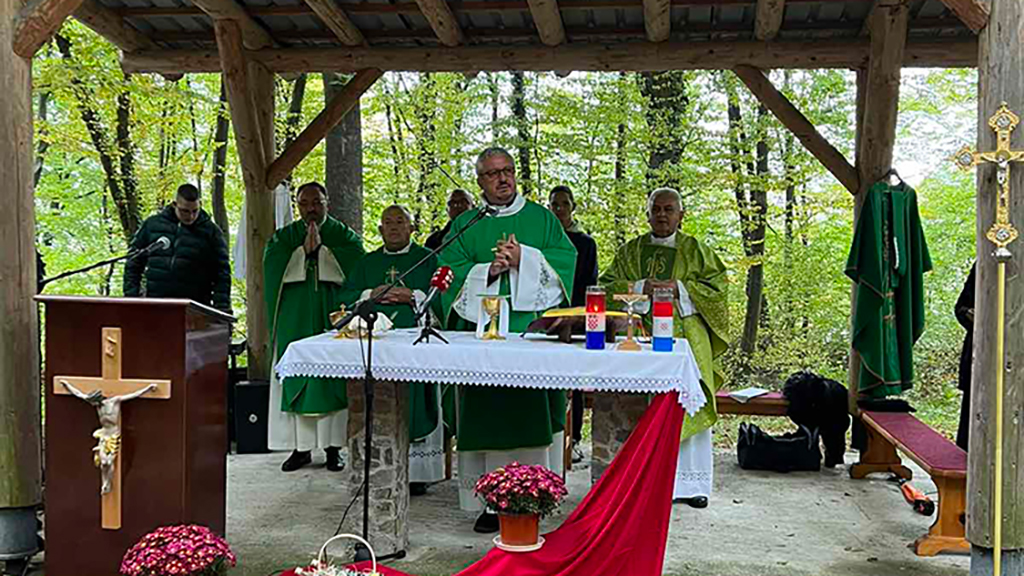
Since the democratic changes in the 1990’s, at the end of October in the parish of Rankovići near Novi Travnik, Holy Mass is celebrated and funeral prayers are held for the soldiers and civilians who were killed and thrown into the pit in the location of Rije, who were killed between October 23rd and 25th, 1944 during the Partisan occupation of Travnik...
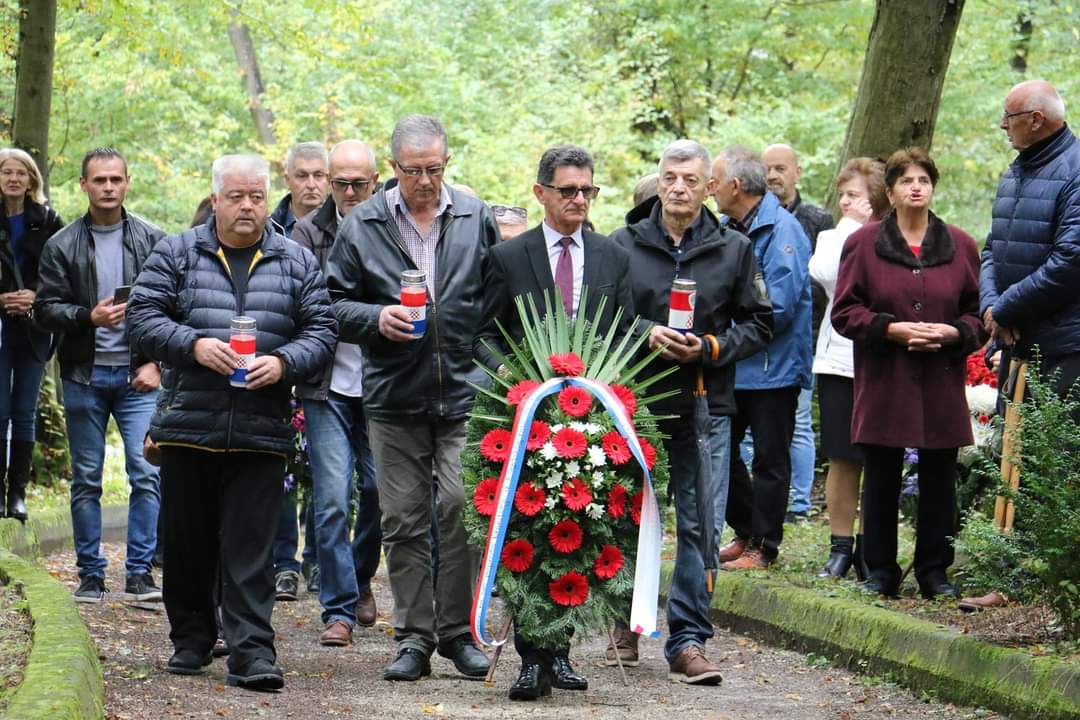
What is called Bleiburg or the Croat Ways of the Cross, is actually the killing without trial of prisoners of war of the Croatian Armed Forces (after the military reorganization in the NDH in 1944, it was the united forces of the Home Guard and Ustasha soldiers) and civilians at the end of 1944 and during 1945 throughout Slovenia, Croatia and Bosnia and Herzegovina, and some say also the other republics of the former SFRY, still represents one of the most complex and emotional topics for discussion, as well as professional study.
This very fact makes it impossible to make a final historical judgment and dot the "i" in the context of the final number of Croats killed, because, although there is a huge literature, the research so far has not borne fruit, nor have scientists agreed on the approximate number of dead.
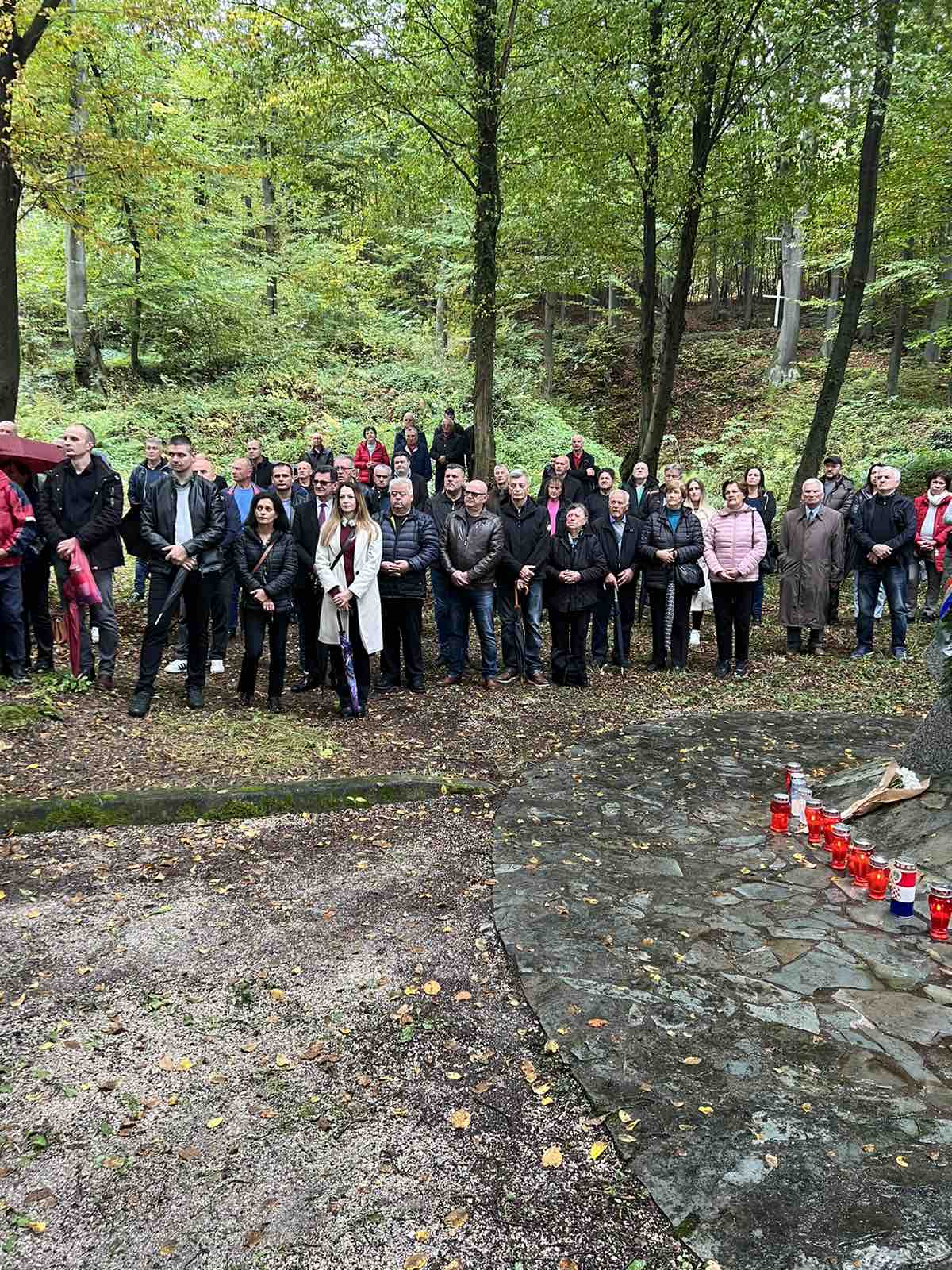
One of those locations where the numbers vary from 150 to 300 killed is Rije.
What are Rije?
Rije is an ordinary grove some 400 meters from the parish church. This is a location that would not have been a special place in any way if mass executions had not taken place there after the Partisan "liberation" of Croatian towns and villages in the Travnik region in 1944.
The chronology of events says that after capturing Travnik, the partisans first carried out executions in the town itself at several locations. One of them is the playground near the Travnik gymnasium where officers of the Croatian army were killed. Also, the collective memory of the Croatian people in this area remembered the crime in the Travnik hospital, where the "liberators" went through the rooms and killed everyone on the sick beds, both the wounded and the civilians who happened to be there, and even pregnant women.
And that's not all, there are numerous places of execution, and due to the economy of space, we will only list the most famous: Tobacco Factory, Cemetery of St. Roch at Bojna, the barracks in Travnik, the Black House prison, the cemetery on Dolac and the grove and garden around the Jesuit high school. Finally, let's add the unknown execution grounds of those 600 captured Home Guards who survived the massacre in Travnik, but were taken towards Donji Vakuf, Jajce and Bugojno, and along the way every trace and resting place of their remains is lost.
Why are Rije special?
What sets Rije apart from all the listed places of suffering is the fact that it is the best-researched and the only marked grave of prisoners in the wider area of Travnik from the time of World War II and the aftermath.
It was investigated because it is known, at least tentatively, which victims are involved. The prisoners who ended up there were gathered in the Travnik region (but not all of them were natives there) and were first taken to the old brick factory in Turbe, and then brought to Rankovići via Donja Večeriska near Vitez.
On the way, they were joined by captured civilians and they were all packed into the stables of Stipe Kvasina and Niko Vidak. They were interrogated in the house of Nika Vidak for a very short time, and then they were tied up four at a time and taken to the execution ground, i.e. the meadow above the grove, where they were all buried later.
Some of the prisoners were released, but most were killed with automatic weapons, and some were tortured and even slaughtered. This information is known because the murdering duo Salih Bajrić and Salko Subašić publicly bragged about it later.
The executors and those who gave orders are not known to this day, although this and this method of liquidation did not go without the cooperation of local people who represented the "people's power" in the National Liberation Committees. However, the names and surnames of all commanders of partisan units in the battles for Travnik in October 1944 are known exactly.
It is also necessary to underline that mostly the useful ones (tailors, cooks and other craftsmen) were left alive, while soldiers, ideological opponents and the "useless" were killed...
According to the testimonies of the survivors, the execution lasted for two days, and long after the crime, ghostly wails of the wounded could be heard from that place, reaching the nearby settlement.
As the parish priest, Rev. Miljenko Džalto, who has been active in this religious community for six years, at the scene of the crime, about which there was silence for half a century, a memorial was built on which the flag of the Croatian people flies, and a memorial plaque was placed reminding of the crimes committed. A walkway from the church to the location has been arranged, and there is an opportunity for personal prayer and reflection on this terrible crime, the many wounds of which have not yet healed.
Rev. Džalto emphasized to us that every year, on the third Sunday in October, he prays for the repose of the souls of the innocent victims of partisan criminals at the location. The members of the KSD Glavica help him in the organization, and before the Holy Mass, there is a Way of the Cross from the church to the monument.
In the conversation, emphasis was placed on the "bottomless pit" into which the corpses of those killed from the sides were also brought for days. As we found out, a living witness from that time gave a statement that he counted more than 150 bodies.
Parishioners are, of course, regular prayer visitors, and not only in October. And Croats from everywhere come to this Travnik Bleiburg, especially from Kupres, since a large number of Kupres people ended up there.
It must not be forgotten that in the area around the village of Rankovići, some other smaller graves were discovered, such as the place Čelikovac near Bavrka's houses, where there were nine murdered Ustashas and Italians. Near the Veterinary Station is the grave of the German victims, and an unknown number of victims are buried in Stojkovići.
Little Bleiburg
The crime in Rija above the village of Rankovići during communist Yugoslavia, as well as many other partisan crimes in the city and Travnik surroundings, was not allowed to be talked about. The prisoners were members of HOS, but also civilians, not only from Ranković, but also from the whole of Central Bosnia, some even from Croatia.
According to the Report on the work of the Commission for determining war and post-war victims of the Republic of Croatia, which operated from 1991 to 2002, the total number of soldiers, wounded and civilians liquidated after the conquest of Travnik in October 1944 remains, as we mentioned at the beginning, unknown. Nevertheless, considering the number of inhabitants of the then municipality and district of Travnik, it is certainly a very high share in the total number of Croatian war and post-war victims in the territory of Bosnia and Herzegovina.
The number between 2 000 and 3 000 dead is mentioned, and historians can freely assert that Travnik was the largest Croatian execution ground in the Vrhbosna archdiocese during the Second World War, while it competes for the negative first place in BiH with the "Stolac holocaust", where several thousand people were killed.
.jpg&w=420&h=235&zc=1&hash=e106aa4c03620f401d3905d5651c685a)


