
Celebration of Corpus Christi in Sarajevo Cathedral
The Eucharist is a picture of unity with Christ and the communion of the members of the Church
sub, 06. lipnja 2026. 13:22
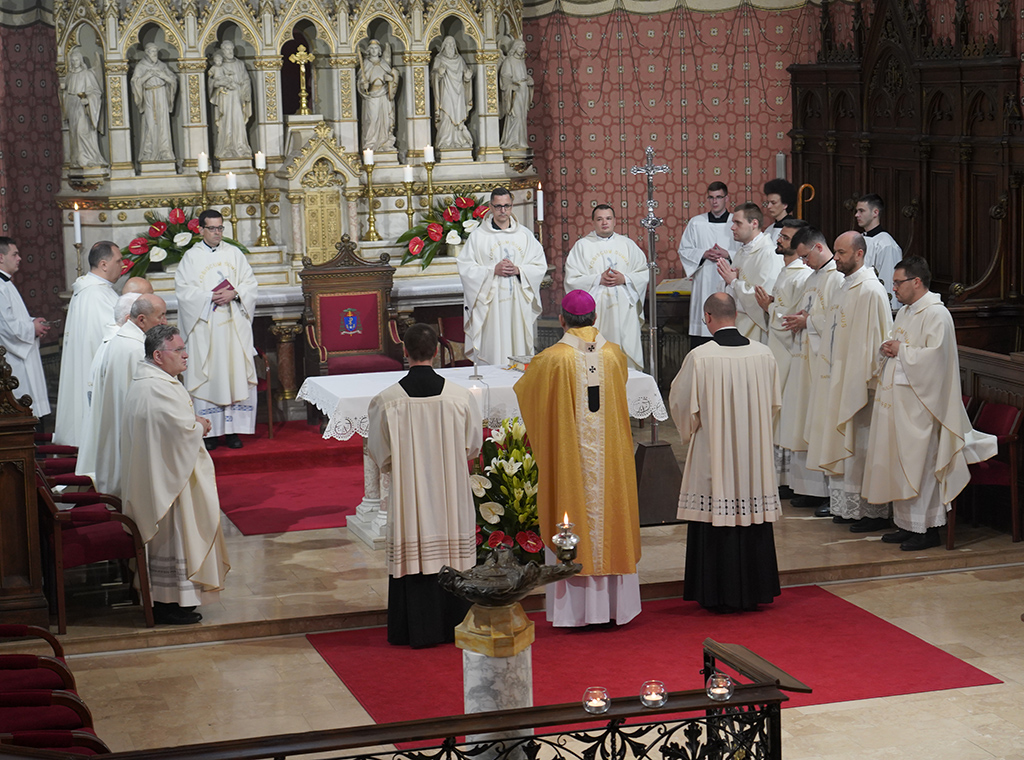
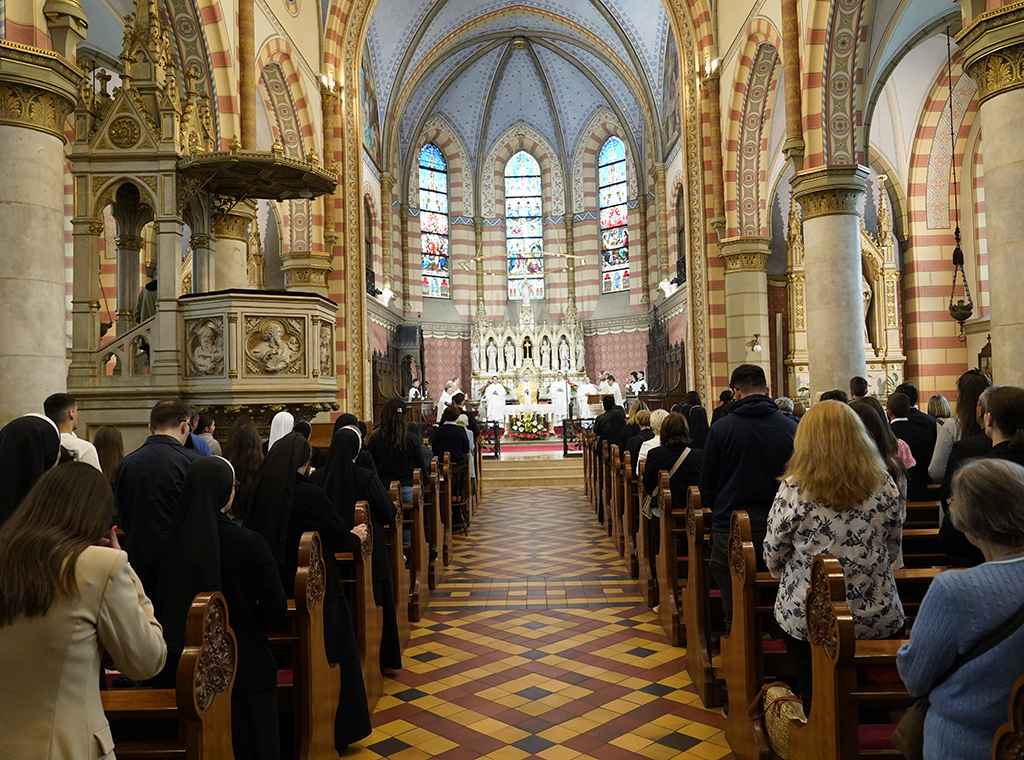
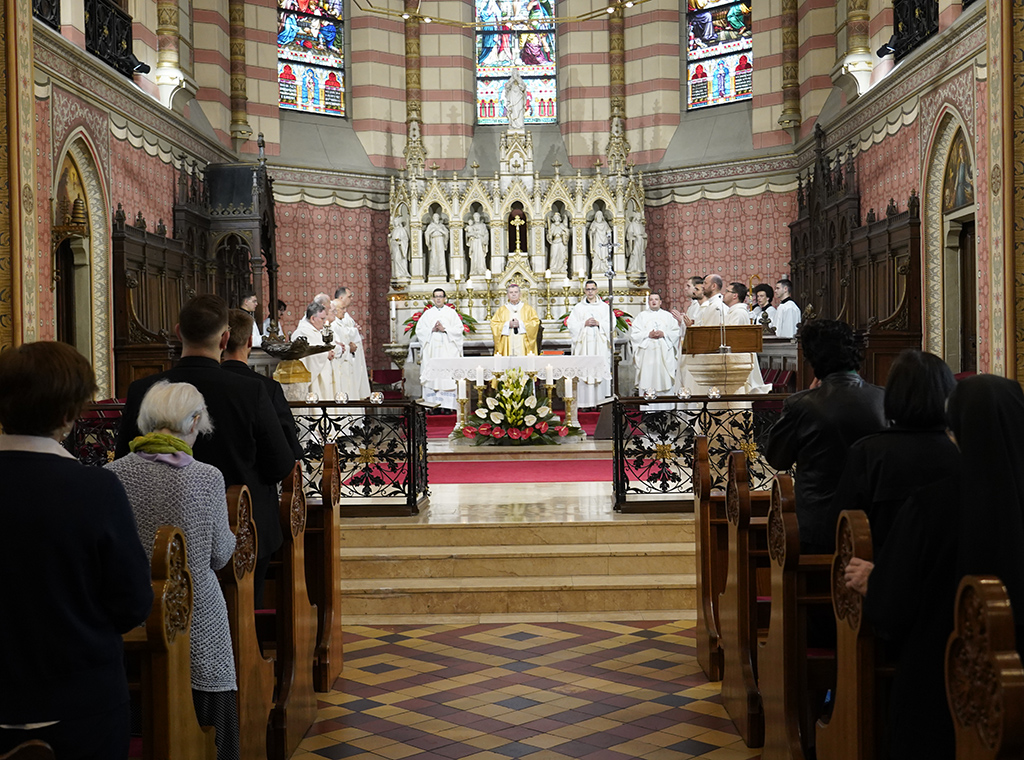
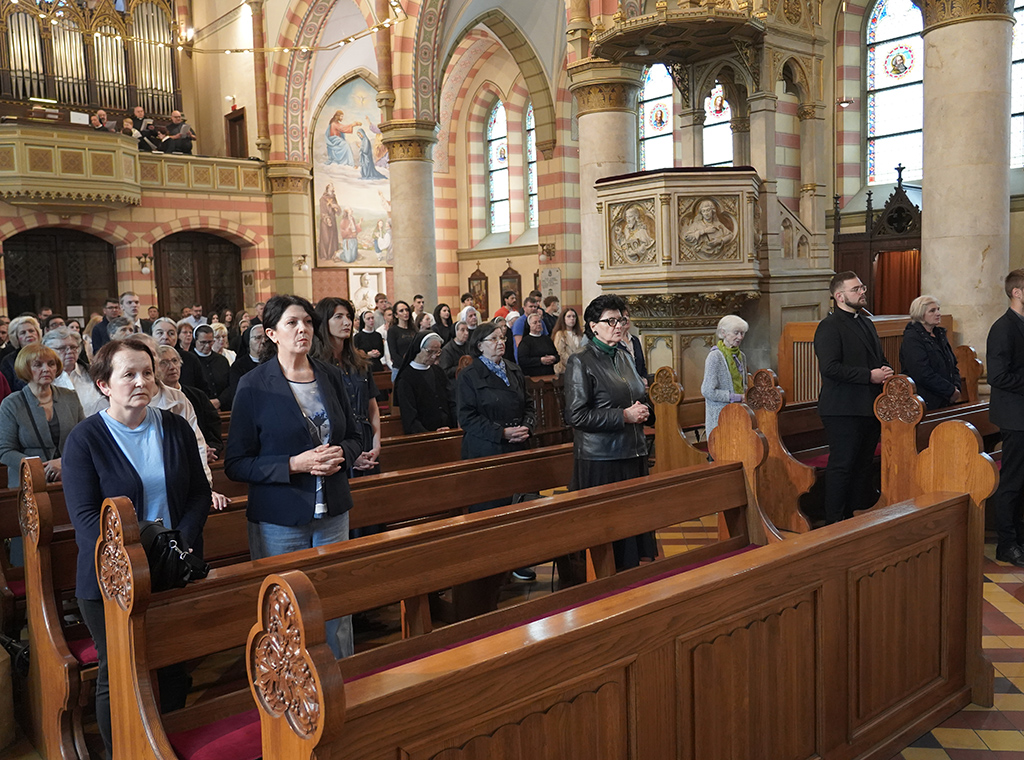
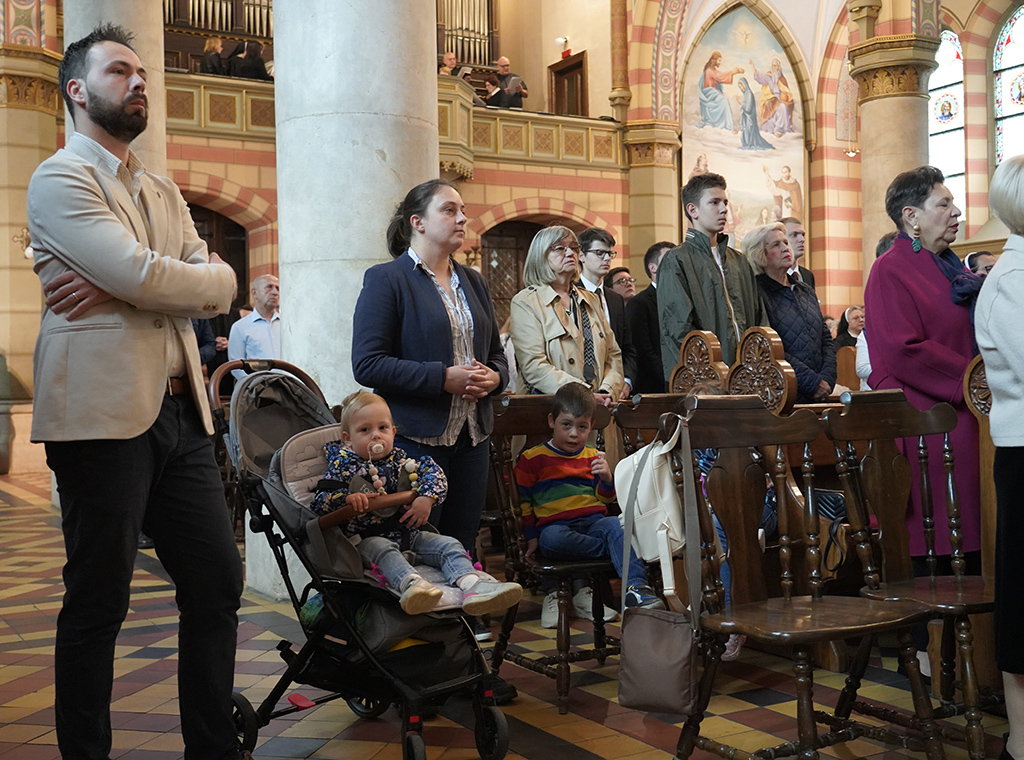
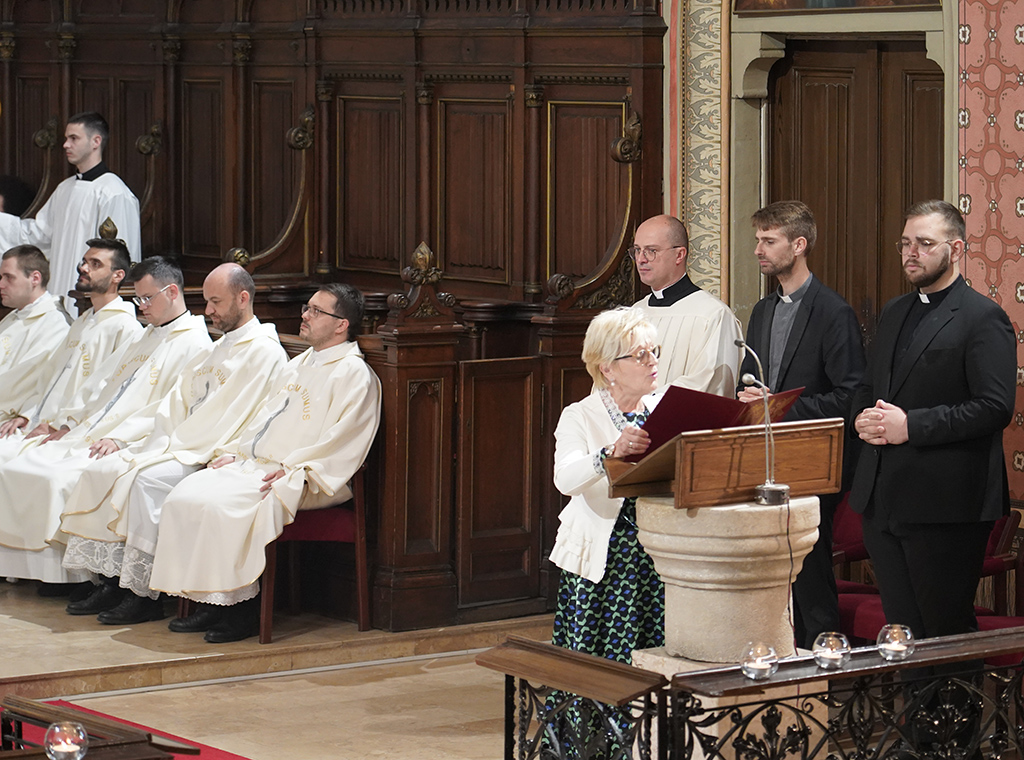
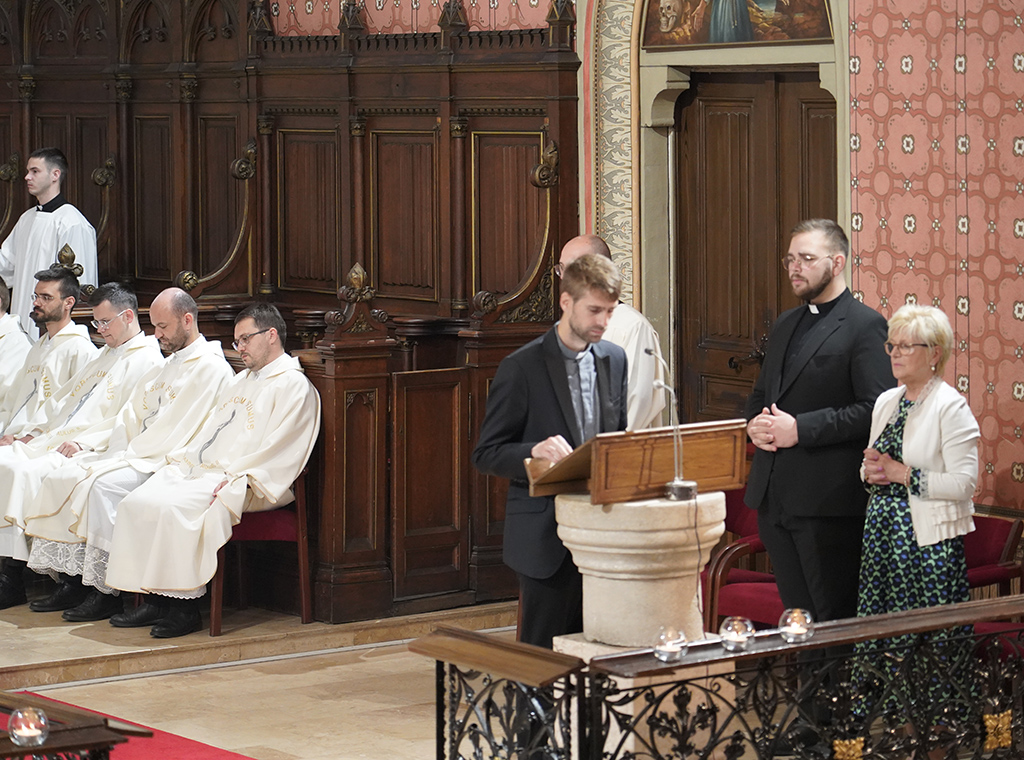
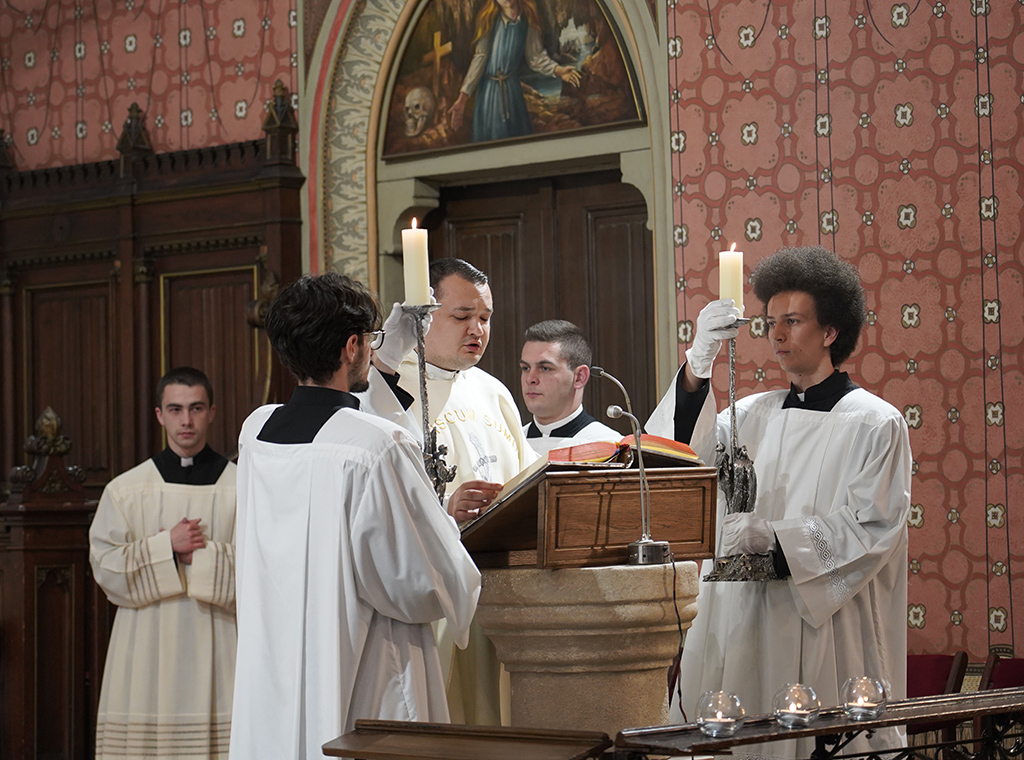
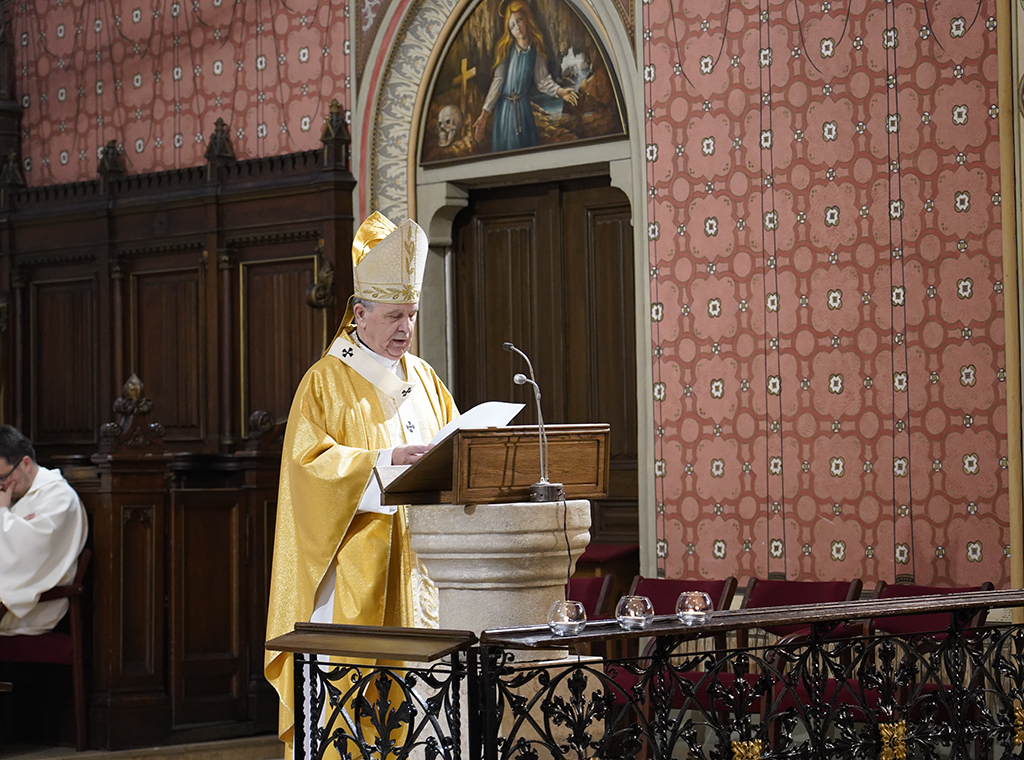
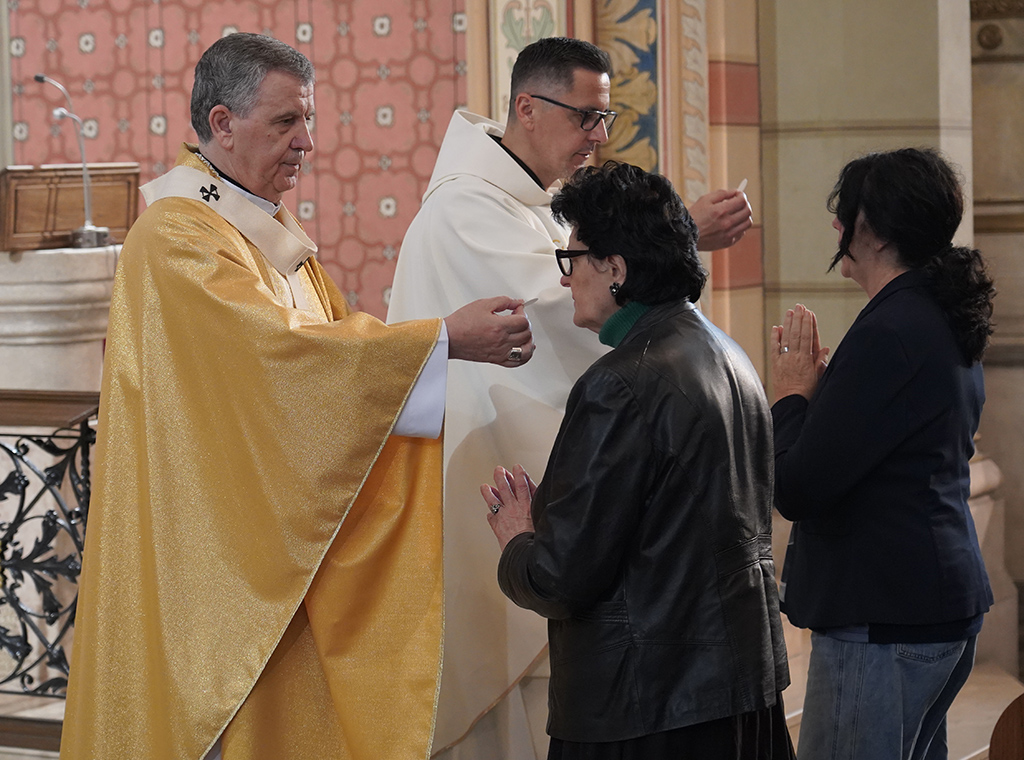
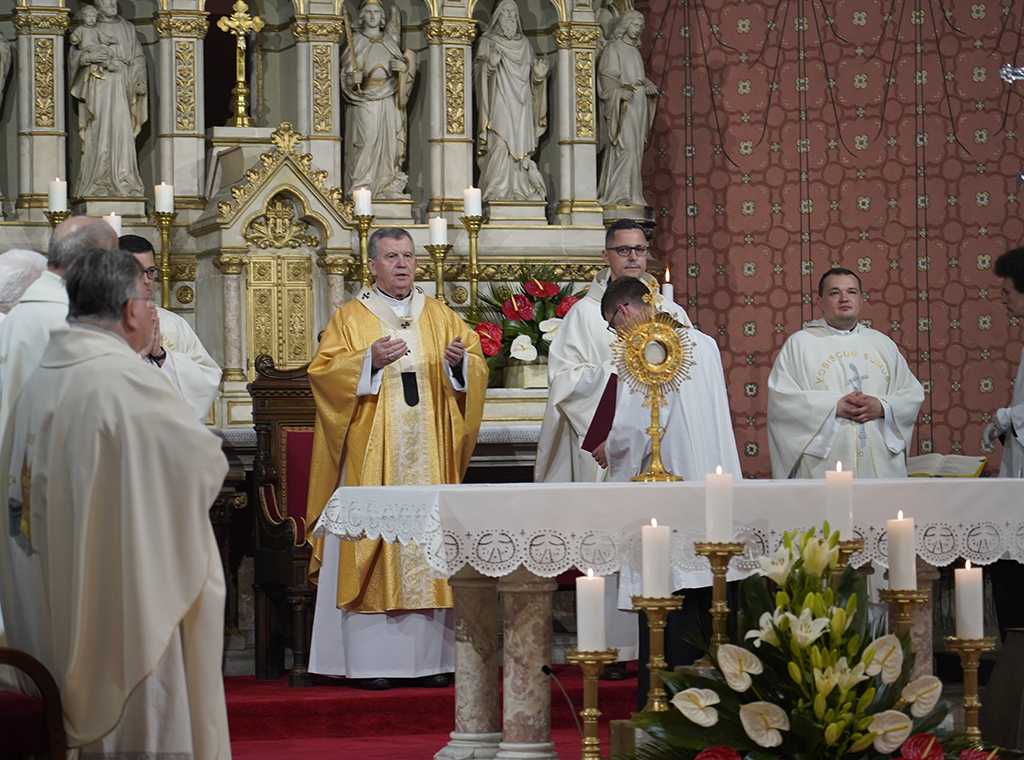
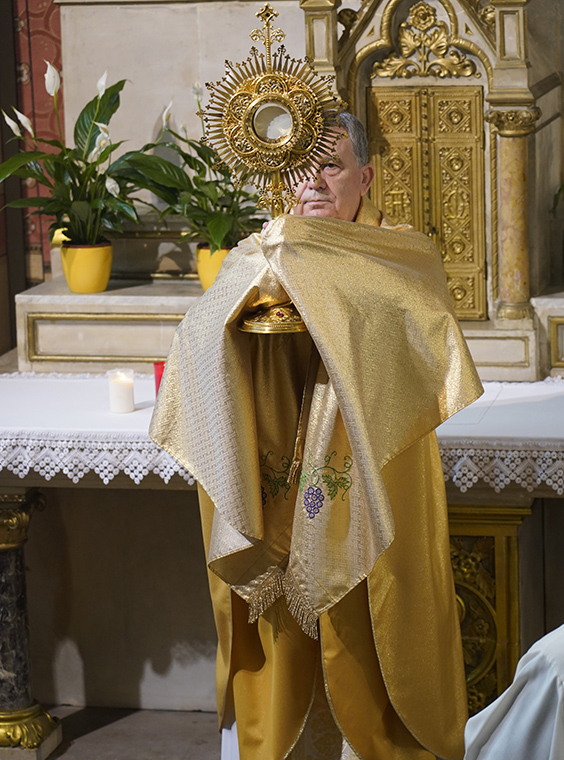
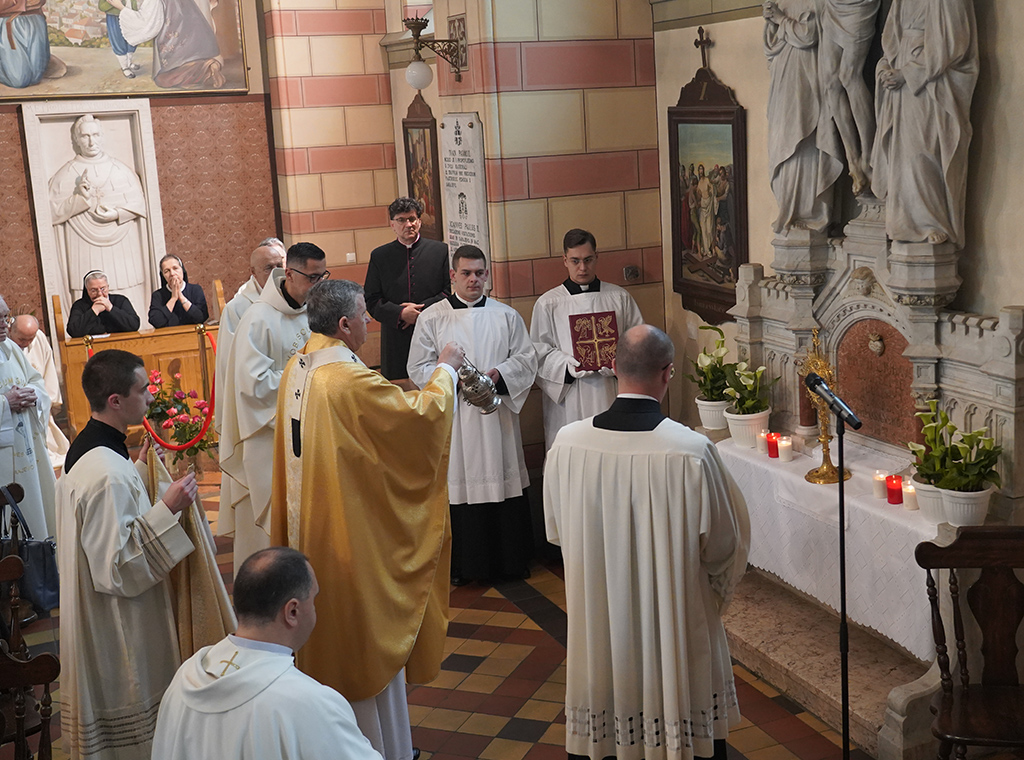
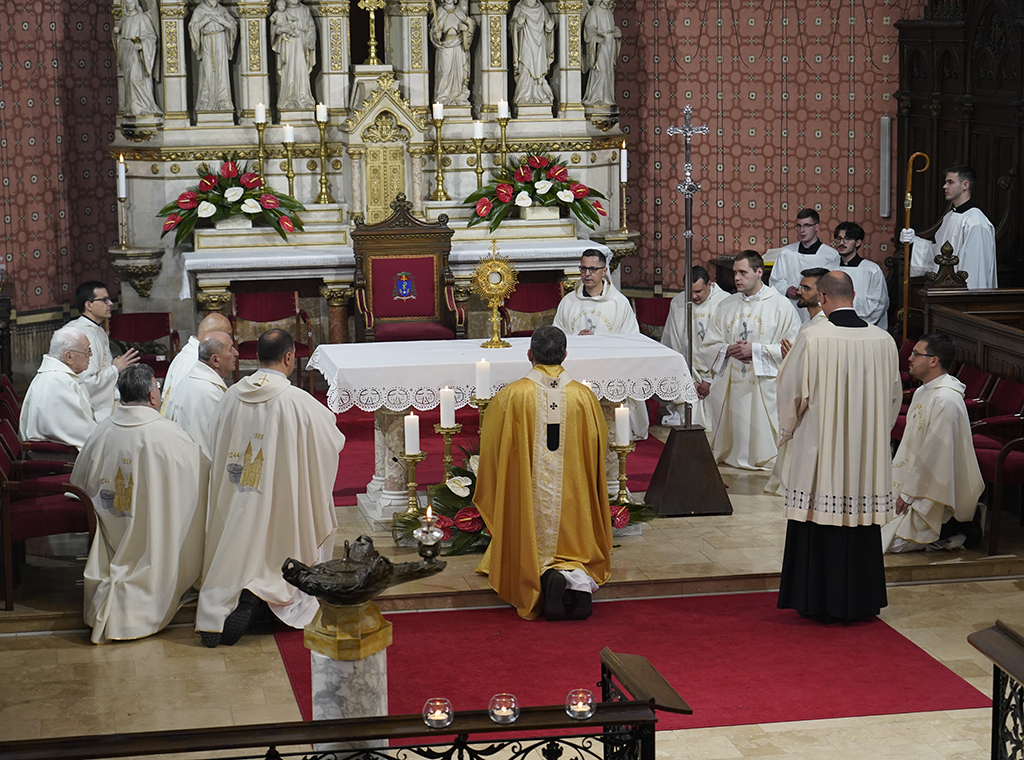
On the feast of the Most Holy Body and Blood of Christ - Corpus Christi, on Thursday, June 4th, in the Sarajevo Cathedral of the Sacred Heart of Jesus, the solemn Eucharist was led by the Archbishop of Vrhbosna, Msgr. Tomo Vukšić.
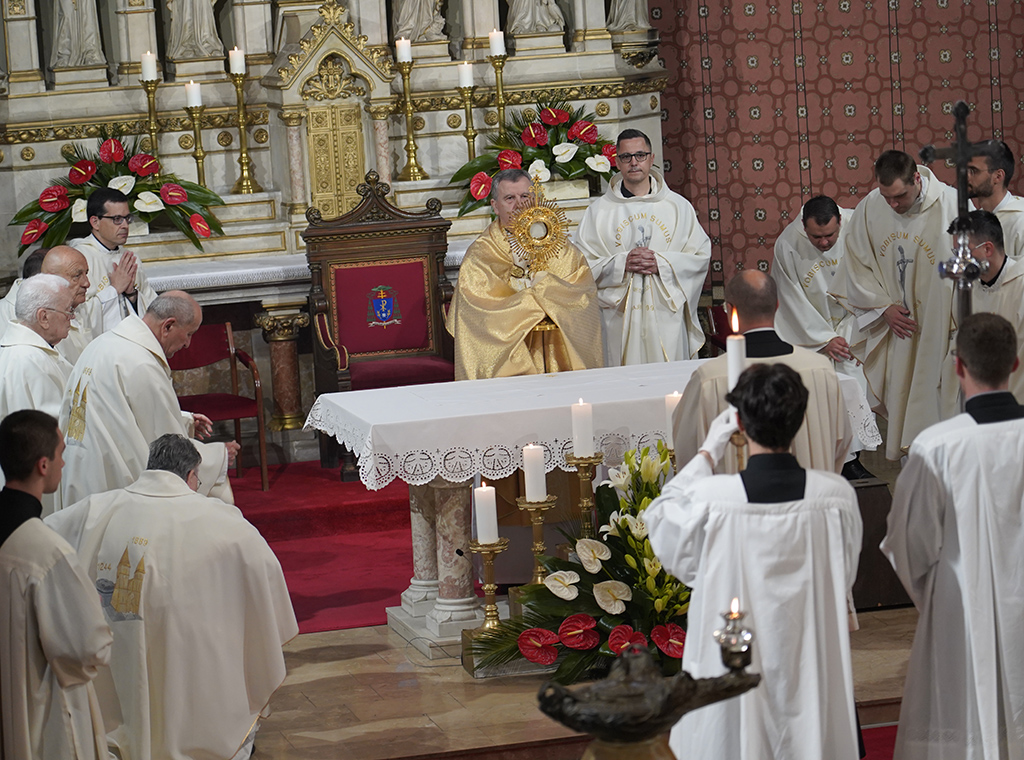
15 priests concelebrated, including: the judicial vicar of the Vrhbosna Archdiocese, OFM Šimo Ivelj, and the Secretary of the Apostolic Nunciature in Bosnia and Herzegovina, Msgr. Javier Camañes-Forés.
Introducing in to the Holy Mass, Archbishop Vukšić emphasized that the Eucharist is always Christ's return among the faithful and his reincarnation in a sacramental way, and said: "Today, with this feast, we want to thank the Lord, together with the entire Church, for this blessing and for His constant presence, and ask Him to make us worthy so that we may always be near Him. May He forgive us all our weaknesses and sins so that it may be so today as well."
The Eucharist is also a memorial of Jesus' Paschal Mystery
At the beginning of the homily, Archbishop Vukšić quoted St. Thomas Aquinas, who professed the Catholic faith with the words: “Our sacred teachings say: / Bread is transformed into the Body, / Wine into the Blood of the Lord. / We do not understand, we do not see, / But by strong faith we know / What is happening out of order here. / In two figures there are hidden / Mighty things, which / Only the exterior difference / The Body is food, the Blood is drink, / Yet the being of Christ / All under every occasion.”
He further explained that the Eucharist is the source and summit of all Christian life, and all other sacraments, as well as all church services and works of the apostolate, the presence of Christians in the world and all their actions are closely connected with it and are directed towards it.
“The Eucharist is also a memorial of Jesus’ Paschal Mystery, especially the Last Supper. It is its sacramental re-enactment, but also the event by which the Church proclaims Jesus’ death and resurrection (…) The Apostle Paul teaches this: ‘For whenever you eat this bread and drink this cup, you proclaim the Lord’s death until he comes’ (1 Cor 11:26). And in accordance with this faith and this teaching, every time the community celebrates the Eucharist, it repeats: ‘We proclaim your death, Lord, we celebrate your resurrection, we await your glorious coming’”, he said, repeating how, faithful to Jesus’ wish and command, the Church has gathered from the beginning around the cup of blessing and the bread and the breaking of bread, as the Acts of the Apostles also testify (Acts 2:42.46).
"From apostolic times, the celebration of the Eucharist has continued until our own day. It has always had the same basic structure that we find everywhere in the Church today, and so the Church will perform, celebrate and proclaim the Paschal Mystery of Jesus until the end of time, until Christ comes again", he said, underlining that all the elements of the Eucharistic celebration are found in the oldest description of it, left by Saint Justin Martyr, and written around 155 AD, which he then quoted.
He further reminded us that in his sermon in Capernaum city regarding communion, so that believers would have life within themselves, Jesus said: "I am the living bread that came down from heaven. Whoever eats of this bread will live forever," and emphasized that in order for a disciple of Jesus to respond worthily to this call of His, he must do everything to be worthy and prepare himself for that holy moment. In this sense, he recalled how Saint Paul calls for an examination of conscience when he writes: “Therefore, whoever eats the bread or drinks the cup of the Lord in an unworthy manner will be guilty of the body and blood of the Lord. Let a person examine himself, then, and so eat of the bread and drink of the cup. For he who eats and drinks eats and drinks judgment on himself if he does not discern the Body” (1 Cor 11:27-29).
He further quoted Saint Justin again who wrote: “No one has the right to partake of the Eucharist except he who believes that what we teach is true and who has bathed in the bath of forgiveness of sins and regeneration and who lives as Christ has given us. We do not take it as ordinary bread or ordinary drink, but just as by the Word of God the incarnate Jesus Christ, our Saviour, had both body and blood for our salvation, so we are taught that by prayer and thanksgiving that come from him, this Eucharistic food, which by transformation nourishes our blood and bodies, is also the body and blood of that incarnate Jesus.”
In conclusion, Msgr. Vukšić emphasized that the Eucharist is a picture of unity with Christ and the mutual communion of the members of the Church: “Just as from the multitude of grapes comes one wine and from it one cup of blessing, which is the communion of the Blood of Christ; and just as from the multitude of ears of corn comes the bread that we break and which is the communion of the Body of Christ, so we, many, are one Body in Christ (cf. 1 Cor 10:16-17). This Body of Christ becomes visible in the communion of the Church in which the faithful, as participants in one body, are connected to Christ and to other believers. And as long as they are united with Christ, they are also united with others.”
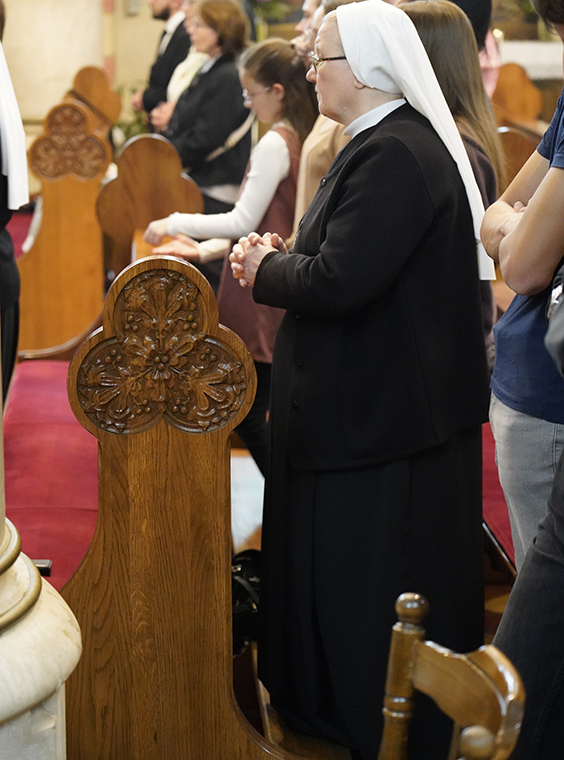
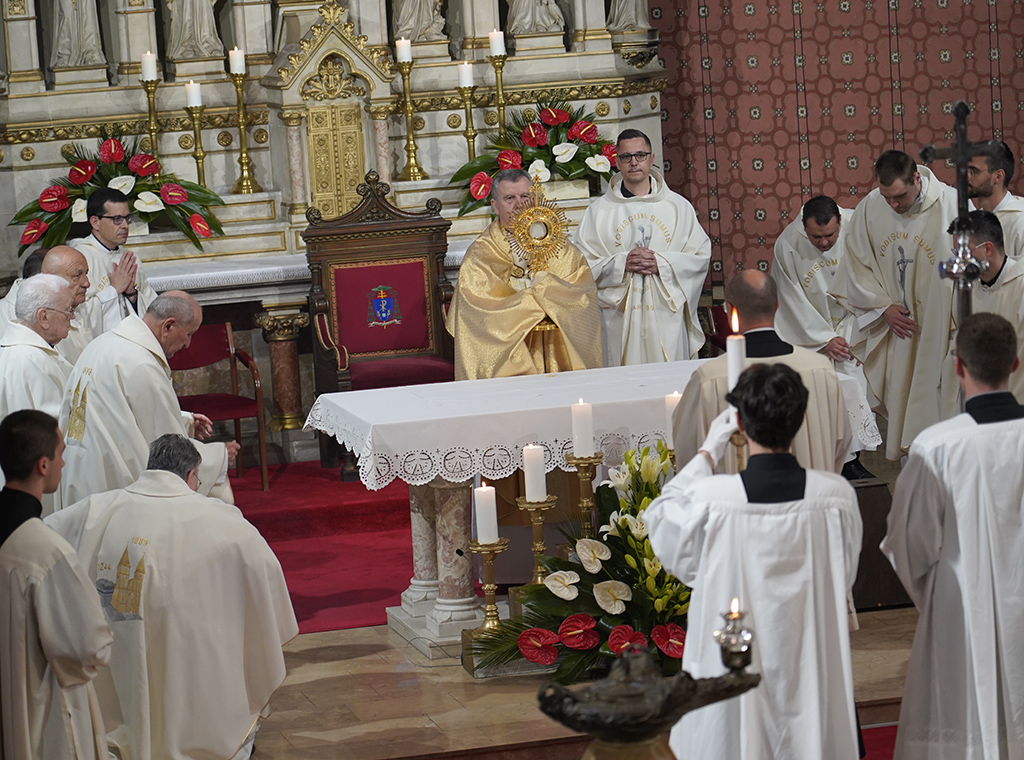
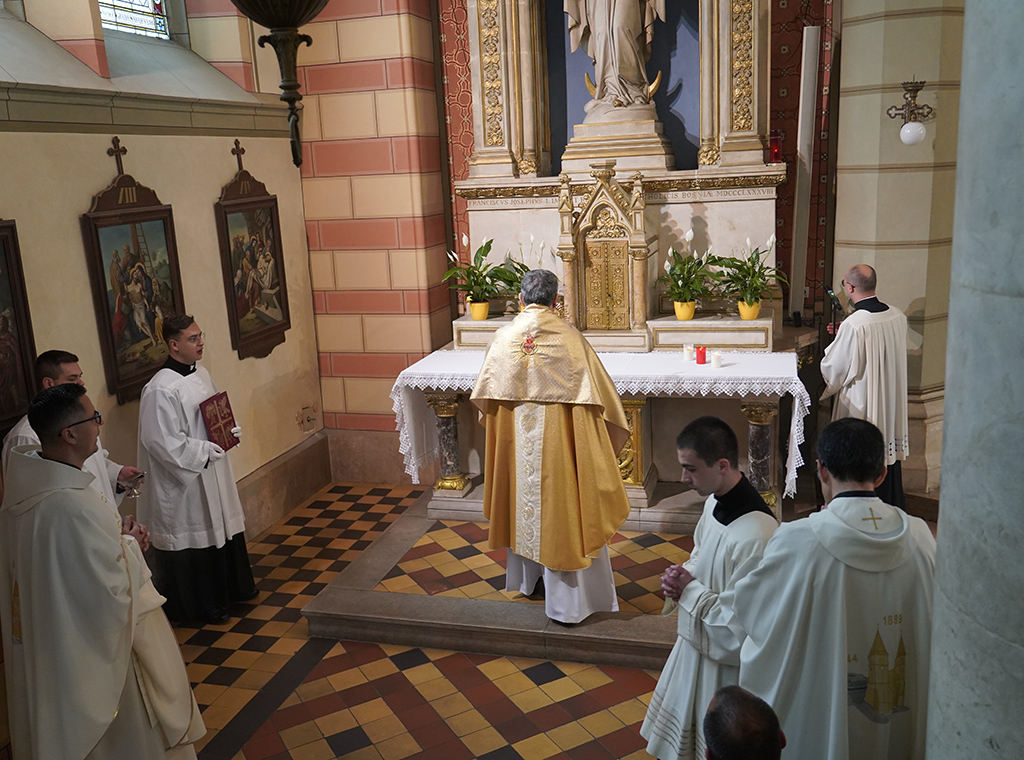
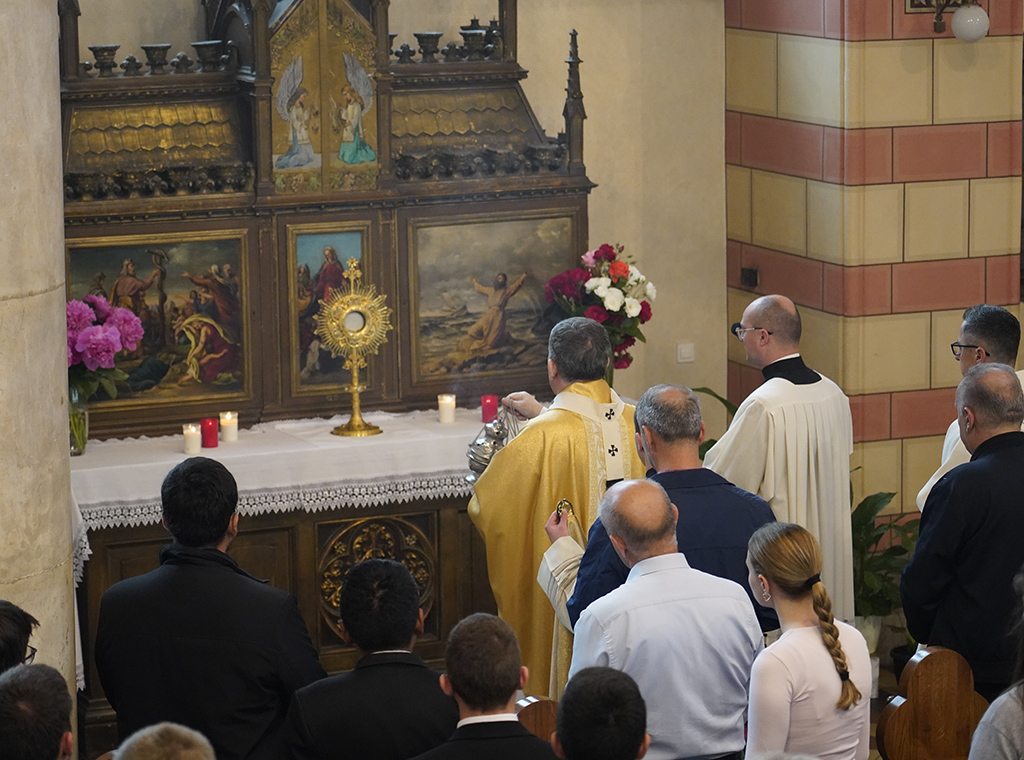
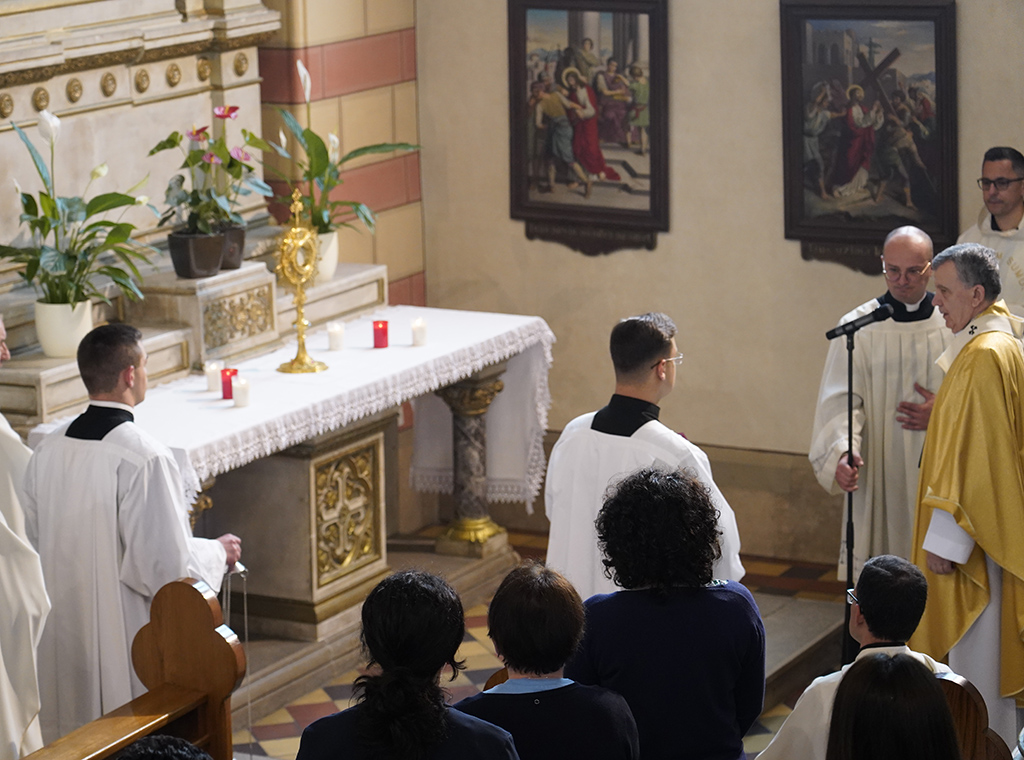
After communion, a Eucharistic procession with four stations followed inside the cathedral with the participation of the faithful.
The liturgical singing was animated by the Cathedral Mixed Choir Josip Stadler under the direction of Rev. Marko Stanušić.
Several names for one mystery
Croatian liturgical terminology uses two names for this holiday: Corpus Christi and “Brašančevo”. Corpus Christi is a pure translation of the New German word Frohnleichnam(-sfest), meaning the feast of the Body of Jesus. This meaning has been preserved in the Catholic church term Brašančevo for this holiday.
The feast of Corpus Christi is celebrated on the Thursday after Holy Trinity Sunday. The focus is on the veneration of the Blessed Sacrament of the Altar, with particular emphasis on the presence of the whole Christ in the consecrated host. Historically, the most important impetus for the introduction of this holiday were the visions of the nun Juliana of Lüttich in the 13th century.

.jpg&w=420&h=235&zc=1&hash=e106aa4c03620f401d3905d5651c685a)


