
Christmas nativity scenes in the context of poverty today
sri, 03. siječnja 2024. 13:10
At Christmas time, a normal person, more than usual, thinks about the needy, the lonely and the sick. This is precisely the period when one can think about who is actually a poor and what to us, in that context, is the message of the modest Bethlehem nativity in which the baby Jesus, that was just born, was laid.
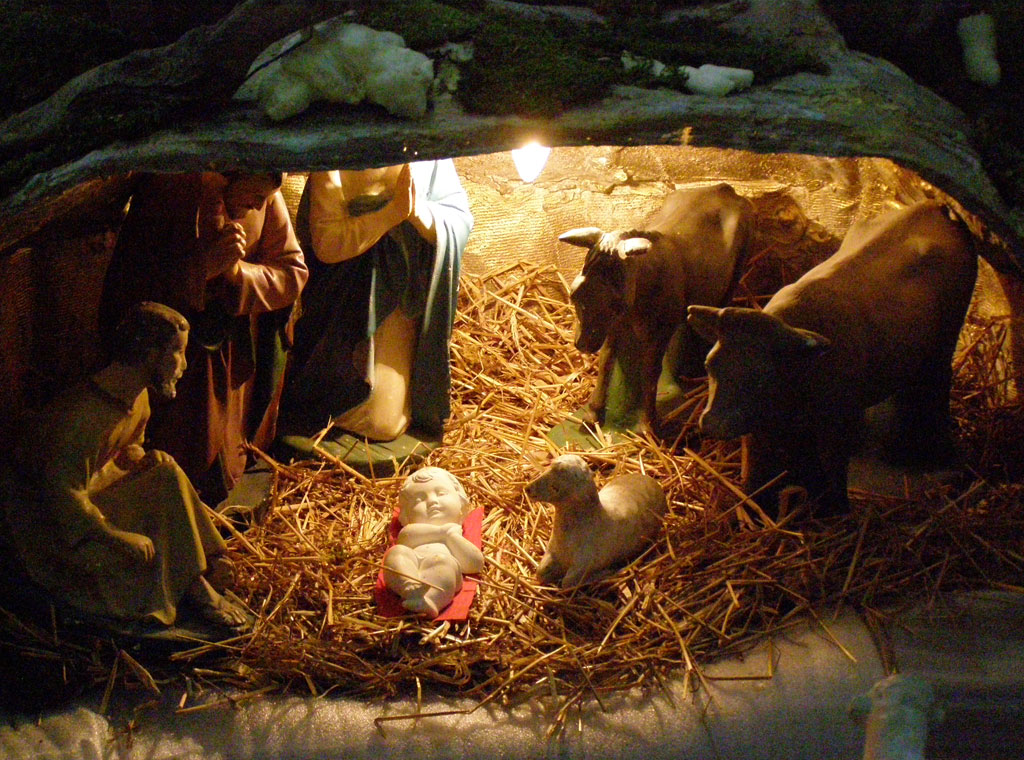
There are many names and synonyms for the poor in the Old and New Testaments, some of which are not pleasant at all: poor, needy, humiliated, thin, misery stricken. Poverty, in biblical times, was a despicable situation, and, unfortunately, the situation is similar today.
It is often considered, just like in the past, to be the result of inaction, carelessness and laziness. It is precisely these three negative "forces" that make a person throw themselves in misery and for what other people, the wider human community and even the country feel no responsibilities. When it comes to that addition of the fact that certain families are impoverished due to illness, on
which cannot be influenced, or because one of its members has lost goods by fraud, gambling or other vice, too often the wider community "washes its hands of them".
It is then that one forgets how, after all, more people were driven to poverty, due to someone else's fault, due to oppression, deception and extortion, which are made up of the more powerful and rich, and in some cases also institutions the states themselves. In those moments, pleas of the poor are often only listened by certain secular humanitarian organizations and, of course, the Church as such.
Barn analogy
The Catechism of the Catholic Church on poverty says: "In economic matters respect for human dignity requires the practice of virtue temperance of moderation to mild the attachment to the goods of this world; the virtue of justice, in order to respect the rights of the close ones to give what belongs to him and the strength of solidarity following the golden rule and the generosity of the Lord who, although rich, became for us poor so that we may become rich with his poverty" (2407).
This reference work summarizing the doctrine of the Catholic Church also adds that owning material goods is quite normal, that is a legitimate "right to private property, in a just way acquired or received" and that it should be respected, but it is necessary to use property for noble purposes - for the common good (2403).
On the trail of that, it should be emphasized that moderation in the accumulation of goods connected with evangelical poverty and the follower of Christ should not fear poverty. "Blessed are the poor in spirit, it is theirs the kingdom of heaven", is the first of Jesus' spoken beatitudes which they are by no means a praise of misery, hunger and trouble, but, if we disregard beyond, a call, or in modern jargon, an appeal to action towards those who depend on other people's help.
As man's existence is dependent on God's action, so too his happiness and fulfillment depend on it. Since God is love, how writes John in his First Epistle, the poor are a lifelong test, but also a call, for the action of every believer, in order to become God's pleasant people.
This logic was witnessed by Christ himself, who, according to all parameters, was poor with a small wage. He was born in a stable; for his presenting at the Temple "two turtledoves or two doves" were sacrificed, which was the obligation of the less wealthy; in one part of his life he was a refugee; fought through life as a carpenter and ordinary worker; often slept only on the floor or the planks; died on the cross without possessions and was eventually buried in someone else's tomb.
The Saviour was not just a poor worker in the material sense, He was "poor in spirit" because his life included humility, gentleness and meekness. That poverty implied a moral way of distribution of worldly goods as something that is transitory and must not manage the life of man.
This is precisely, among other things, the message of the nativity scene mentioned in a short sentence in the Gospels, and they have become an integral part of almost all of Christmas traditions around the world.
So what is their meaning today?
Nativity is one, but the messages are many
The nativity scene is recognized - not only among Christians - as a synonym for the period in the year that is reserved for the celebration of Jesus' birthday. Scene of the nativity depicts the Savior in a simple setting, in a stable or caves with ordinary shepherds and animals. It emphasizes values of modesty and humility, reminding believers and people of good will that majesty and holiness can arise from simplicity.
The gifts brought by shepherds symbolize love and the need to separate from attachment to material things. Nativity scenes emphasize value of giving gifts, not only of visible goods, but also of love, attention and kindness.
The birth of a Child in them brings joy and hope to the family, but also to the world.
This message emphasizes the light and joy that comes with Christmas, especially during the difficult times that the Croats also experienced in the last war, and at this moment Christians, and everyone else, in the Holy Land. Furthermore, the nativity shows Mary, Joseph and Jesus as the Holy Family.
This underlines the importance of family values, love and support within community which is often the reason, if absent, why people fall into poverty.
And finally, the motif of the coming wise men symbolizes the search for truth. This can encourage reflection on the importance of seeking deeper meaning in to a life in which material things cannot fulfill a man in his core.
As we have seen, the nativity scene has many layers of meaning and messages that can be read from them. In essence, they resemble fundamental Christian values: love, humility, giving and hope, which come with the birth of Jesus Christ and settle among the believers.
The Nativity, in fact, leads man to God in a spiritual sense.
What kind of poverty bothers the modern world?
Poverty is not something that happens to others and somewhere out there. Different by a combination of unfortunate circumstances or wrong investments, that decision can affect different groups of people. However, they stand out in particular long-term unemployed, low-income workers, children without the care, the elderly and other vulnerable groups, and mostly sick and the ones who are unable to work.
Different countries and regions face different related challenges with poverty, and the perception of this phenomenon often stems from diverse economic, cultural and social contexts.
Therefore, there are different forms of destitution and modern "poverty" which is often exaggeration and complaining without relevant support (the grass is greener elsewhere).
The first concept that emerges on that trail is relative and absolute poverty: The concept of relative poverty refers to the situation in in which people feel poverty in correlation with others in their own
community. Absolute poverty, on the other hand, refers to lack of basic necessities and conditions.
Next comes the idea of a difference in living standards: developed countries often have a higher average standard of living compared to less developed countries. Therefore, a person who is considered poor in a richer country, may still have access to certain resources that are luxuries for people in less developed areas.
Then come different needs and costs: living costs, including food, shelter, education and health care, they can vary significantly between countries. What is considered poverty in one, may be significantly different from the standard of living in another country. Finally, there are social and cultural norms: they play an important role in shaping the perception of poverty. In certain societies certain
living standards can be the norm, and deviation from them can lead to the feeling of poverty.
Nativity scene in a material sense
In the material sense, the Christmas nativity scene emphasizes several aspects. Social inequality: Christmas brings messages of love, giving and togetherness. However, in societies with a large gap between the rich and the poor, the holiday period also highlights social injustices and
economic inequalities and encourages their reduction. Solidarity and help: many people use the holidays as an opportunity to donate food, clothing or volunteering to help those who are less fortunate.
Feelings of loneliness: for a certain class of people, especially those who are facing poverty, Christmas can be a difficult time if they don't have funds for participation in traditional family celebrations. It can contribute to feelings of isolation and loneliness if they are not a part celebrations and festivities. Values of giving: despite material limitations, many people that are facing poverty value fellowship during Christmas. Gift giving can be emotionally fulfilling and add to the feeling of connection with others.
Ultimately, as we have seen, the relationship between poverty and Christmas, for which one of the symbols is the Nativity scene, is complex, pervasive and dependent about many factors. Understanding and support of the parish, but also wider communities can play a key role in alleviating the challenges that people faced with poverty they can experience during the holidays, but also the rest years.
Is poverty hereditary?
In societies where there is a high level of economic disproportionality the transfer of financial resources from one generation to another can be limited. If the parents do not have enough resources to provide for the children basic resources such as education, health care and safe
accommodation, children may be exposed to the risk of poverty. Social structures and norms can also influence the transmission of poverty. If a certain social class or community is systematically
exposed to poverty, it is often more difficult to break that cycle. Also, if certain societies have limited employment opportunities or if the jobs are poorly paid, this can contribute to inheriting
of poverty.
800 years since the Nativity scene
The Church has been from its begining a mystery, a mystery of God's incarnation, expressed through numerous images and thought categories understandable to ordinary people, both of passed time and today. Because pictures as a prototype through which the mystery of Christmas is expressed, touch the heart. Using the announcements of the Old Testament prophets and evangelical reports, Christian artists were happy to depict the event Incarnations of Jesus. Following this the Nativity were created, although it is not known when the first ones were made.
The first recorded depiction of the incarnation of Jesus comes from the Pope Sixtus III. (432 - 440) which in the basilica of St. Mary the Great in Rome 432 had a cave made, similar to the one in Bethlehem.
The first Christmas nativity scene, which is considered the forerunner of today's were set up in 1228, by Pope Nicholas IV. (1288 - 1292) in the same basilica. It was, however, five years after St. Francis of Assisi staged a live Christmas atmosphere among Umbrian shepherds.
St. Francis was the first originator of the Christian nativity scene popular piety. Inspired by the first live Christmas nativity scene, he staged it with his brothers in 1223, as a midnight worship service, in a nearby cave of the town of Greccio near Assisi.
As a memory of this event, Pope Honorius III. (1216 - 1227) approved the worship of the Christmas nativity scene in the monastery for the Franciscan churches. The pious custom was transferred to other religious communities thus spreading throughout all churches, and later among Christian families as well.
A mathematical definition of poverty?
Organizations such as the United Nations and the World Bank have developed certain formulas for poverty thresholds which are based on the minimum survival needs, including food, housing, clothing and education. The World Bank often uses a threshold of $1.90 per day to measure extreme poverty.
Despite attempts of standardization, setting a universal point of the poverty line still sparks debate. There is no simple one mathematical formula that would universally describe the relationship between wealth and poverty because this dynamic depends on different factors.
.jpg&w=420&h=235&zc=1&hash=e106aa4c03620f401d3905d5651c685a)


