
For thirty years, the Neretva has been talking about the camp called Museum in Jablanica, but the judiciary has been silent
pet, 01. ožujka 2024. 09:51
The green and powerful Neretva roars tirelessly through its deep canyon towards the Adriatic Sea. It washes its shores of dirt and all kinds of garbage. It remembers both good and bad times. And it can wash everything away, but it cannot wash the face of those who created the Museum camp on its shores in Jablanica.

The Museum of the Battle for the Wounded in Jablanica, next to the Neretva itself, is an object built by the Yugoslav authorities in 1978. It was erected as a symbol of "the most humane anti-fascist battle, the Battle on Neretva, for the wounded and freedom", and then became a symbol of the imprisonment and torture of the Croats of this region.
Because of its existence, the Neretva River, for 30 years has not been able to wash the face of those who imprisoned children, old people, women, men and soldiers. The judiciary, which is more than slow, also contributes to this. Thus, the blue river and the Croats of Jablanica call again and again for justice and fairness. Will it happen and when? Probably it will, because we all have to stand before God and that is the only inevitable judgment of justice.
The war and the establishment of the Museum camp
How this place of torture and death was created will probably never be fully revealed. However, it is known that many Muslims, who were expelled from their homes by the Serbs in pursuit of their war goals, found refuge in Jablanica - which, it seems, became so cramped. Narrow according to the standards of those who then planned that it should be "liberated" from the Croats.
According to available information, the camp was founded on April 15th, 1993, by the War Presidency for the municipalities of Konjic, Jablanica and Prozor, headed by Dr. Safet Ćibo.
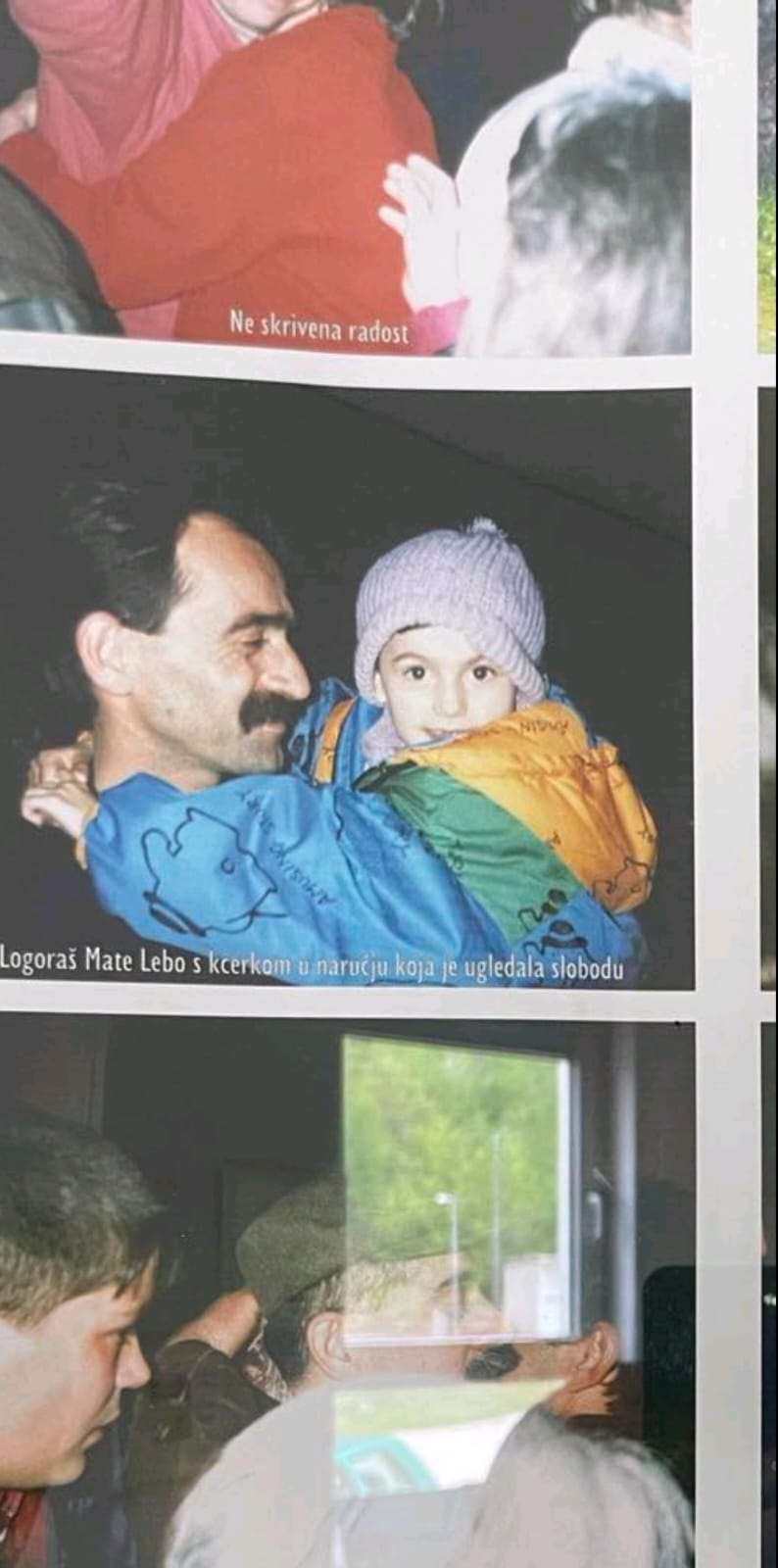
From its establishment until its closure on March 1st, 1994, 891 persons of Croatian nationality passed through this camp. Of that number, 88 were members of the HVO, and the rest were civilians from Jablanica, Doljani, Drežnica, Grabovica and surrounding towns, and some were not even recorded by the International Red Cross.
The youngest inmate was a 28-day-old baby, and more than 60 children under the age of 14, as well as a large number of elderly people, also were in the Museum camp.
Recalling that terrible time and an even more terrible place, one of the detainees, Marinko Ljoljo, says that according to everything he experienced, it was a concentration camp. "The youngest prisoner was only 28 days old, the baby from Doljani, Gabrijel Jurić. The oldest was 81 years old, a blind old man from Doljani, Mato Marjanović. The inhumane conditions for the stay included the inhuman treatment of the camp authorities. As a direct result of this, seven elderly people died in the camp, whose bodies were kept in a room together with living prisoners until burial. A baby was born in such conditions", Ljoljo said, pointing out that the camp is an insurmountable event in the life of every camp inmate.
"Deportation, violent removal of groups of civilians from conquered territories to concentration camps... all this is a classic example of a war crime against the civilian population. Interning people without any guilt is a crime. Investigations were conducted for this camp and two people were tried and sentenced to one and five years in prison. Why the organizers and why more people were not prosecuted for this can be cited: negligence, political games and carelessness", this former inmate thinks.
Bringing to the camp and torture
His words can be confirmed by many, because shortly after the establishment of the camp in Jablanica, civilians and members of the Croatian Defense Council began to be brought in.
After the attack of the BiH Army on the Croatian village of Doljani on July 28th, 1993, more than 150 civilians from that village were forcibly and illegally brought to the camp. People were also brought from the village of Grabovice.
Camp inmates were housed in cells under the museum. These were the basement rooms. Those that were paved with Jablanica granite were used for imprisoned civilians, while rooms with concrete and no daylight were used for members of the HVO. There was complete darkness. There were no aids. They received food twice, namely tea and "war bread" that was cut into 12 slices, as well as boiled lentils and rare rice. They were without medicines and medical help in critical situations. Prisoners were taken to forced labor at Bokševica and Pisvir, and forced blood extraction also took place.
Mara Kovačević from Doljani spent seven months in this camp. "It was difficult. I don’t want to talk about it now... What hurts me is that the authorities did not do anything to exercise our rights as former inmates, because we were there: neither me, nor my son, nor my mother-in-law. That they at least give something to us", Mara says resignedly.
Mirko Zelenika shared a similar fate in the concentration camp, who said that he lived in Jablanica, not far from the Museum, until the war. "I have been in this camp for the last four months, and before that I was in the Crkva (Church) camp in Donja Drežnica and in the Zuka base. I came here in November 1993 when the camp was already full. I was in a room that had no daylight. Imagine this, all night and most of the day the only toilet was a bucket, and we were only allowed outside once during the day. In addition to this: beatings, suffering from hunger, forced labour. That's a brief picture of this camp - a concentration camp", said Zelenika, who is pained that, as he says, this camp is "constantly challenged by politics".
In addition to the civilian population of Croatian nationality, members of the HVO were also captured in the Museum camp in Jablanica.
Matija Jakšić from Jajce testified about the camp that he was under neon lights for four months. "They took us around some lookout places to work, to dig. There was beating, hitting, belittling. They were doing all sorts of things. They say 'assembly centre', but this was actually a 'concrete fort'. A lot was there. I was at the court in The Hague, at the court in Mostar and Konjic. They have some judgments, but all that is only superficial", Jakšić thinks.
Srećko Raič from Drežnica, who was imprisoned in the Museum from which he managed to escape, had a similar sad experience. "I spent six months here. If I hadn't ran, I would have been there for another four months. There were all kinds of things: beating, hunger, there were three days when they wouldn't give us anything to eat. They don't open the door at all for three days. Before I was imprisoned, they first materially destroyed me: everything I had, property - everything was demolished. There were four of us from the Raič house. I was brought here, and the old ones stayed. Then they took the old people three kilometres from the house and then they demolished everything. What I suffered... and if I hadn't ran away, who knows what would have happened. 22 of us escaped and only five or six of us are still alive", testified Raič.
Conviction of the immediate executors
For the Museum camp and the persecution of Croats in the Jablanica-Konjic region and this part of the Neretva valley, only the immediate executors of the dirty deeds were convicted: Mirsad Tabaković, who was sentenced to five years in prison for abusing and torturing victims in the Museum "and at the location of the Rogić House".
Nihad Bojadžić, deputy commander of the Zulfikar special squad, was found guilty of crimes against prisoners of war in the Museum by the first-instance verdict of April 2014 and sentenced to one year in prison. In June 2018, the Appellate Panel of the Court of Bosnia and Herzegovina sentenced him to a total of 15 years in prison for crimes against civilians and prisoners of war.
The Neretva is still roaring, flowing towards its end. The same way these suffering people go on with their life paths that will end in the lap of God. Unfortunately, they will take their truth, their suffering with them... And the country? And the judiciary? And politics? And justice? As things stand now, they will be far from them. It will be mentioned only as another one of the calvaries of the Croats in Bosnia and Herzegovina, which the bearers of the cross know and keep silent about from station to station, and God's providence. Unfortunately, the younger generations don't know anything about it, not even among Croats, not to mention among Bosniaks and their narrative that the BiH Army did not commit crimes, but that they were just "irresponsible individuals".
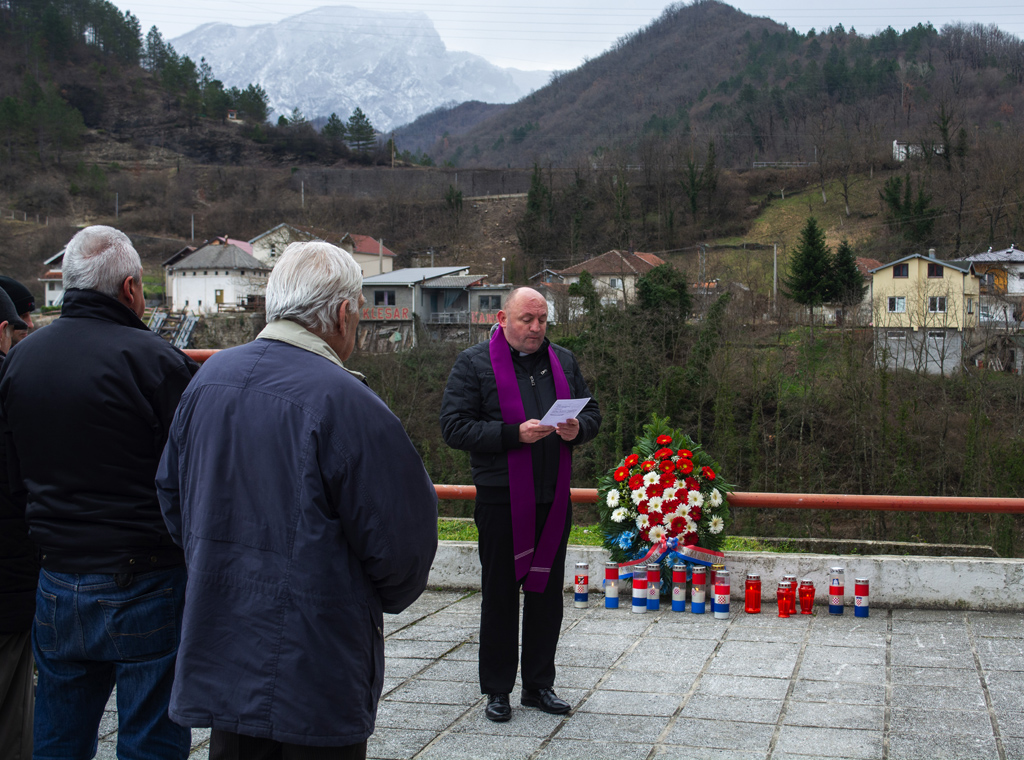
And this 30th anniversary will be marked on the day of the dissolution of the Museum camp on March 1st, in a dignified way: by laying wreaths and lighting candles, with prayer and Holy Mass celebration, but also with the bitterness of the lack of justice and feelings for the persecuted.
.jpg&w=420&h=235&zc=1&hash=e106aa4c03620f401d3905d5651c685a)


