International Symposium: "Smiljan Franjo Čekada – Shepherd of the Church, Witness of the Times, and Heir to Hope"
pet, 23. listopada 2026. 10:57
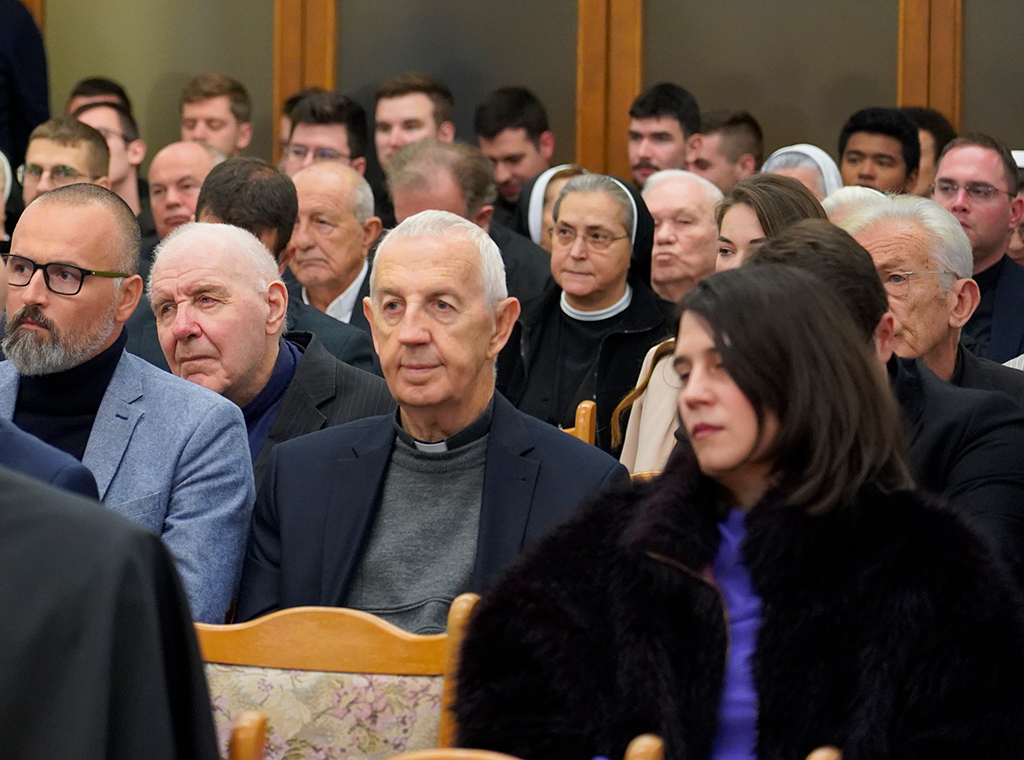
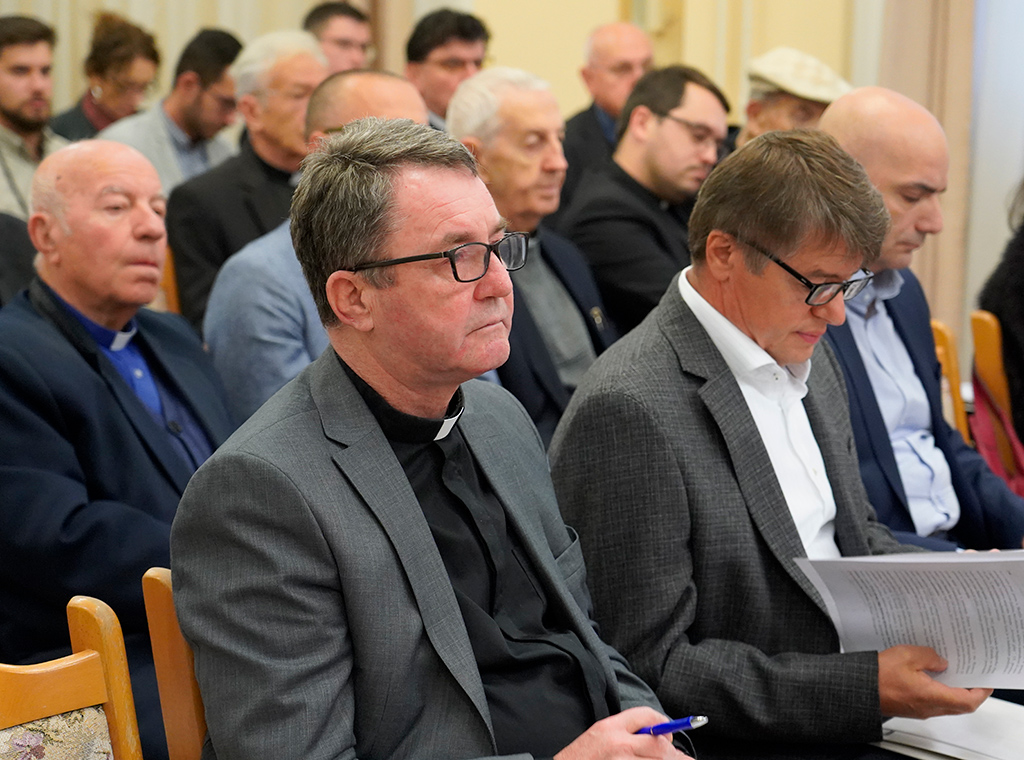
On October 20th and 21st, the Catholic Theological Faculty of the University of Sarajevo is hosting a symposium titled "Smiljan Franjo Čekada – Shepherd of the Church, Witness of the Times, and Heir to Hope: The 50th Anniversary of the Death of the Archbishop of Vrhbosna."
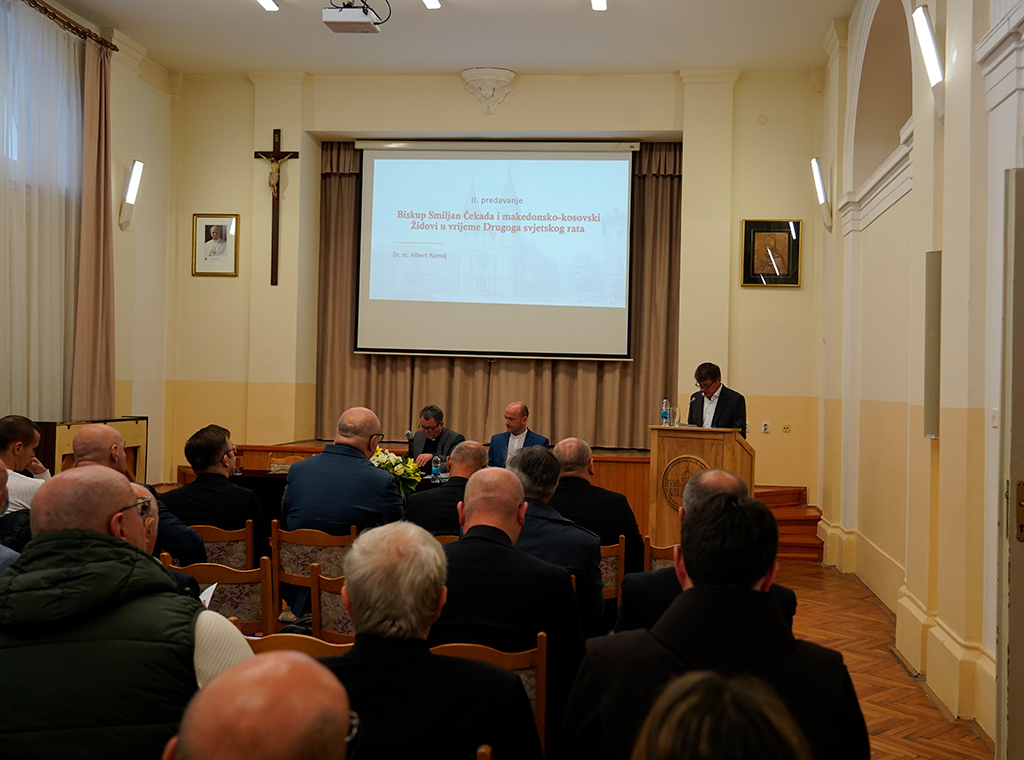
This international academic symposium was organized by the Catholic Theological Faculty in Sarajevo, with the support of the Government of the Federation of Bosnia and Herzegovina—specifically, the Federal Ministry of Culture and Sports.
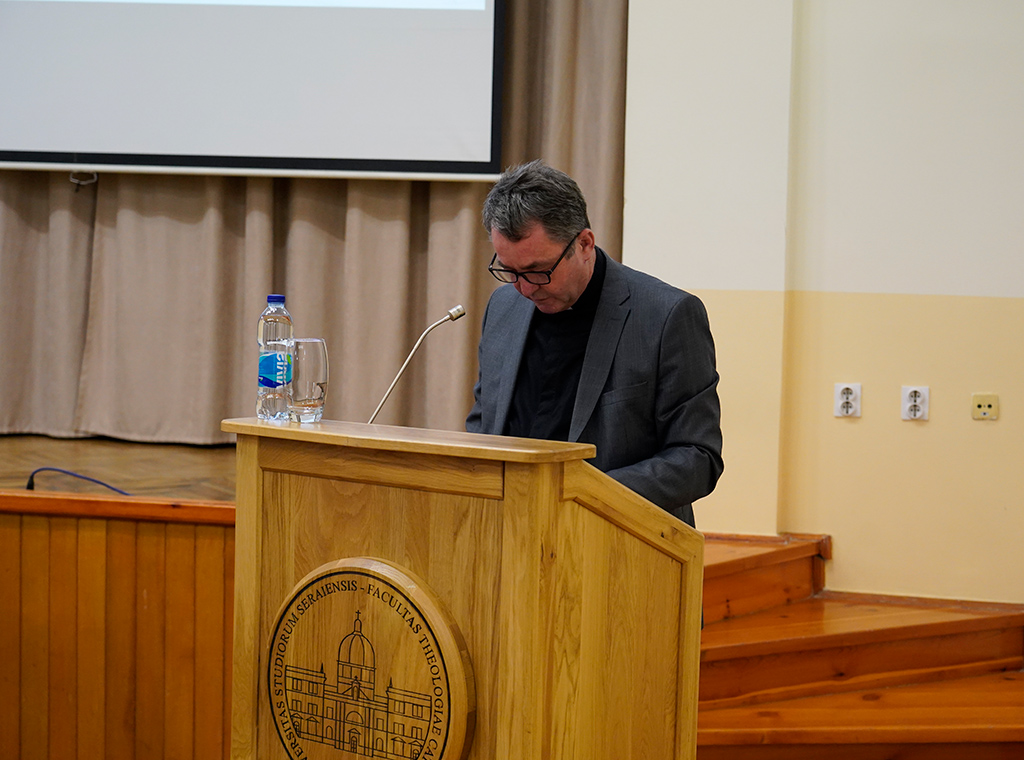
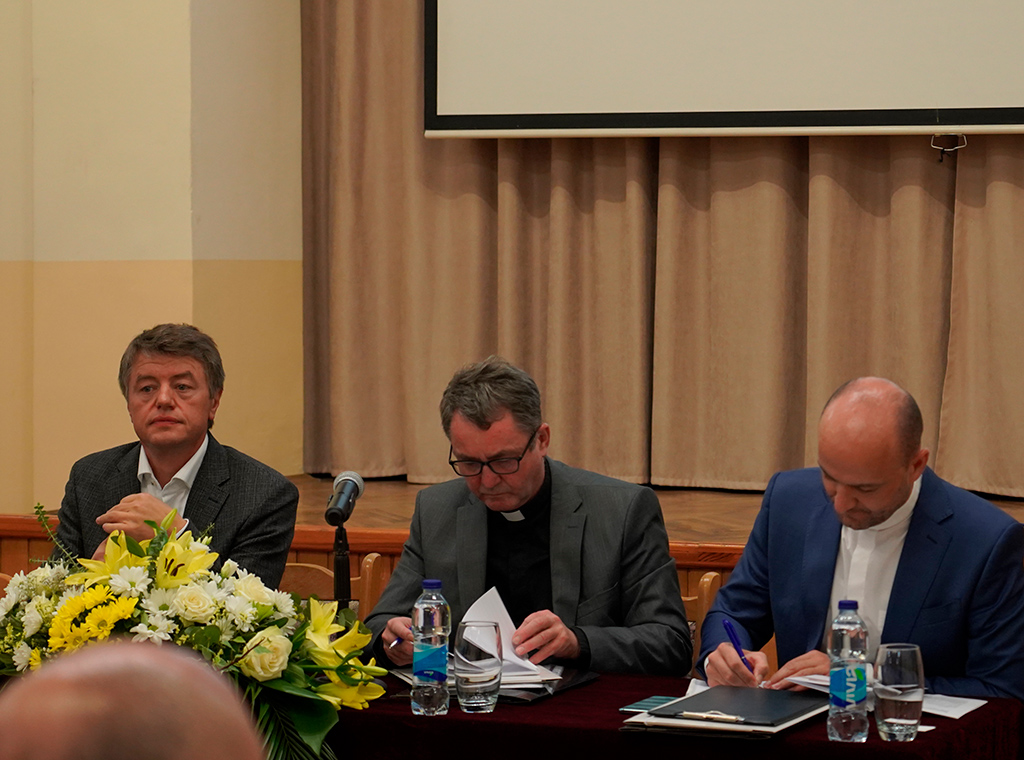
At the beginning, during opening of the Study day, words of welcome and greetings were offered the program moderator—Rev. Dr. Ljubo Zadrić, a professor of dogmatic theology at the faculty and Vice-Rector of the Vrhbosna Theological Seminary.
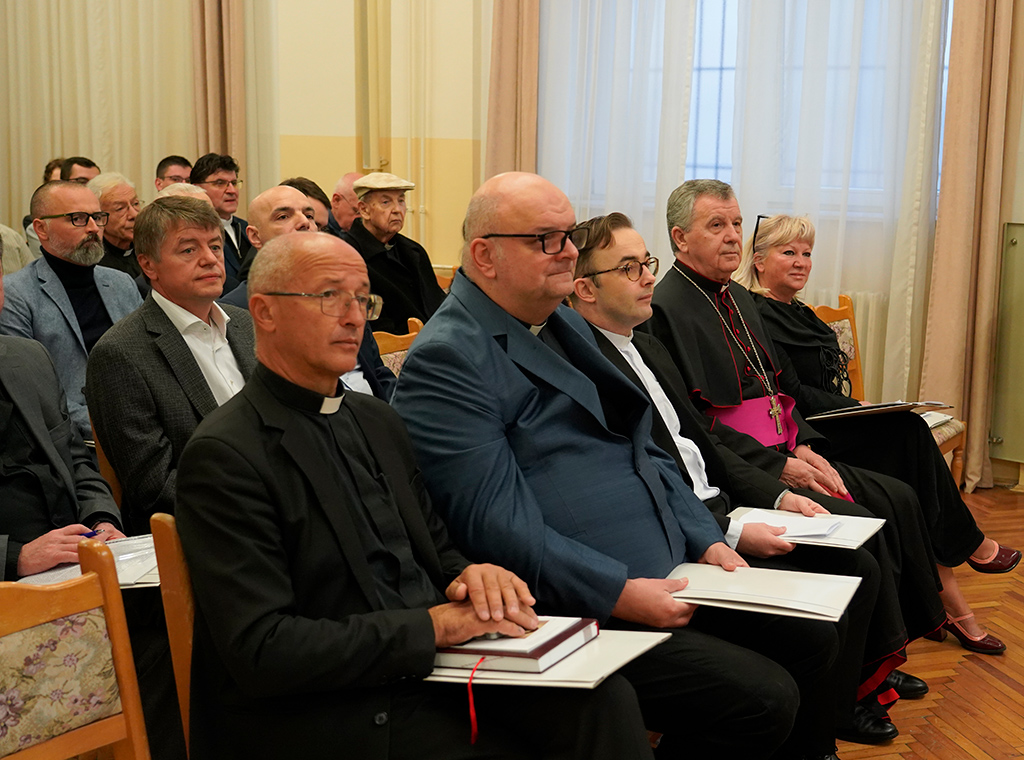
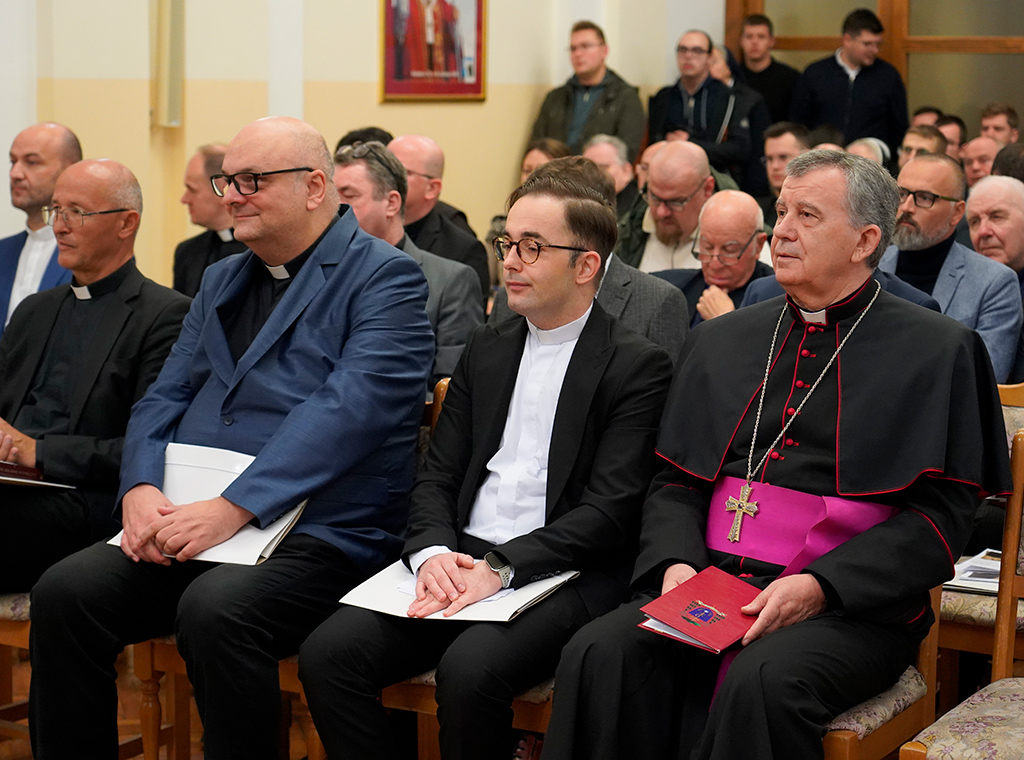
Among others, he extended greetings to the Archbishop Metropolitan of Vrhbosna and Grand Chancellor of the Faculty, Msgr. Dr. Tomo Vukšić; the Dean of the Catholic Theological Faculty, Rev. Dr. Mario Bernadić; and the Minister of Culture and Sports of the Federation of Bosnia and Herzegovina, Dr. Sanja Vlaisavljević.
Prior to the scheduled introductory addresses, Rev. Zadrić read a message from the Bishop of Skopje, Msgr. Kiro Stojanov, who was unable to attend the symposium. In his message, Bishop Stojanov highlighted, in particular, the significance of the service rendered by Smiljan Franjo Čekada as the Bishop of Skopje-Prizren, who was active in Skopje from 1940 to 1967.
Reviving Memories
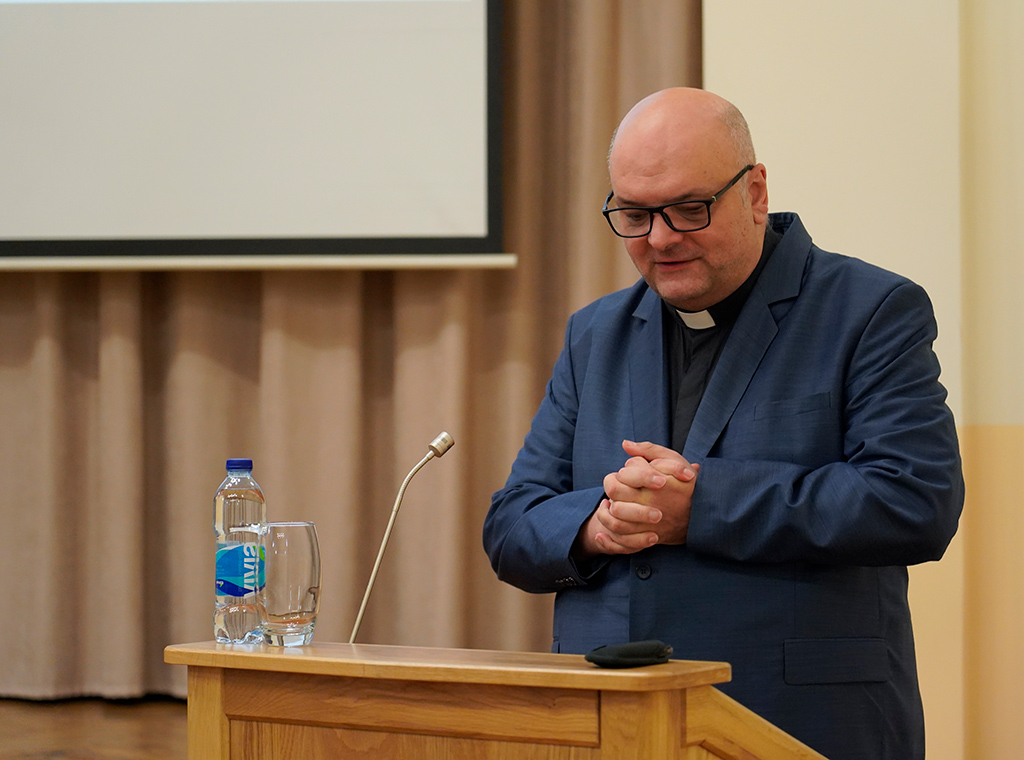
He then invited Dean Bernadić to the podium, who offered words of welcome, followed by thanks to all those who contributed to the realization of this academic gathering. He noted that the symposium was initiated by Archbishop Vukšić himself, while the organization was largely driven by professors from the Catholic Faculty of Theology (KBF): Vice-Dean for science, Rev. prof. dr. sc. Ilija Marković, and Prof. dr. sc Milenko Krešić. He extended special thanks to Minister Vlaisavljević, whose ministry provided enthusiastic and generous support for the symposium.
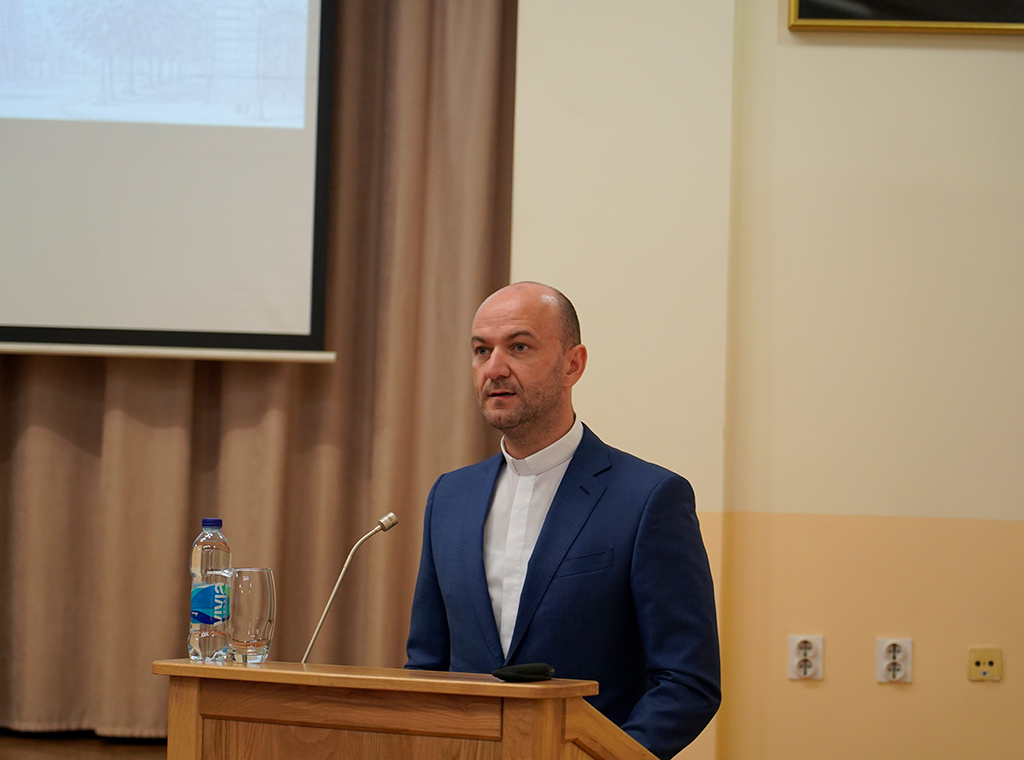
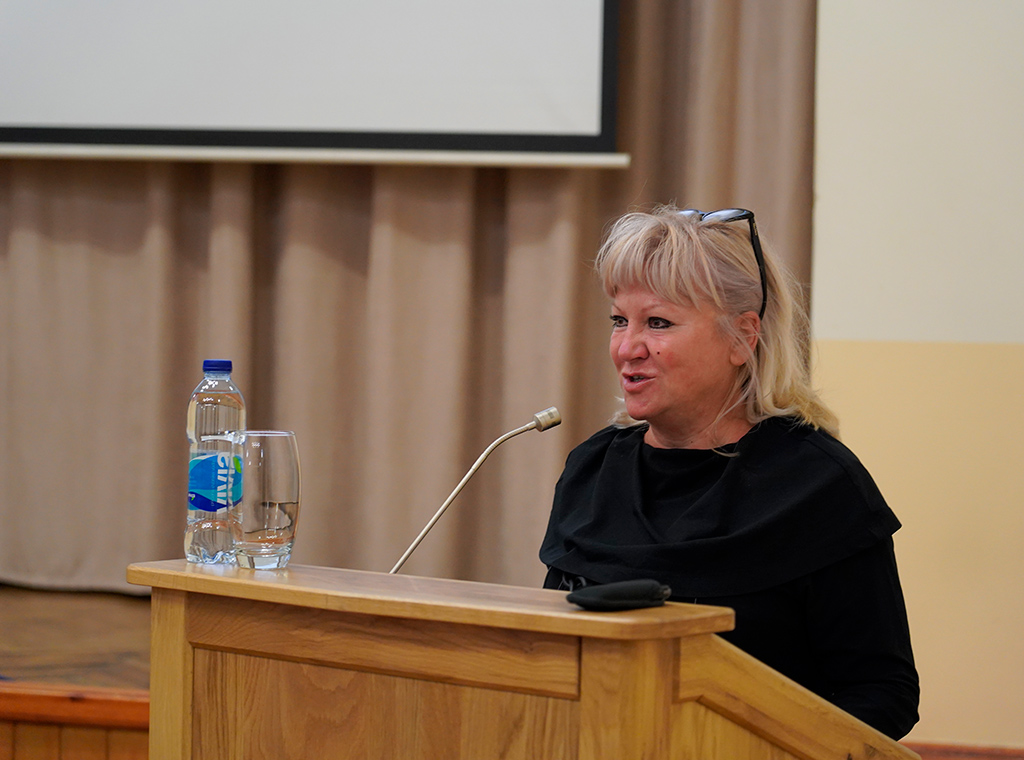
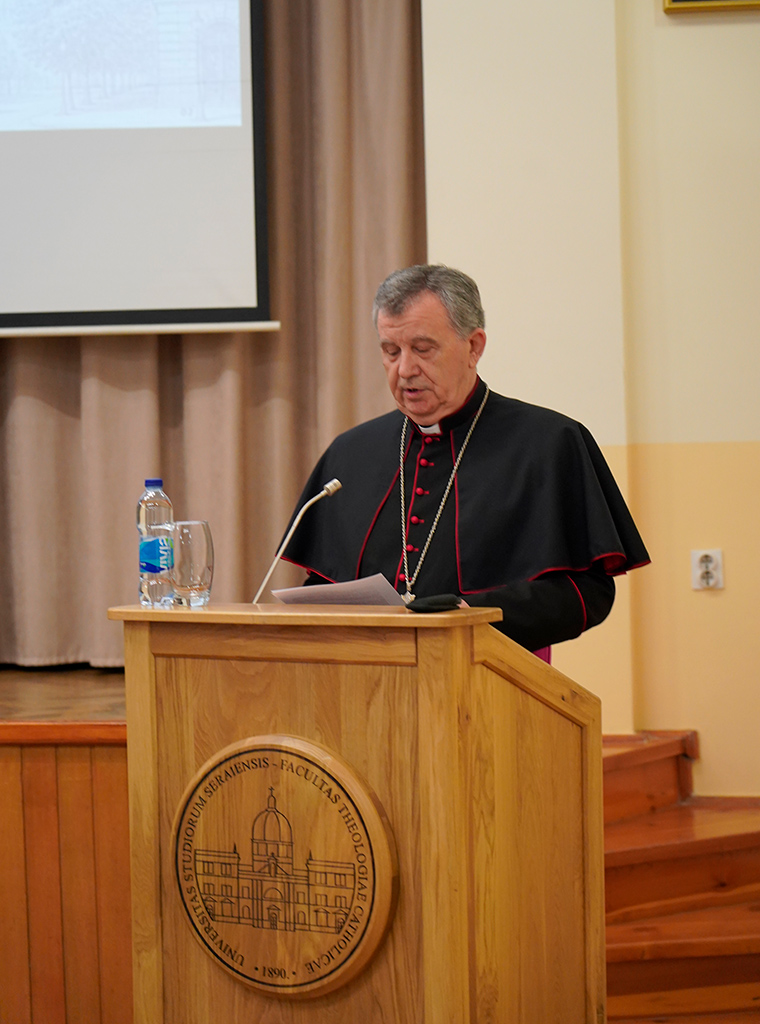
Minister Vlaisavljević then took the floor, stating that the ministry exists precisely for the sake of such significant and meaningful events and acts of remembrance. "As a political philosopher by vocation, allow me to share a few brief points—perhaps slightly outside the immediate scope of this topic, yet still aligned with its essence: a people that forgets who they are, what they are, where they come from—as well as their language, faith, and customs—ceases to be a people in the true sense, and is consequently removed from the political stage; they certainly cannot be considered a 'political people.' A people that cherishes its memories—individuals who nurture and revive these memories (and here, we have ample reason to revive the memory of Smiljan Franjo Čekada, a 'Righteous Among the Nations'...)—is a people with every reason to endure and to pass down through generations that which has sustained them", said Dr. Vlaisavljević, among other remarks. In his address, Archbishop Vukšić first recalled some biographical details regarding Archbishop Čekada. He expressed his pleasure that "the Catholic Faculty of Theology—marking the 50th anniversary of the death of Smiljan Franjo Čekada, a highly meritorious son of the Church and the Croatian people—accepted the proposal to organize this symposium, aptly titling it: 'Shepherd of the Church, Witness of the Times, and Heir to Hope'."
"As a candidate for the priesthood, I arrived in Sarajevo in the autumn of 1973 to begin my studies, and it was there that I met Archbishop Čekada. Over the next three years or so, I was frequently in his presence; I attended Holy Masses he celebrated—sometimes even serving as an altar server—and listened to his homilies, which he would regularly deliver from a stone pulpit located in the centre of the cathedral. From that period, I carry impressions of a truly dear bishop—a refined gentleman, a patient conversationalist, an excellent preacher, and a genuine witness of hope", shared Msgr. Vukšić, recounting some of his memories.
From Donji Vakuf to Skopje
Following his opening remarks, as an introduction to the lectures, Dr. Zadrić noted that both what a person said and did—and how they did so—are of great importance; equally worthy of attention is how others speak about that person. "At the heart of this concept—how he himself spoke and how others speak of him—lies the name and work of Smiljan Franjo Čekada. I will draw upon a biblical analogy here: the way people spoke about Jesus at that time prompted many—such as Zacchaeus—to seek a closer look and an encounter with Him", he said.
He then introduced the first speaker, Dr. Krešić, who addressed the topic: "Archbishop Smiljan Čekada: From Donji Vakuf to Skopje (1902–1940)." Dr. Krešić presented the life and work of Archbishop Smiljan Čekada from his birth in 1902 until his appointment as the residential Bishop of Skopje in 1940. He also spoke about the Čekada family, which gave three priests to the Church—Čedomil, Milivoj, and Smiljan—as well as Smiljan’s education leading up to his ordination, his early priestly assignments, and his postgraduate studies in Rome. Furthermore, he covered Čekada’s service in Sarajevo following his return from Rome—notably his role as editor of the Katolički tjednik (Catholic Weekly)—and his pastoral and parochial work in the parish of Bosanski Brod, where he was serving when he received his appointment as Auxiliary Bishop of Vrhbosna. He also spoke about his episcopal ministry in the Archdiocese of Vrhbosna, as well as his transfer to serve as the residential bishop in Skopje.
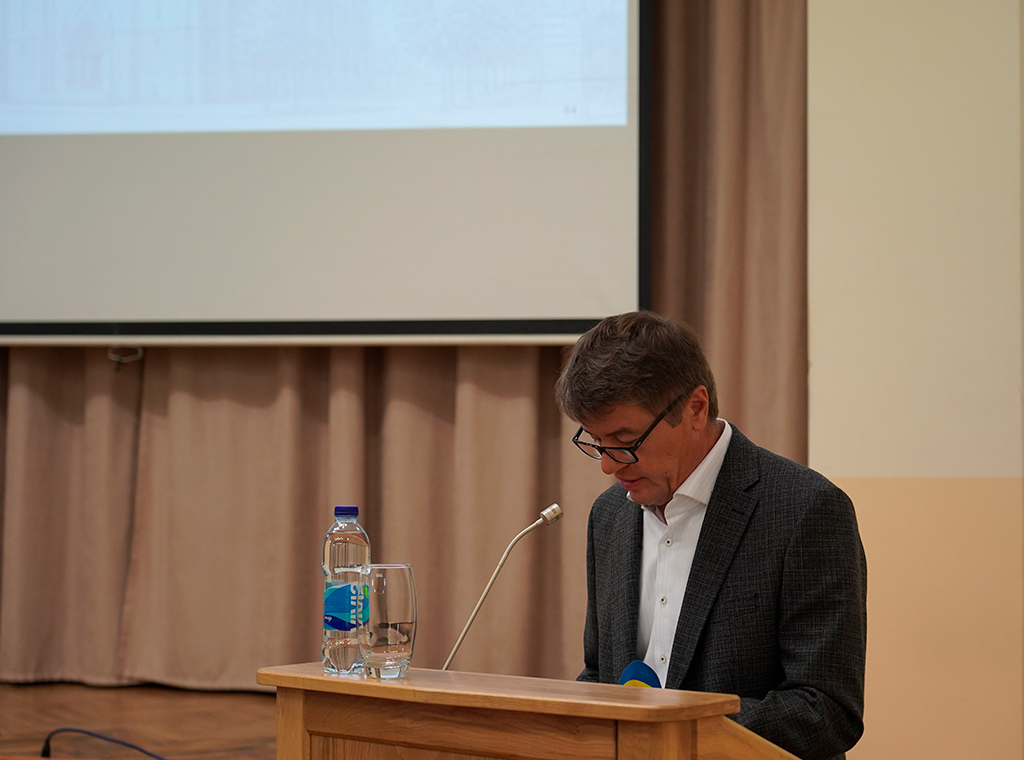
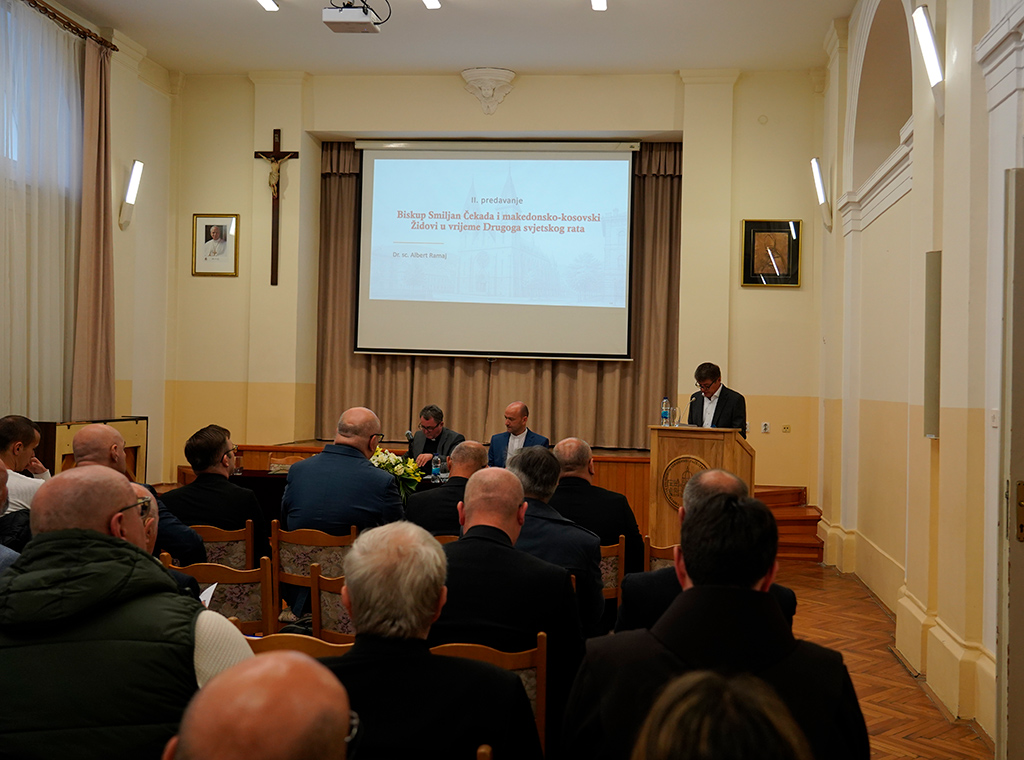
The second lecture, titled Bishop Smiljan Čekada and the Jews of Macedonia and Kosovo during the Second World War, was delivered by Dr. Albert Ramaj from the Albanian Institute in St. Gallen, Switzerland. "In his very first address in Skopje, Bishop Čekada spoke of the need to treat all people justly, regardless of their nationality or race—a stance reported by the Sarajevo press and the Jevrejski glasnik (Jewish Herald) on December 13th 1940. This record testifies to the importance of his messages, which held particular significance given the political and social circumstances of the time. A particularly harrowing period began in March 1943, when Bulgarian authorities in Skopje arrested thousands of Jews and prepared them for deportation. Čekada courageously opposed the persecutions, advocated for humane treatment of the captives, and assisted those in peril during these times of fear", stated Dr. Ramaj, among other remarks.
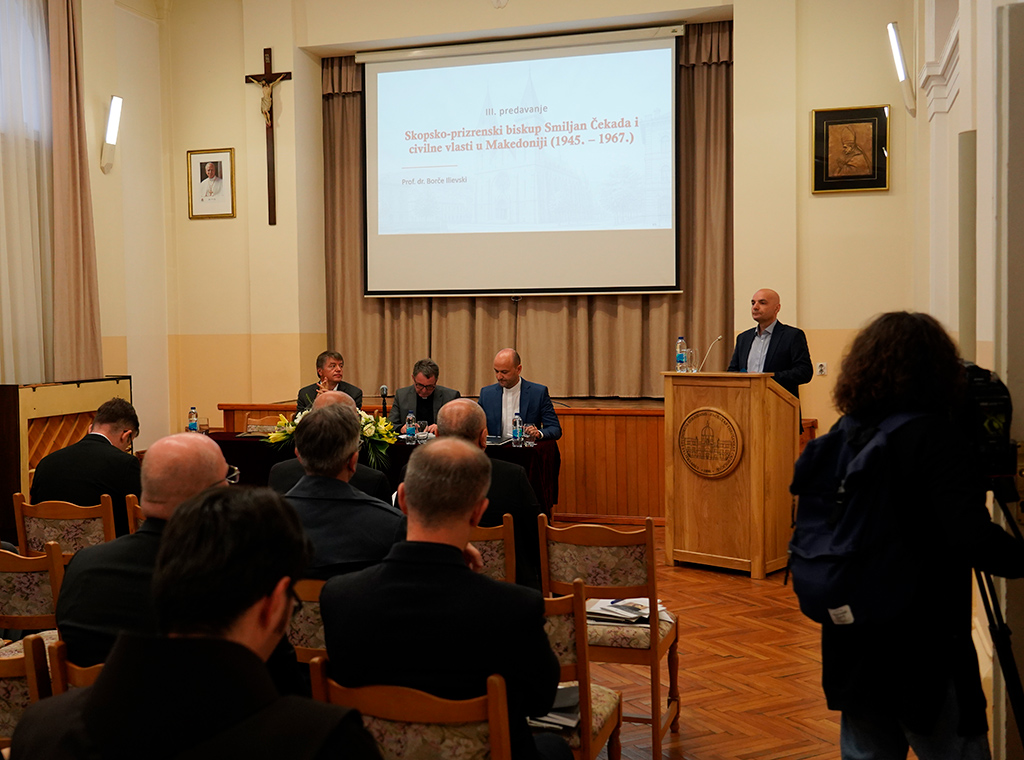
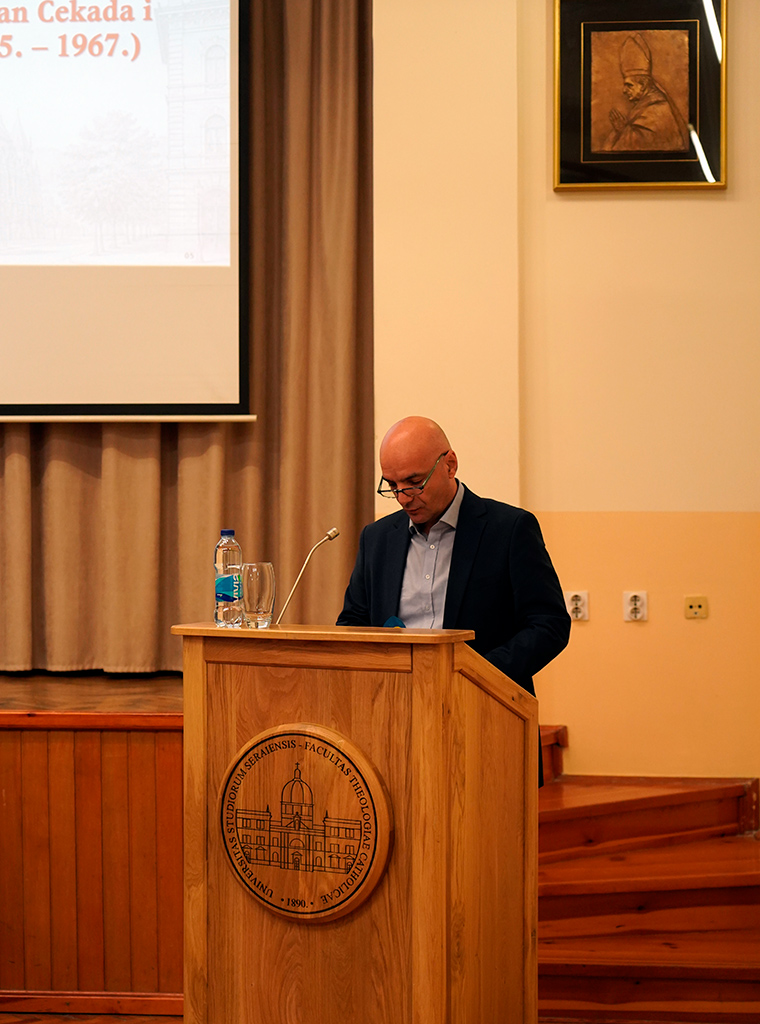
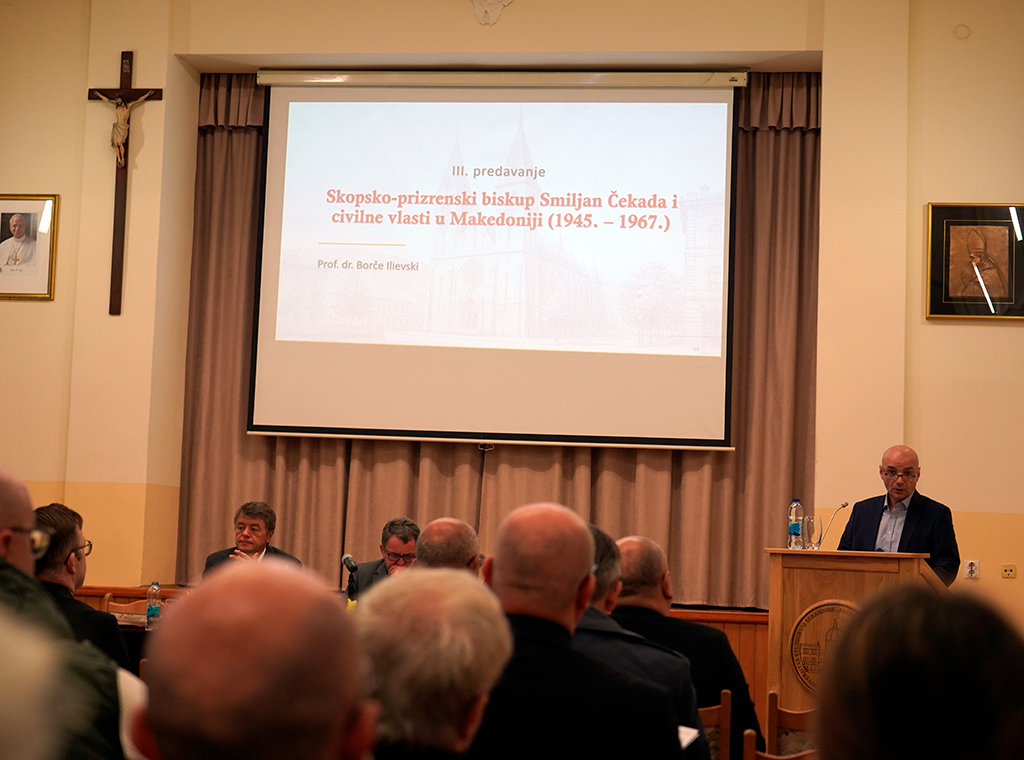
The third lecture was delivered by Prof. Borče Ilievski from the Faculty of Philosophy in Skopje, on the topic: "Bishop of Skopje-Prizren Smiljan Čekada and the Civil Authorities in Macedonia (1945–1967)." Among other points, he noted that, following Marxist interpretations of the role of religion in society, the authorities in Yugoslavia after 1945 sought to limit religious influence through comprehensive control over the activities of religious communities. "The Roman Catholic Church proved to be a rather formidable opponent to the official ideology and the social system. In all reports and analyses by state or party structures, at both the federal level and the republic level in Macedonia—the Bishop of Skopje-Prizren, Smiljan Čekada, was characterized as one of the 'greatest opponents of the state order'", stated Prof. Ilievski.
This was followed by a lecture titled "The Pastoral Work of Bishop Smiljan Čekada in the Diocese of Skopje-Prizren (1940–1967)," delivered by Dr. Lush Gjergji, a retired priest of the Diocese of Prizren-Pristina.
Historical Context
Following a break, the next lectures were presented: "The Historical Context of Bishop Čekada’s Work in Bosnia and Herzegovina (1945–1951; 1967–1976)" by Dr. Domagoj Novosel of the Croatian Institute of History in Zagreb; "Smiljan Franjo Čekada - Apostolic Administrator of the Diocese of Banja Luka" by Dr. Anto Orlovac, a retired priest of the Diocese of Banja Luka; and "Smiljan Franjo Čekada - Archbishop of Vrhbosna and the Archdiocese (1967–1976)" by the General Secretary of the Bishops' Conference of Bosnia and Herzegovina, Dr. sc. Bojan Ivešić.
A discussion followed the lecture, and the symposium program will continue on Wednesday, October 21st, at 3 p.m., with student presentations on Archbishop Čekada.