Memorial Centre Cemetery of peace in Bile
To the glory of God and the truth for the world
ned, 23. kolovoza 2026. 14:03
The purpose of this cemetery is not to hunt down perpetrators and bring them to justice, but to seek out victims and ensure they receive a dignified burial and remembrance. Here, the future truly reconciles with the past, and the dignity of the truth is preserved.
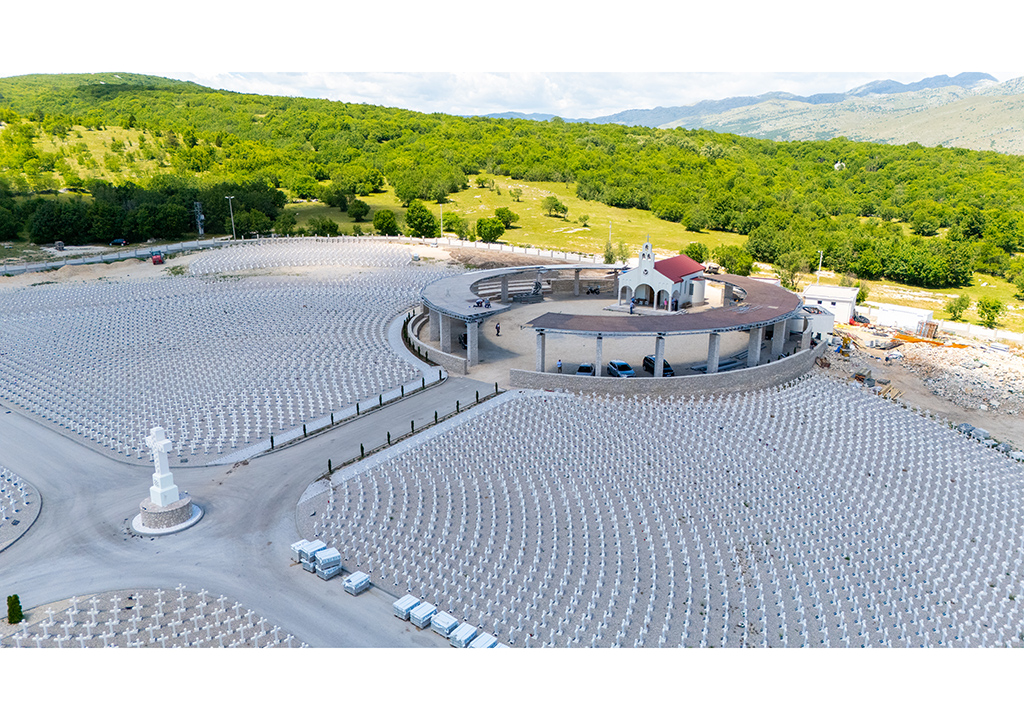
Only now—in the sweltering summer of the Year of Our Lord 2026, more than a decade after the idea of commemorating the wartime and post-war victims of communist tyranny was first conceived—is it clear why the initiators chose this specific location at the boundary between Mostar and Široki Brijeg. At first glance, this plateau seems remote, almost isolated—yet it is a true pilgrimage site. One does not simply stumble upon it in passing; rather, people come here to pray in silence, light a candle, and show those whose bones lie in unknown locations that they have not been forgotten. And they never will be—contrary to the beliefs of their ruthless executioners, who thought otherwise...
A site that cannot be overlooked
You can reach the site via a paved road—itself a result of the decision to build the Peace Cemetery on this plateau. One route runs from the direction of Mostar–Goranci–Bogodol; where at Babaljka—near the statue of St. Anthony—you turn left toward Bile. The second route is from Široki Brijeg toward Mostar; in the village of Dobrić, you turn right toward Grabova Draga, and that road quickly takes you up to Bile. Guided by our hosts, we chose this second option. However, it would be sacrilegious not to stop at Misište—a place where Holy Mass was secretly celebrated during the Ottoman bans, and where the faith of the local people was forged amidst the stone and brambles. Traditionally, Holy Mass is celebrated here on the first Sunday after St. Peter’s Day. According to both oral and written tradition, Franciscans were already celebrating Holy Mass here as early as 1488 for the faithful from Mostar, Brotnjo, and the wider surrounding area. It served as a spiritual sanctuary in those difficult times, and it remains one today—after more than half a millennium.
Our host, Friar Miljenko Mića Stojić, draws our attention to this, making it clear that this is, in fact, the first pilgrimage stop on the way to our final destination.
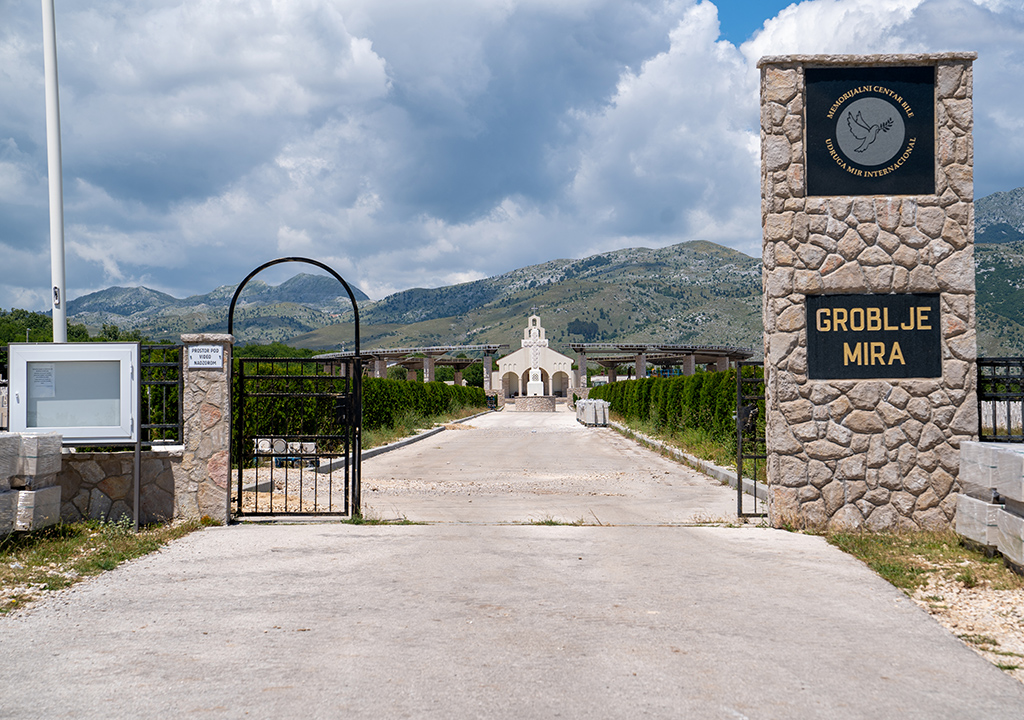
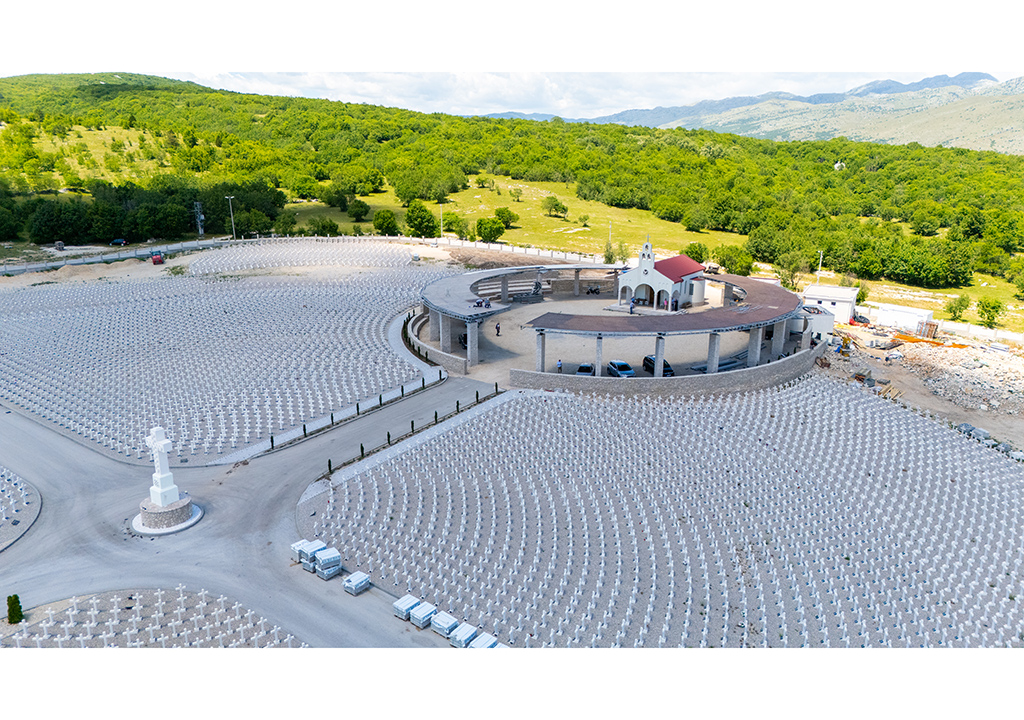
And as we approach the Cemetery of Peace, it is immediately apparent—in contrast to the scene five or six years ago when this Herzegovinian Franciscan (a man with a truly impressive life story) first introduced us to the project—that the site is now firmly nestled within this natural amphitheatre. Rising above it are Mount Prenj to the east, Velež to the south, and Čabulja to the north, with Čvrsnica visible behind the latter. In February of the fateful year 1945, this very spot was the scene of bloody battles and the suffering of Croats—a fact that also played a key role in the choice of location.
Where the Future Makes Peace with the Past
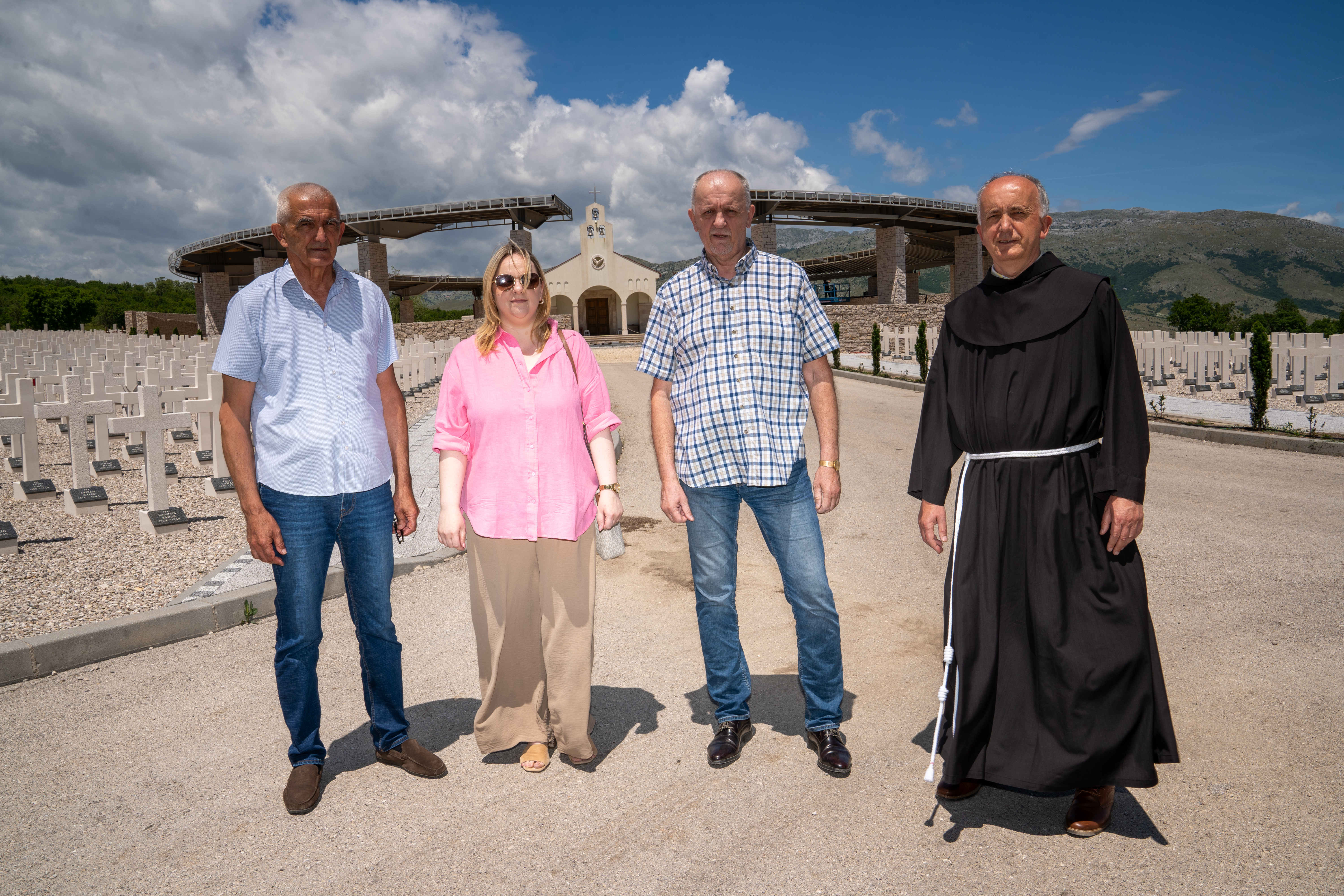
As we stepped into the cemetery itself with OFM Mićo—almost taken aback by the extent of the work accomplished—amidst that solemn whiteness, we recalled the words of writer Anita Martinac. Impressed by the site herself, she had first shared her impressions with us years ago and later wrote: "… Nestled in that natural amphitheatre lies the 'Cemetery of Peace' Memorial Centre… a place of pilgrimage and prayer, a monumental cultural landmark, a sacred site, a mausoleum, an oasis of peace and tranquillity where the future makes peace with the past and preserves the dignity of truth."
However, one must not forget that the road to what we see today at Bile was anything but easy. In essence, one could say—albeit colloquially—that the foundation for commemorating victims in this manner was laid twenty years ago, in 2006, when the European Parliament adopted a resolution titled The Need for International Condemnation of the Crimes of Totalitarian Communist Regimes on January 25th. OFM Mića agrees and explains:
“Point 13 of the resolution ‘calls upon all communist or post-communist parties in their countries, if they have not already done so, to reassess the history of communism and their own past, to clearly distance themselves from the crimes committed by totalitarian communist regimes, and to condemn them unequivocally.’ Yet, we chose not to broach the subject of how much traction this resolution has actually gained in the former Yugoslav territories inhabited by Croats. Otherwise, we would end up discussing the so-called Partisan Cemetery in Mostar—built on land seized from the Church—over which a sect of mass murderers from ’45—and later!—periodically sheds tears... But then again, unlike the regimes that ruled these lands, the Croatian people have always known where the truth lies.”
It Was God’s Will
It is also worth mentioning that in April 2009, the European Parliament took a significant step forward by adopting the Resolution on European Conscience and Totalitarianism, calling for the dignified and impartial commemoration of all victims of totalitarian and authoritarian regimes. In effect, this also served as a green light for OFM Mića and his future associates. "It was God’s will that, during those years, the Vice-Postulation for the Cause of Martyrdom of OFM Leo Petrović and 65 Fellow Friars began its work; its task was to systematically investigate the fate of the 66 Herzegovinian Franciscans—every single one of whom was killed by Yugoslav communists during World War II and the immediate post-war period", our host recalls, noting that the Vice-Postulation officially began operations on September 19th 2007, the day he was appointed Vice-Postulator. At that time, its headquarters were in Mostar (at Humac), whereas today they are located in Široki Brijeg.
"Among other things", the Vice-Postulator tells us, "we have so far located, identified, and buried the remains of seven more murdered Franciscans. We now know the final resting places of 34 of them."
One could almost say—and OFM Mića suggests as much—that once the "European conditions" had been established, it all began with a cup of coffee shared at the Hrvatski dom hercega Stjepana Kosače in Mostar with university professor Mile Lasić, a lawyer by profession. While searching for the remains of the slain Herzegovinian Franciscans, our interviewee and his associates also came across the remains of murdered civilians; they exhumed those found in mass graves alongside the Franciscans and attempted to identify them using DNA analysis. However, since so many others remained scattered in various locations, OFM Mića was keen to find a way to address the situation; he asked a friend from Kosača if there was any law that could serve as a basis for establishing a commission—or something similar—to begin exhuming the countless civilians. Mr. Lasić took a brief pause to study the legal options and find a solution. He found it (!) in a municipal decision regarding the marking and maintenance of burial sites—to which the phrase "from World War II and the immediate postwar period" was added. And so, it began...
"Birthday" – August 23rd 2013
"After some discussions and preparations, the Commission, led by Pero Kožul, was established on August 4th 2009. We set to work diligently, as we needed no explanation regarding the atrocities committed by the Communists in February 1945 within the Široki Brijeg municipality. To date, we have documented—among other things—161 mass graves (ranging from large to small) resulting from Partisan crimes during those terrible days. We placed a cross at each site and recorded all testimonies related to that specific mass grave", said OFM Mića.
The first results soon became apparent. The municipality of Široki Brijeg was joined—through the formation of commissions—by Ljubuški, Čitluk, Neum, Kupres, Grude, Posušje, Busovača, and Tomislavgrad. Their work is—to use a popular modern phrase—transparent, and can be tracked on the pobijeni.info portal, a project brought to life by OFM Mića himself. In short, it became a major undertaking that required the coordination of all these commissions. Consequently, on January 14th 2013, a meeting took place at the family home of Ilija Vrljić in Bogodul, attended by OFM Miljenko, Pero Kožul, Velimir Mabić, Vice Nižić, Niko Marušić, and, of course, the host. The topic was the construction of a cemetery for Croats and the German soldiers who had been killed. OFM Mića proposed the name "Cemetery of Peace" (*Groblje mira*), and thus the cemetery was christened. It was agreed that it would be built at Bile.
"The decisive step was the laying of the cornerstone on August 23rd 2013. There was no infrastructure whatsoever. The day before, a road had been cut through to the site where we intended to begin. Holy Mass was celebrated by military chaplain rev. Ivan Turudić; a cross was erected, along with a plaque bearing an inscription authored by Niko Marušić: 'To the glory of God and the truth for the world, Croats lay the cornerstone for the construction of the Cemetery of Peace at Bile on August 23rd in the Year of Our Lord 2013.' About a hundred people were present", recalls OFM Mića of that day—a day that could truly be called the birthday of the "Bile Project."
The Way Was Open
The following year, the turnout was slightly larger, yet people still wondered: "Why are we here today?" Even OFM Mića—a man whose optimism never wavered—felt as though the idea was stagnating. He was mistaken...
A site was soon secured, and once all the necessary permits for constructing the "Cemetery of Peace" were obtained, it became clear that the path from concept to realization was open. A legal entity was established to oversee the entire undertaking: on November 13th 2013, the "Mir International" Association was founded, with committee heads—along with Ilija Vrljić and Niko Marušić—joining as members. Efforts to coordinate the committees also continued, leading to the establishment of the Department for the Second World War and the Homeland War within the Croatian National Assembly on March 21st 2014; Ilija Vrljić was elected as its head. Thus, the legal framework for realizing the desired project was put in place.
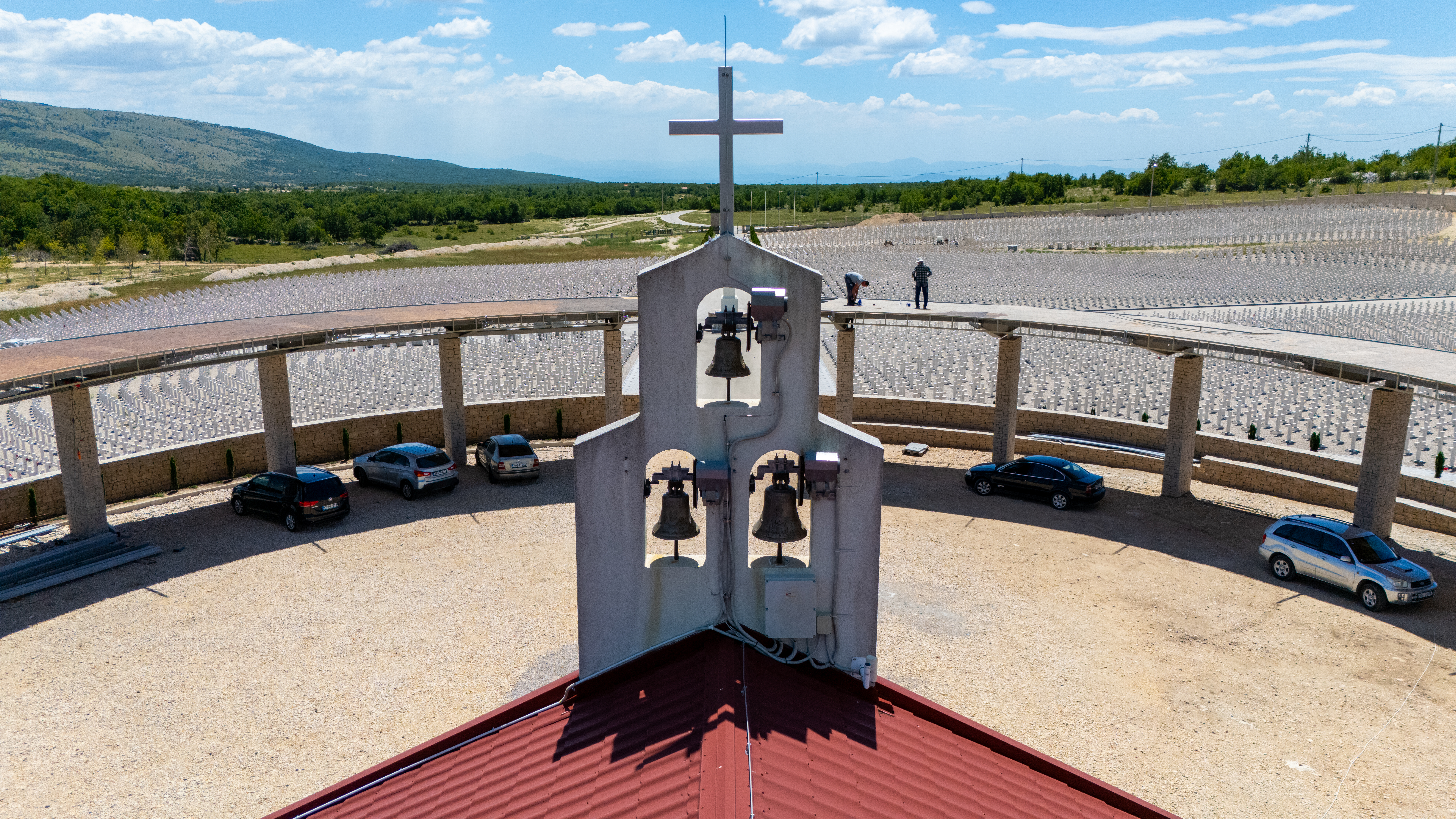
OFM Mića believes that the third year marked the turning point. The future cemetery site was demarcated and leveled, and a proper paved access road was built... And by that third year, around 5 000 believers gathered in prayer during a Holy Mass led by Rev Željko Majić, the then-Vicar General of the Mostar-Duvno and Trebinje-Mrkan dioceses. Then, on August 20th 2016, it was clear that significant strides were being made toward the goal: the chapel, the ossuary, and the well for the future auxiliary building had already been constructed; the main and side gates had been erected; and electricity had been installed. Bishop Ratko Perić led the Holy Mass before several thousand believers and blessed the chapel, dedicating it to St. Joseph.
Following the Example of St. Joseph
Marijana Tomašević, head of the Cemetery of Peace Memorial Centre office—who accompanied us into the aforementioned chapel—explains that Holy Mass is celebrated here every year on the feast day of the Cemetery of Peace’s patron saint. "I would say that this Holy Mass provides the spiritual foundation for this Memorial Centre. Symbolically speaking, this Holy Mass allows us to see the connection between work and prayer. Following the example of St. Joseph the Worker, we strive to work diligently at every moment and, with prayer in our hearts, to worthily preserve the memory of our victims. Each new cross is a pledge for the future; these Holy Masses are the crowning achievement of our work and a testament to our respect for the history of the Croatian people. Those who look deeper understood this message long ago", says Ms. Tomašević, noting that the project of erecting crosses is now proceeding at a steady pace. To date, more than 20 000 crosses have been installed—a clear indication that people understand what is happening at Bile and what these crosses represent. There is room for 50 000 crosses at Bile!
For instance, just under 700 new crosses were installed in early August of this year. Across Bosnia and Herzegovina, an increasing number of individuals, families, committees, and local communities are joining the initiative to ensure their victims receive a cross. People from the Posavina region and local communities in Tomislavgrad had already initiated the process of erecting crosses for their fallen. Recently, as our interviewee notes, the Crnopod local community in Ljubuški and the Zvirovići and Prćavci communities in Čapljina have set commendable examples; through joint efforts, their residents secured the installation of crosses for all their victims whose graves had previously gone unmarked.
Patient and Reliable Work
Similar initiatives are currently being prepared in other local communities within Široki Brijeg and Čitluk. Underlying all of this, of course, is the tireless work of the committees; their dedication to preserving historical truth and honouring the victims has, from the very beginning, been the foundation of this remarkable site.
Both individuals interviewed by Tjednik, note that people come here hoping to find information about their loved ones. Indeed, they possess specific data regarding the victims and their families, all of which is available for review. However, it is the families themselves who, through their personal testimonies, make a unique contribution that is then added to the archive dedicated to the victims. "The names of the victims are being collected through cooperation with municipalities, counties, and parishes across the entire country. Part of the list has already been submitted to our office, while we are still awaiting other lists; in some areas, commissions have already been established, whereas in others, they are still in the process of being formed. In any case, more municipalities are getting involved each year", says Ms. Tomašević, emphasizing that this is a highly demanding process requiring time—and that is precisely how they are approaching it: patiently, yet reliably and thoroughly. Additionally, OFM Mića notes that, from the very beginning, their work on the list of the killed has strictly adhered to the methodology used by the Croatian Conference of Bishops and the Bishops' Conference of Bosnia and Herzegovina for the Croatian martyrology; they also consulted the list compiled in Herzegovina in the late 1980’s, which parish priests had created at the explicit request of Bishop Pavao Žunić. Consequently, OFM Mića attests, Herzegovina currently possesses the best list of the killed.
A Symbolic Burial
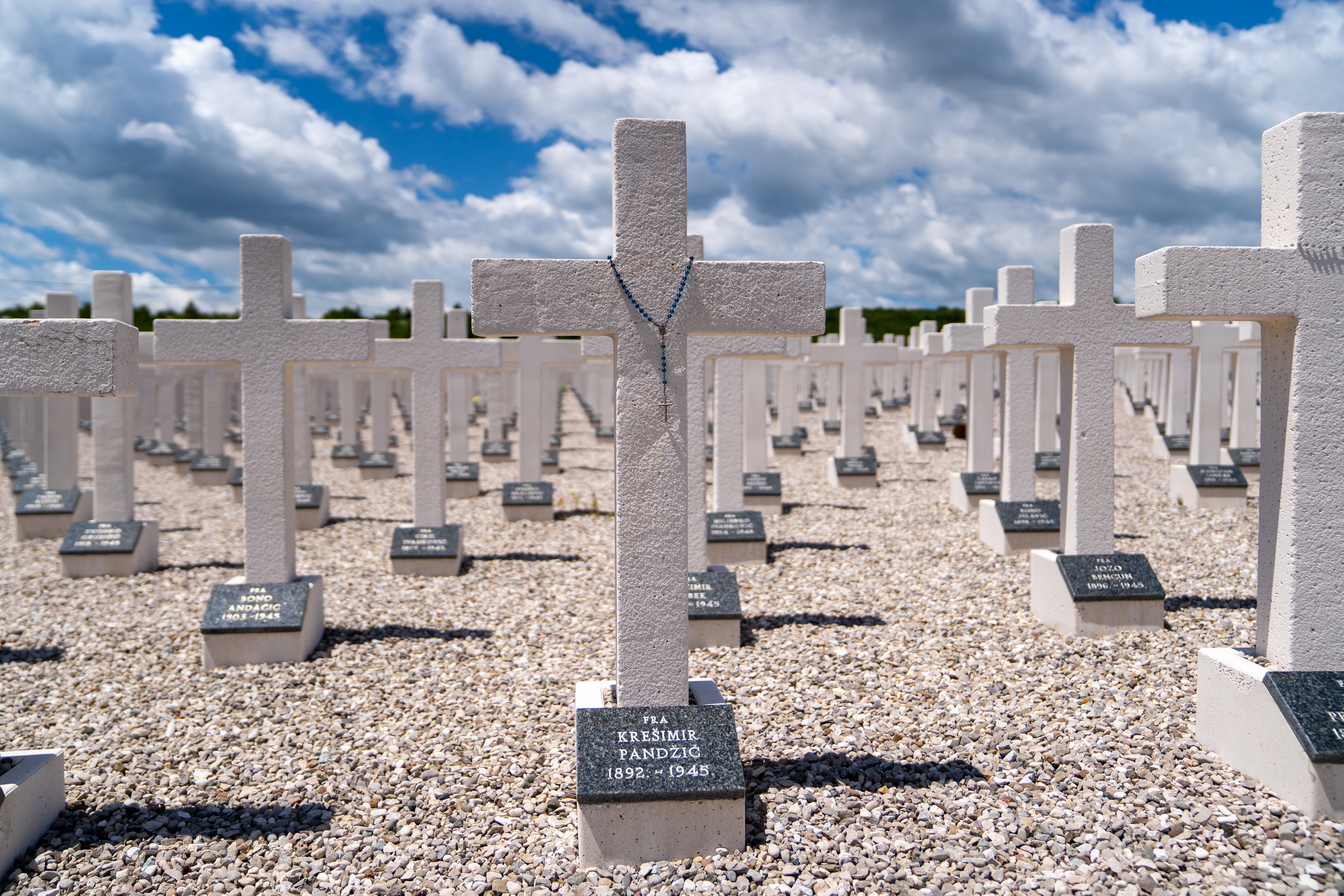
Our interviewee also points out that the purpose of this cemetery is not to hunt down perpetrators and bring them to justice, but rather to search for victims and ensure they receive a dignified burial and remembrance. The fundamental idea is for any family that does not know where a member perished to inscribe that person's full name and other key details on a cross, and then place that cross at the Cemetery of Peace. In this way, they symbolically bury their family member, creating a place where they can light a candle and offer prayers. The cost of a single cross is truly symbolic—100 euros.
That is precisely why the Cemetery of Peace exists at Bile—for the glory of God and the truth for the world!
Skočibušić’s Pietà
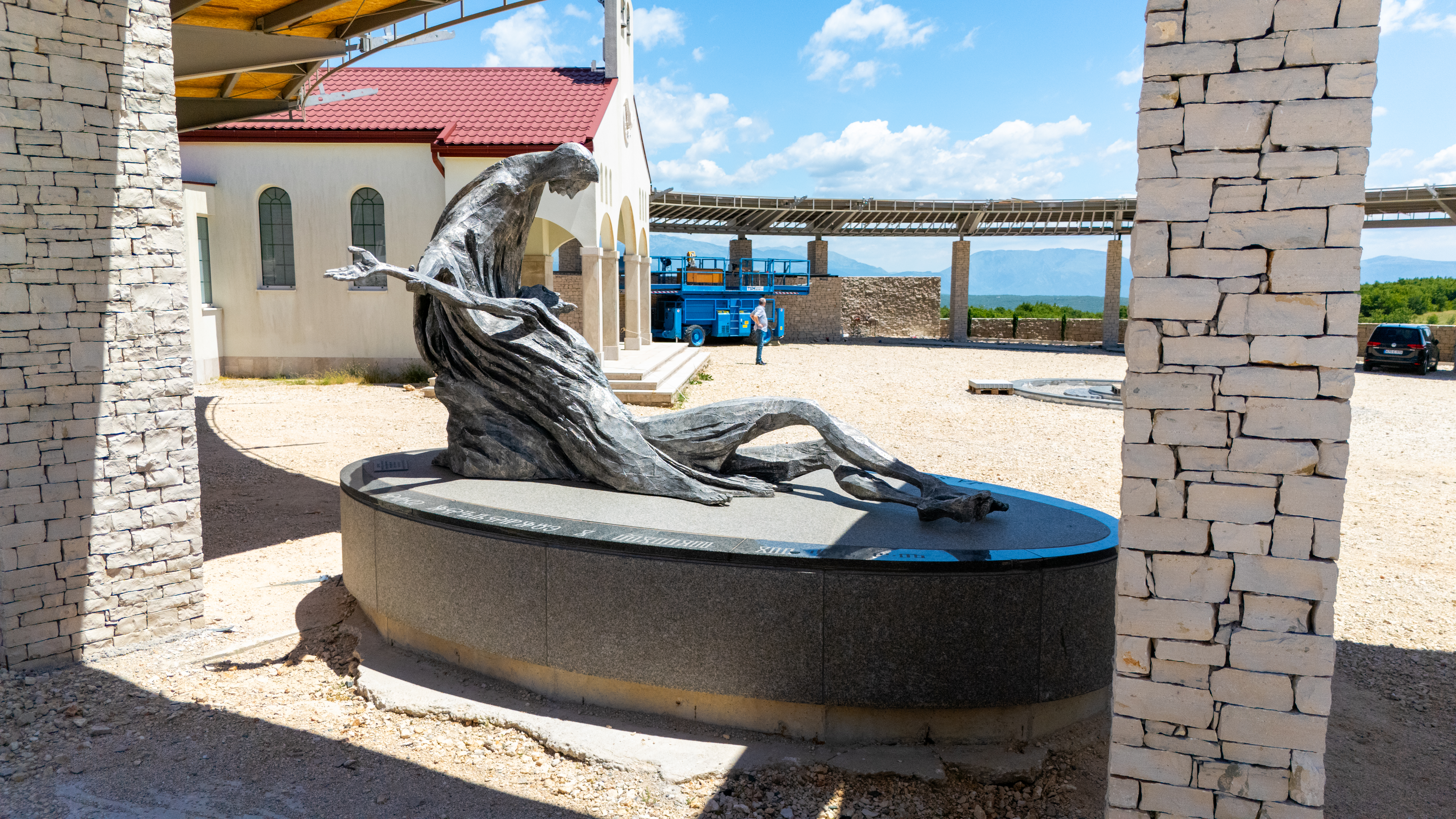
The Feast of St. Joseph three years ago was a particularly solemn occasion. Alongside the traditional Holy Mass, a Pietà sculpture—the work of academic sculptor Ilija Skočibušić from Tomislavgrad—was installed as part of the Cemetery of Peace project.
On that occasion, the artist highlighted his desire to unite the sacrifice and suffering of the Croatian people with the suffering and sacrifice of Christ. "Suffering united with Christ is transformed into the hope of resurrection, whereas without Christ, it becomes a tragedy", Skočibušić remarked.
It would be truly difficult to find a better location for Skočibušić’s work than Bile.
Fields at Bile
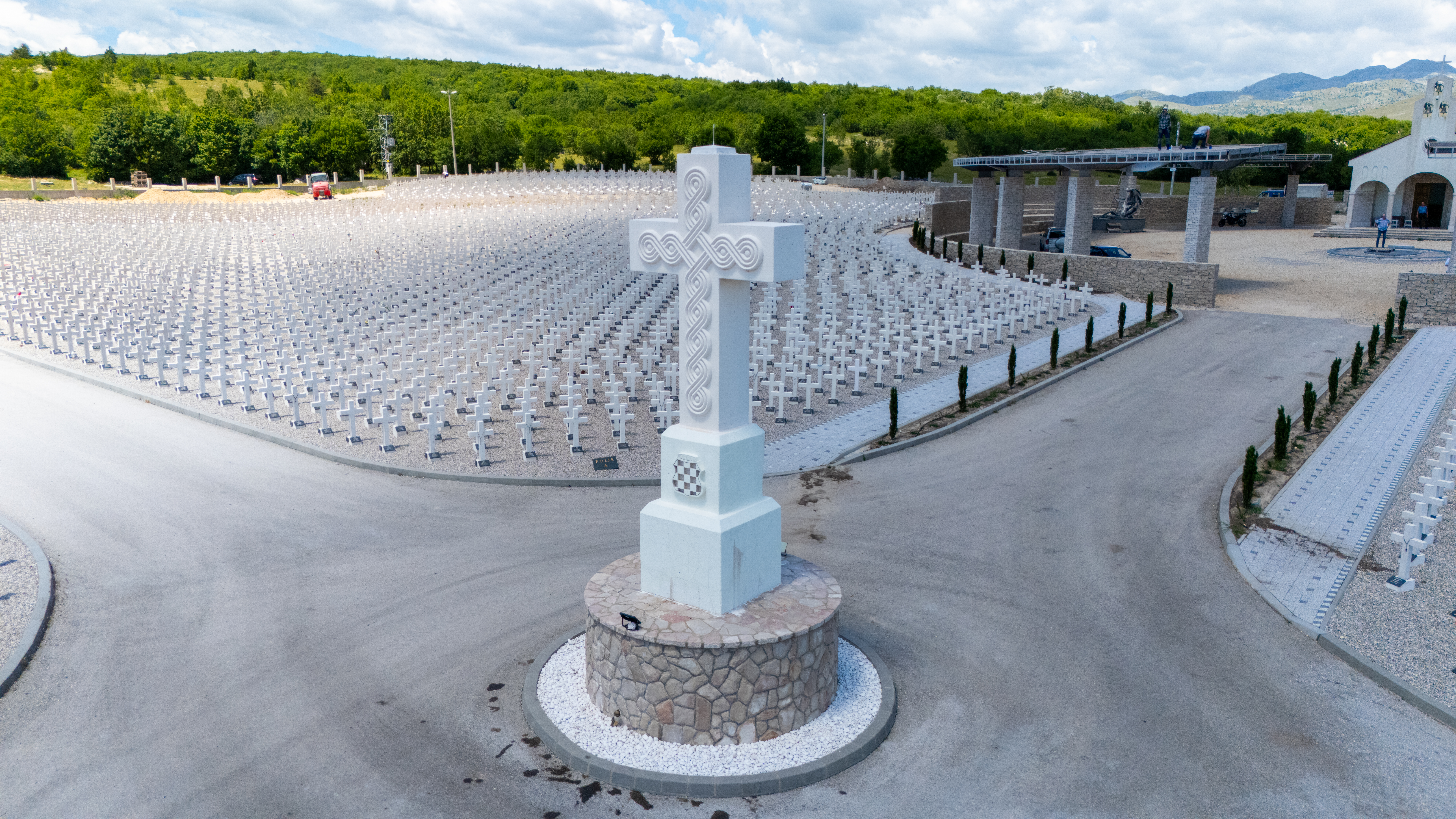
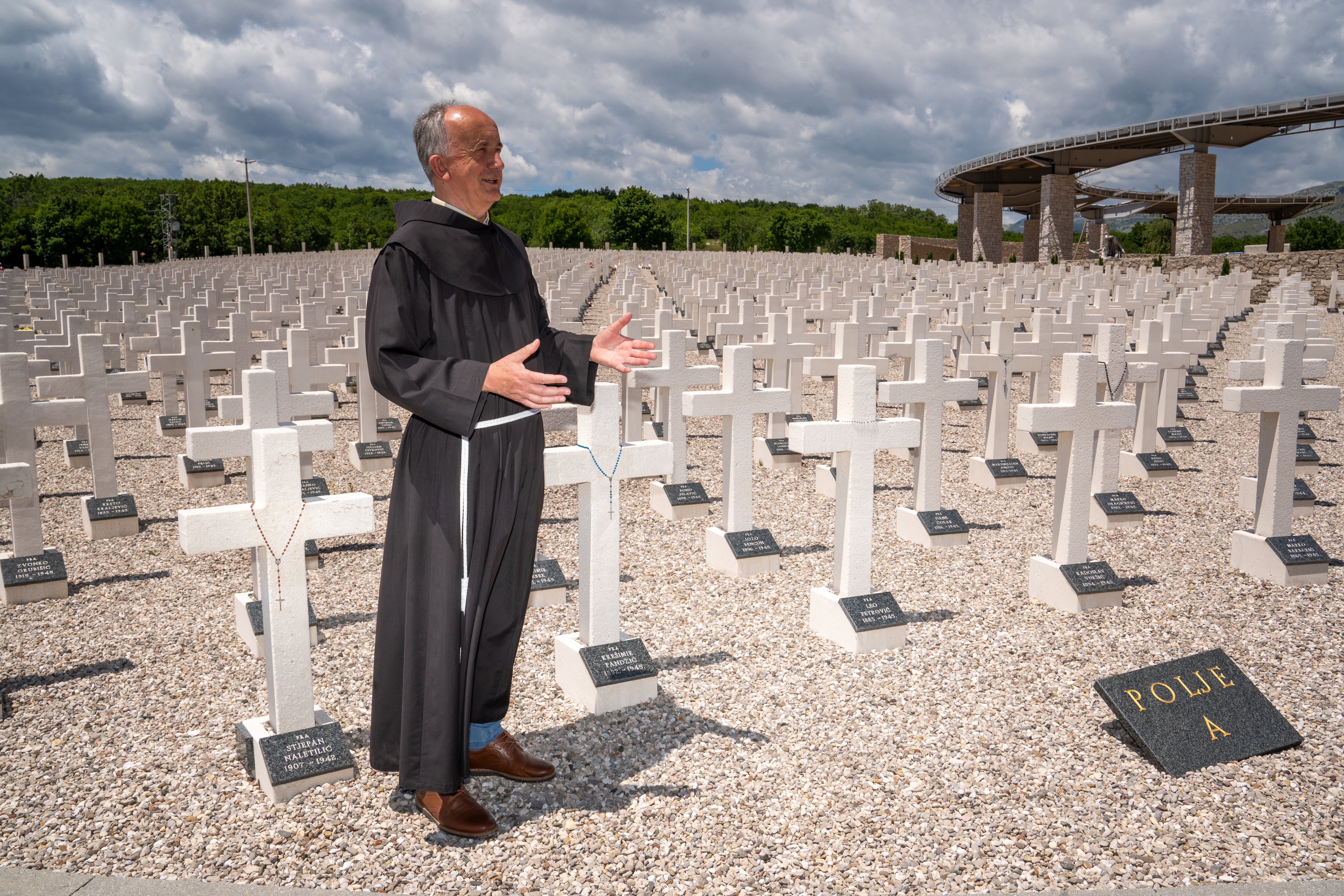
To make locating them easier, the crosses are organized into four sections: A, B, C, and D. Additionally, an electronic search tool is available on the Cemetery of Peace website. The crosses are arranged in a circle, all facing the central cross. That is how it is at Bile: a section for priests and clergy, a section for Posavina, a section for Široki Brijeg... and—as OFM Mića told us—it was particularly important to include crosses for Odžak, as it was a symbol of the suffering endured during World War II and the post-war period. The Martyrs of Drina also have their place there.