
The Archbishop of Vrhbosna led the Good Friday Ceremony
ned, 31. ožujka 2024. 13:36
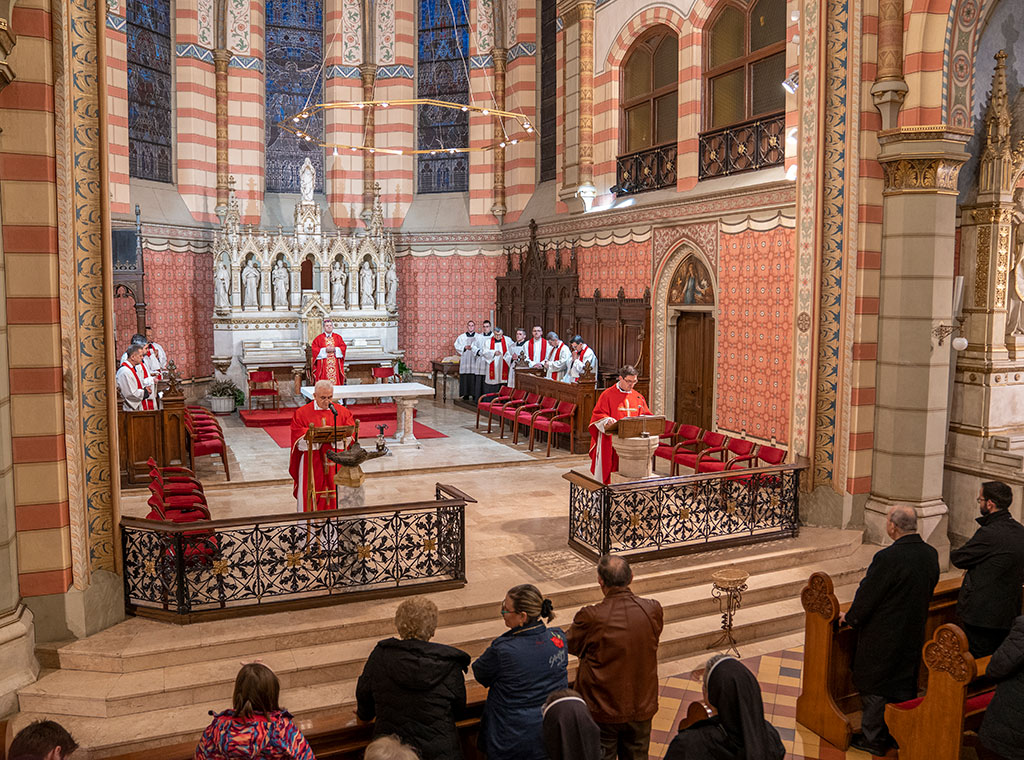
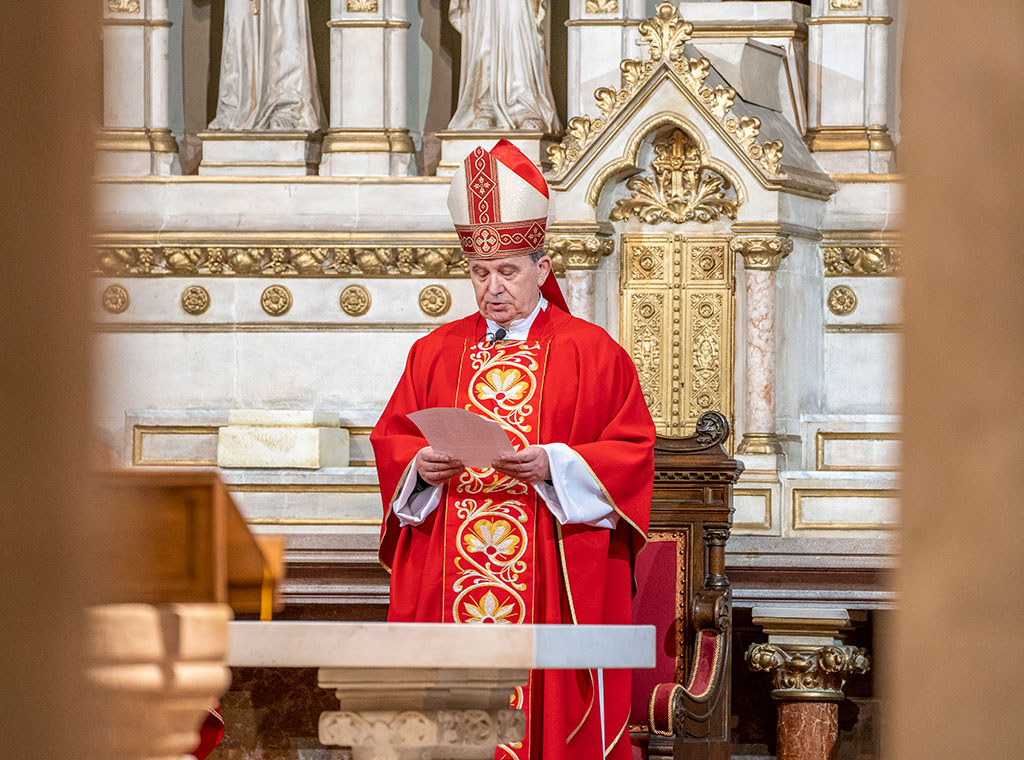
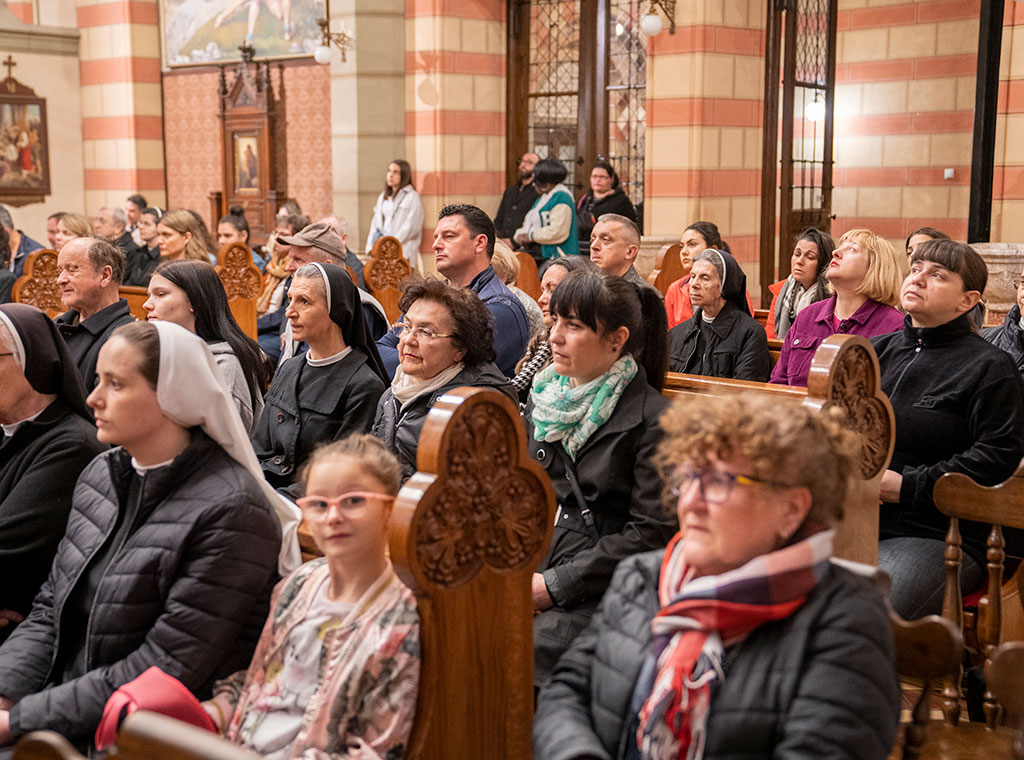
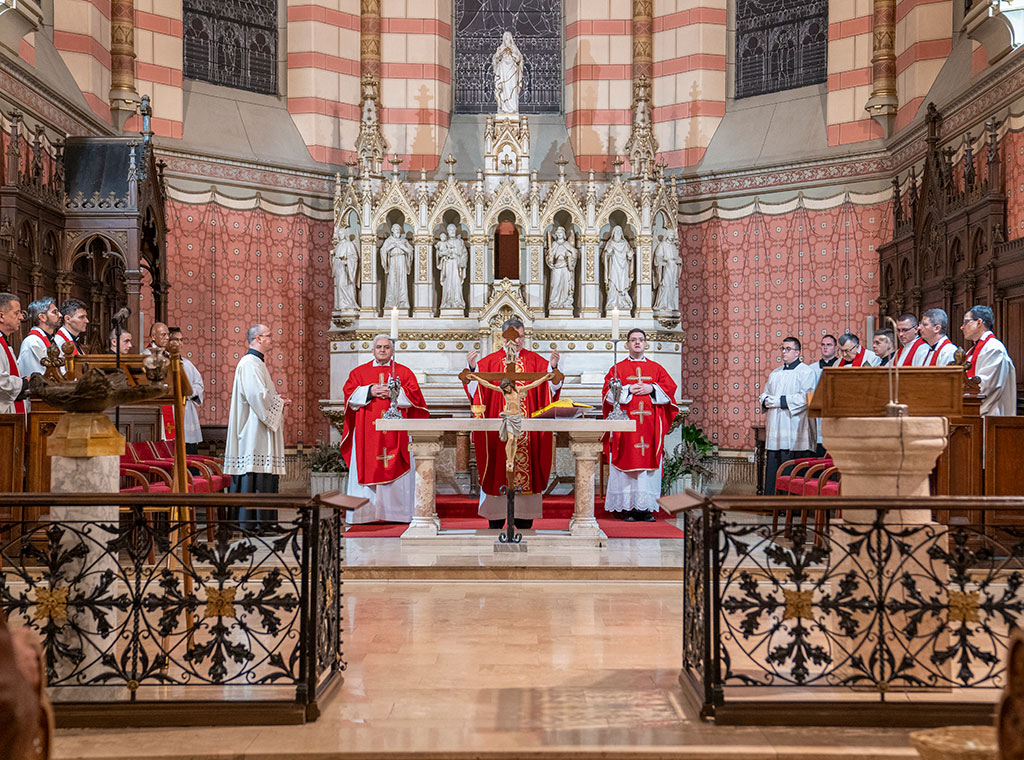
On Good Friday, March 29th, in Sarajevo's Cathedral of the Sacred Heart of Jesus, the Archbishop of Vrhbosna, Metropolitan Msgr. Tomo Vukšić led the Good Friday Ceremony.
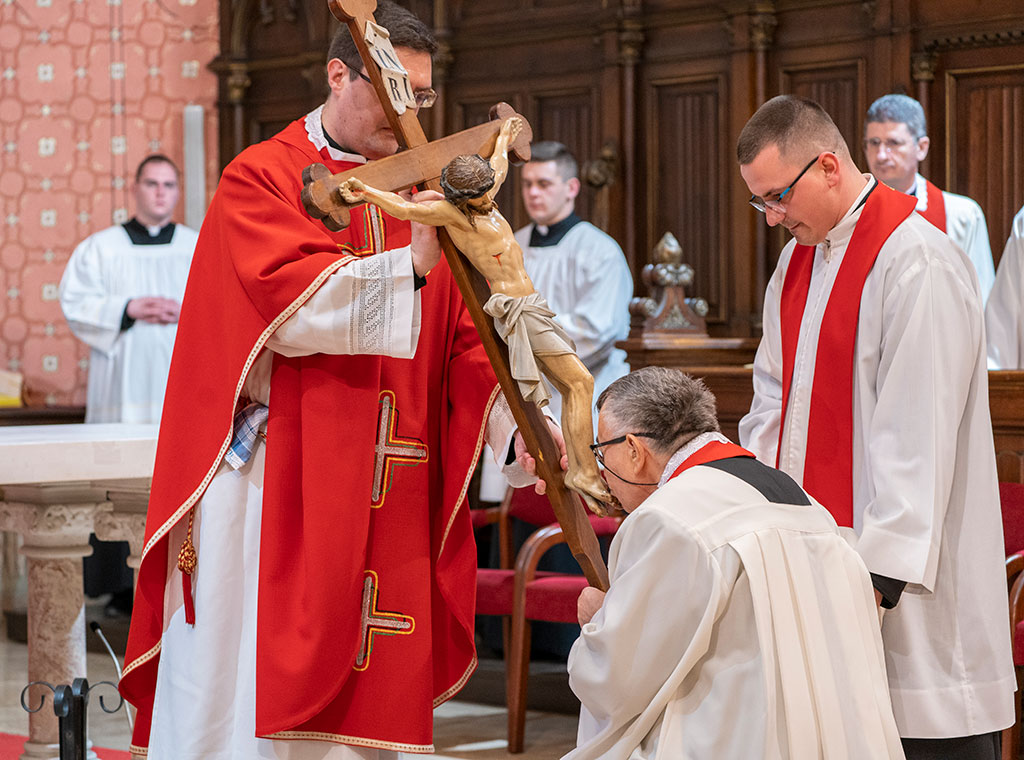
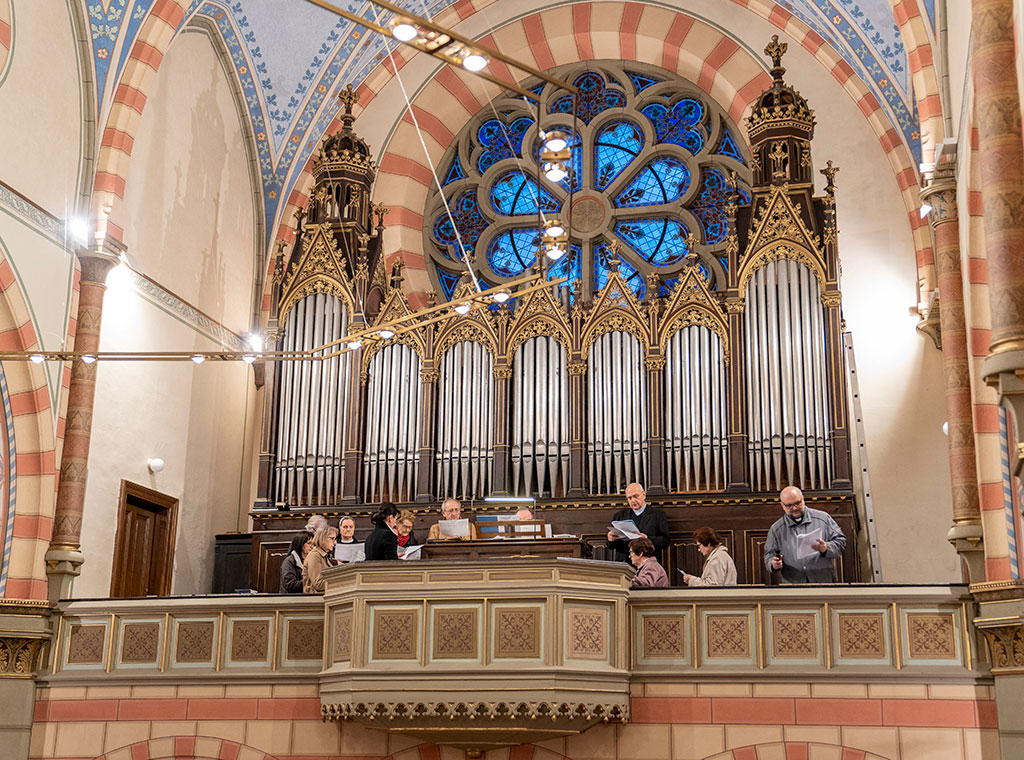
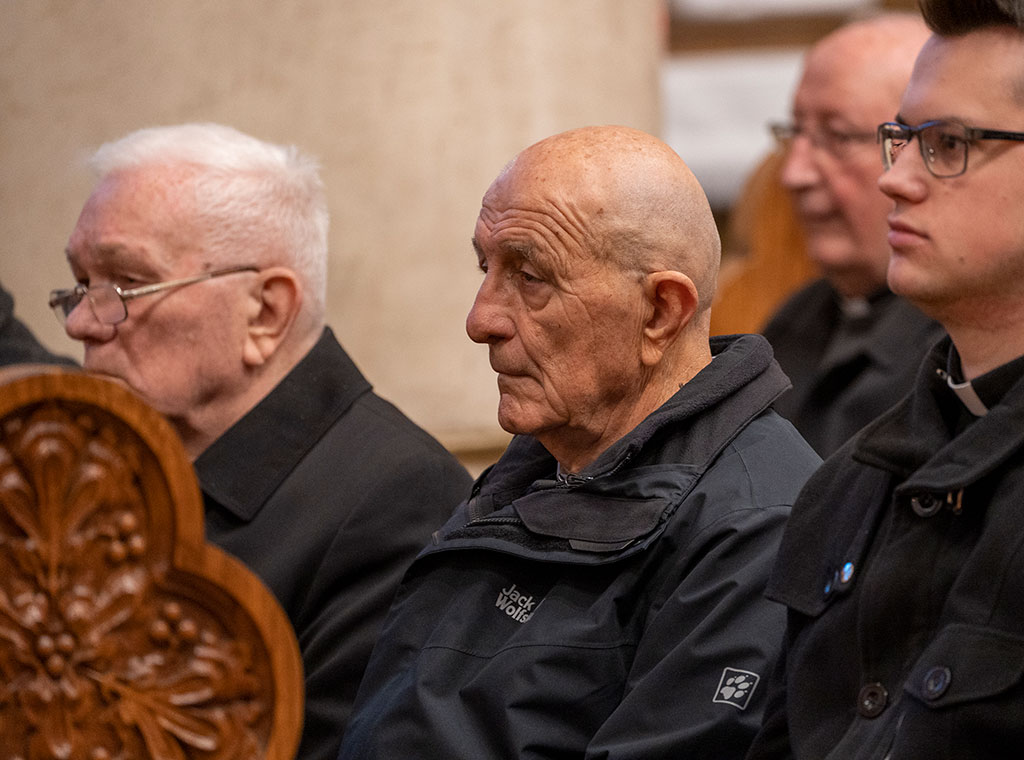
The rite of the only day of the year when the Church does not celebrate Holy Mass consists of: Service of the word centred on the Passion of the Lord according to John, then adoration of the Holy Cross and communion. The liturgical singing was animated by the Cathedral Mixed Choir Josip Stadler, who was led by the regens chori of the cathedral, Rev. Marko Stanušić, and the Good Friday ceremony was attended by 15 priests, among whom were: Archbishop of Vrhbosna in peace cardinal Vinko Puljić, apostolic nuncio in Bosnia and Herzegovina, Msgr. Francis Assisi Chullikatt, Vicar General of the Archdiocese of Vrhbosna, Msgr. Slađan Ćosić, professor at the KBF in Sarajevo and postulator of the cause for the beatification of the servant of God, Josip Stadler, msgr. Pavo Jurišić and the director of the Priest's Home of the Vrhbosna Archdiocese, Rev. Vlado Vrebac.
Passion of Jesus according to John
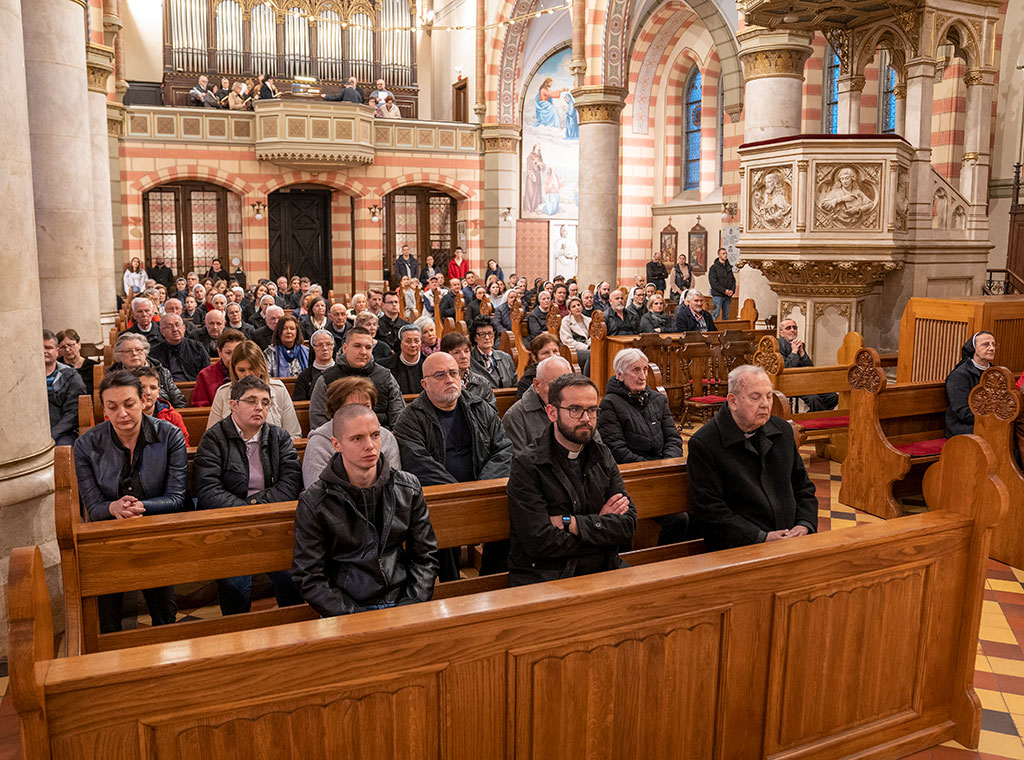
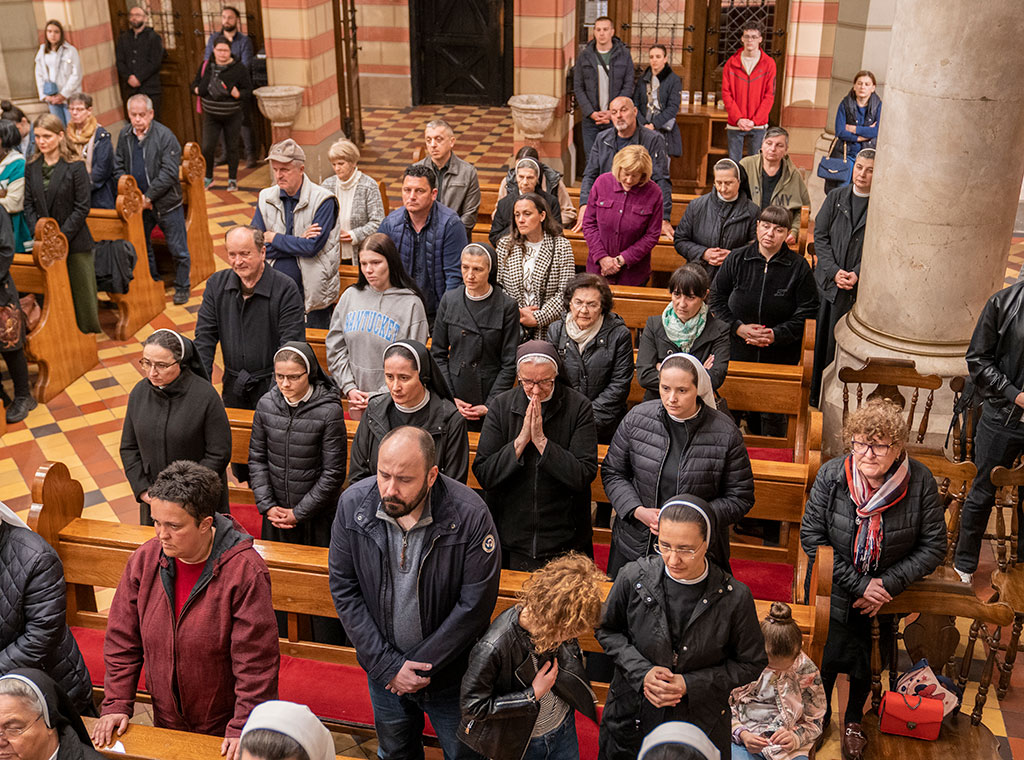
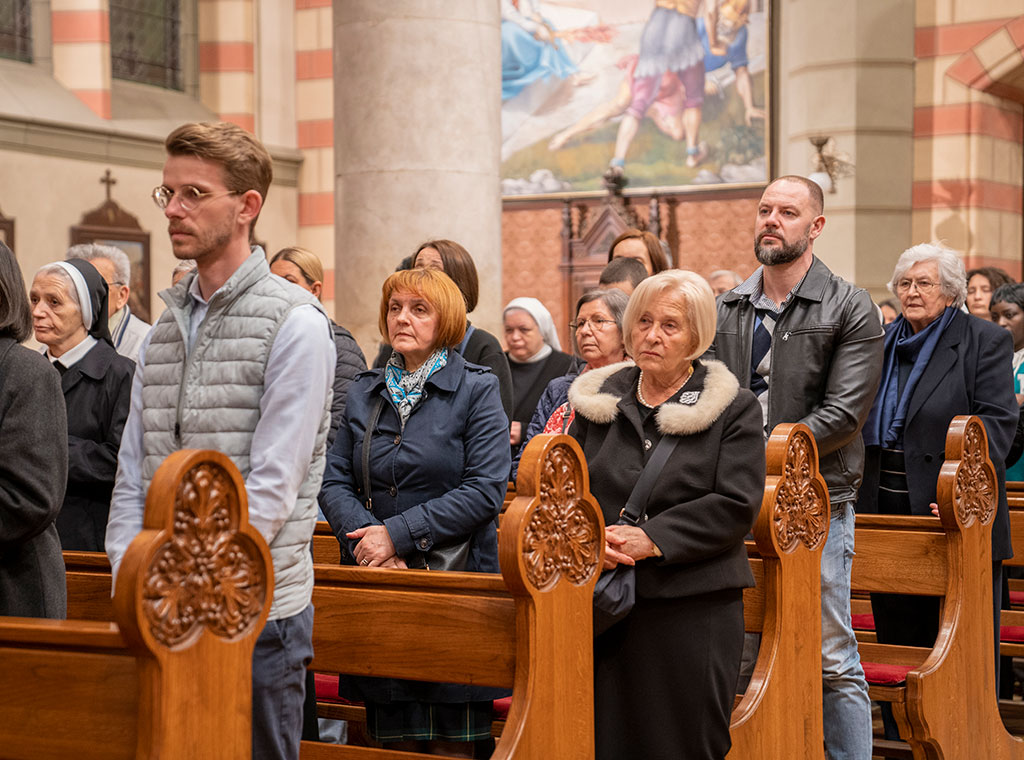
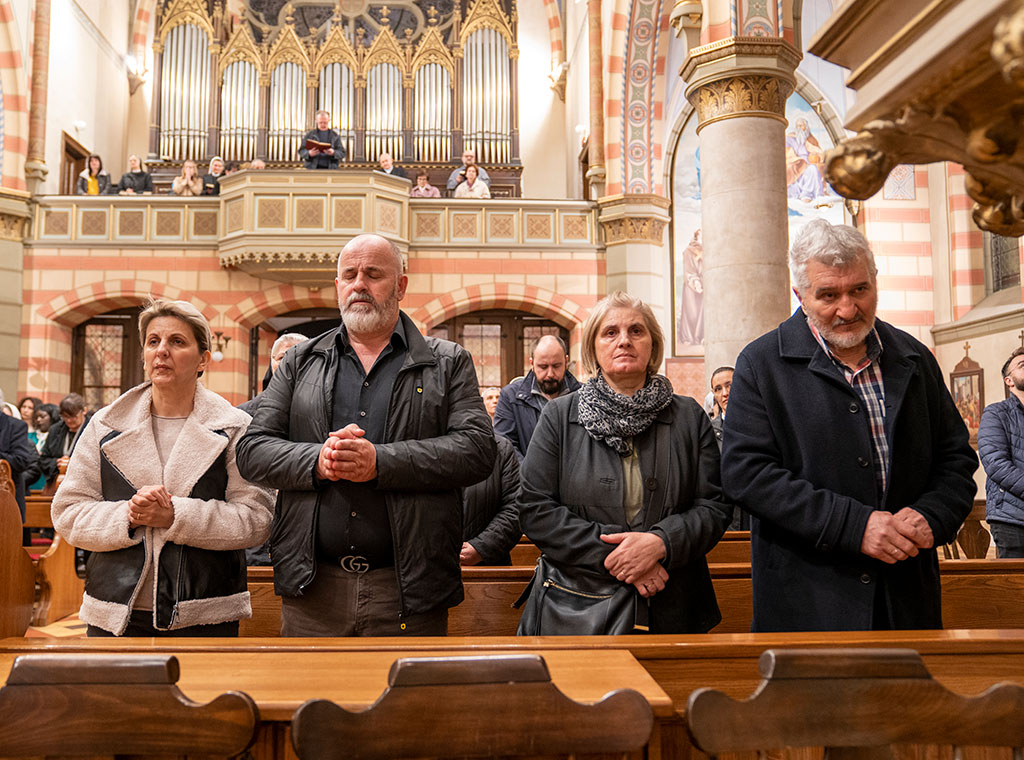
After the procession entered the presbytery, Msgr. Vukšić lay down on the ground (prostration) facing the altar, and all those present in the cathedral were kneeling.
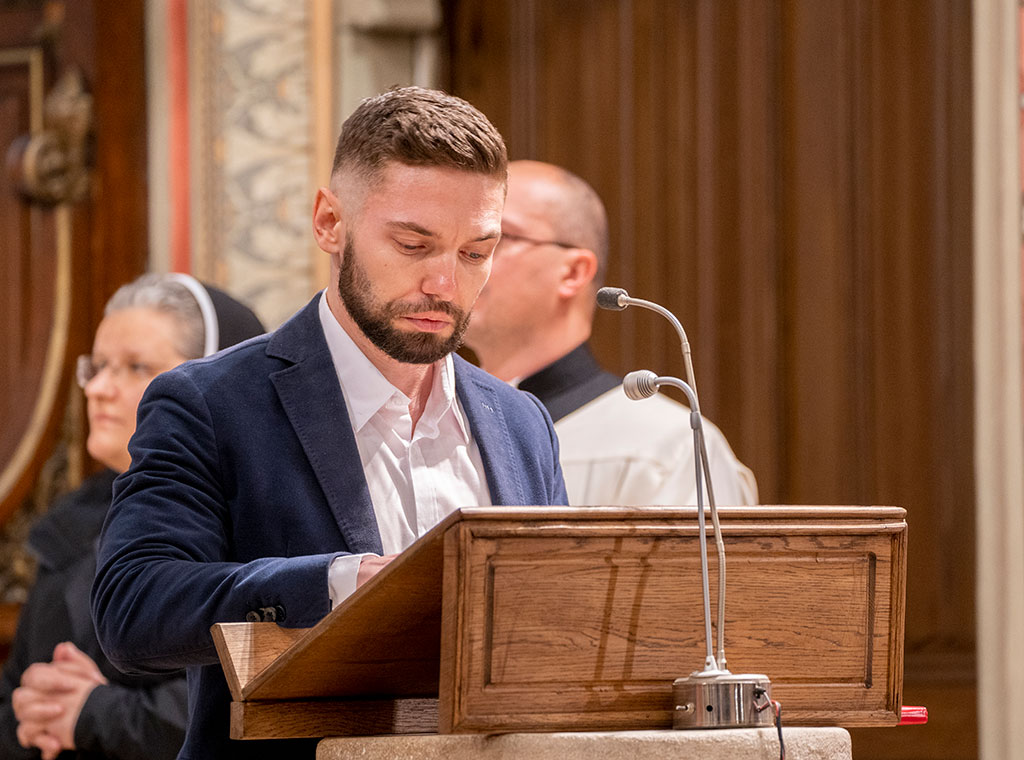
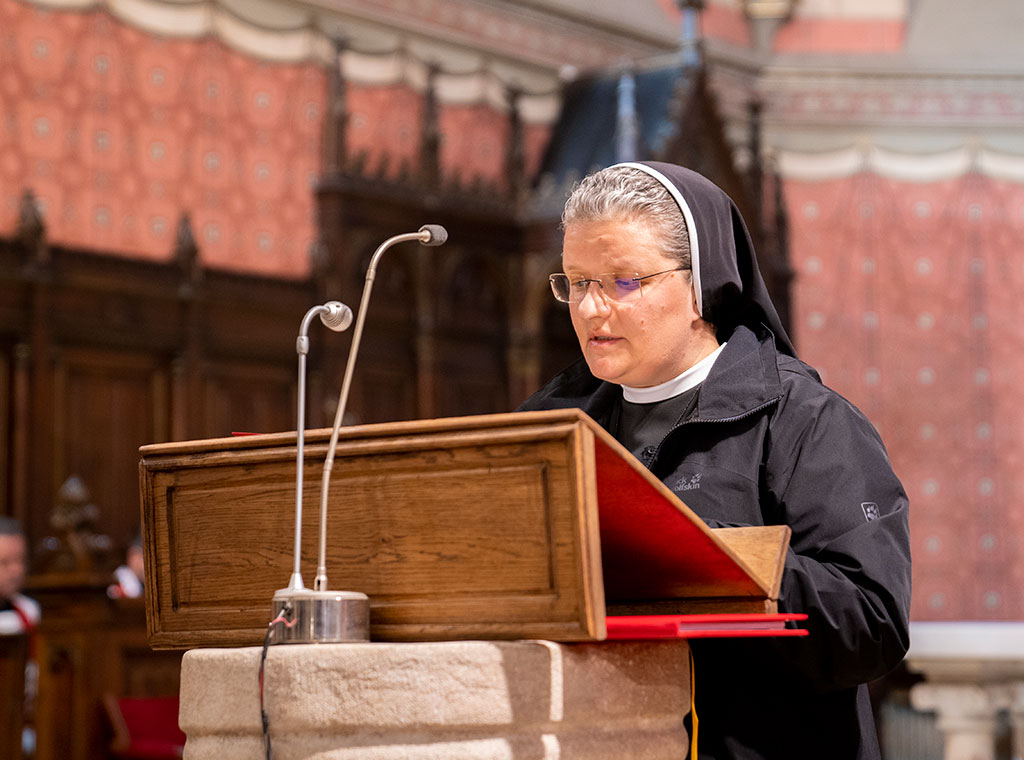
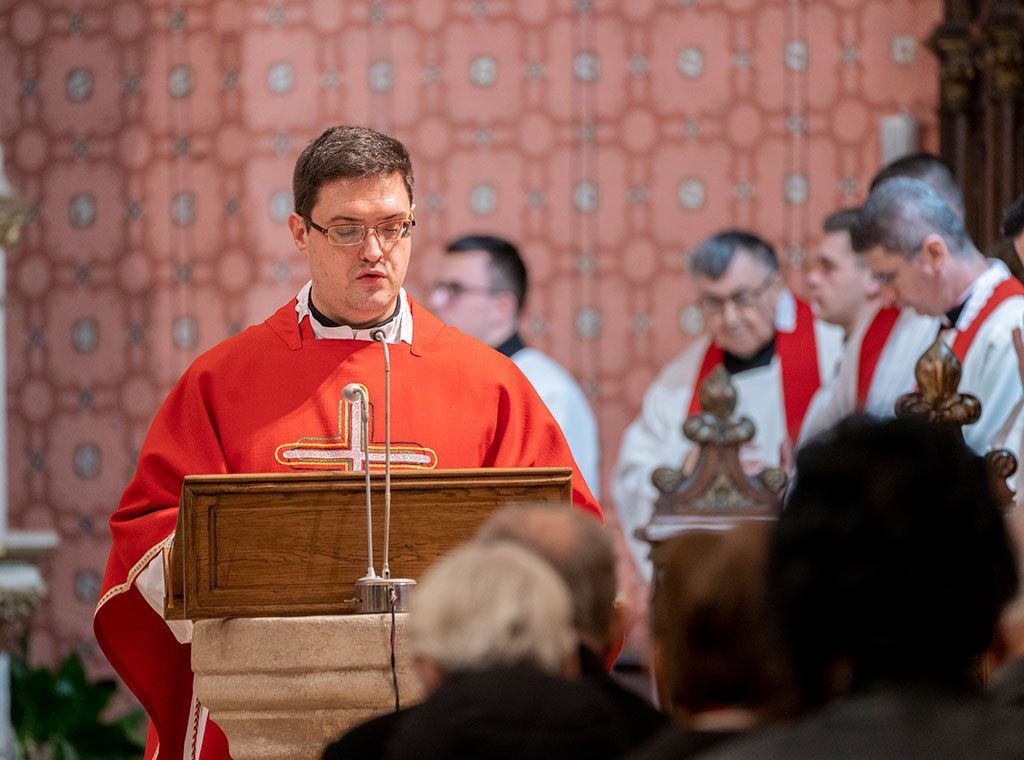
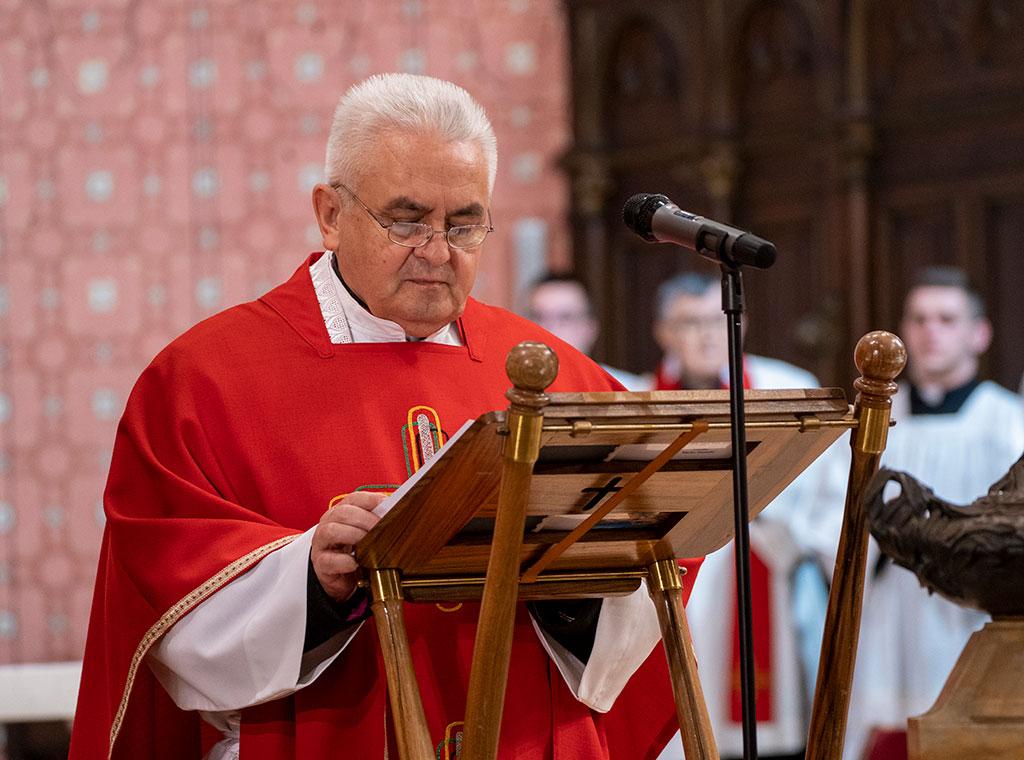
After that, two lay believers read a passage from the Book of the Prophet Isaiah and from the Epistle to the Hebrews. This was followed by the singing of the Passion of Jesus according to John, where the words of Jesus were pronounced from the altar by Msgr. Jurišić, the words of the evangelist were conveyed by Rev. Vrebac, and the other roles were distributed among the members of the Cathedral Mixed Choir who were in the choir.
In which character do we recognize ourselves?
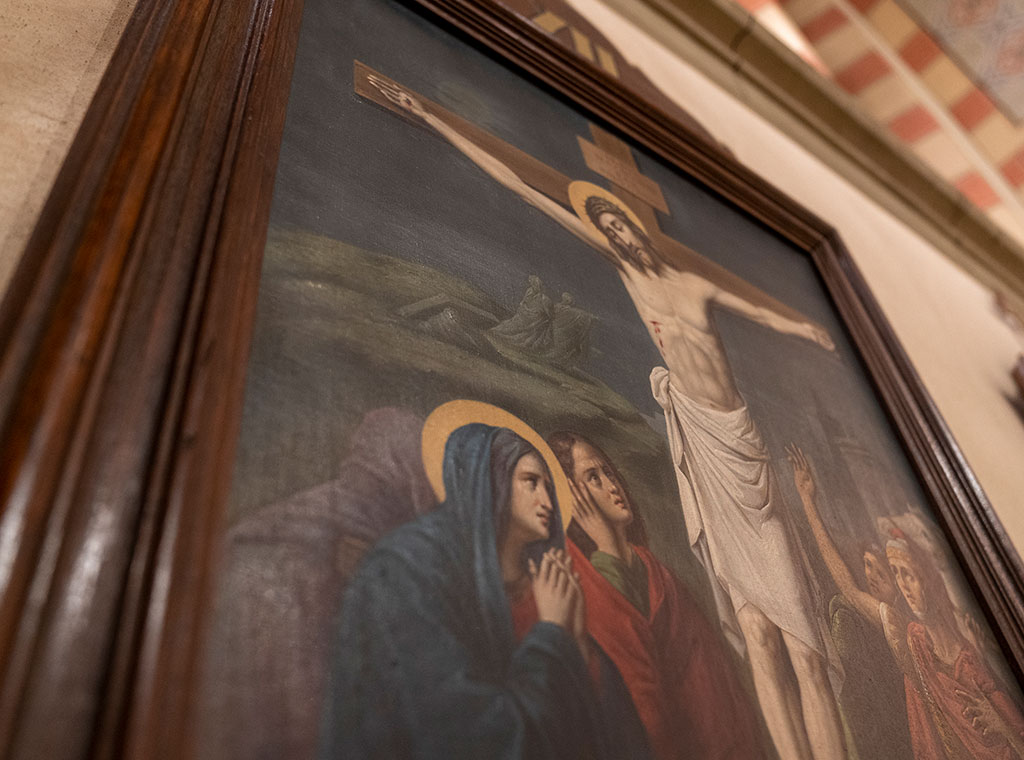
Archbishop Vukšić gave an appropriate short discussion, and pointed out at the beginning that "Good Friday is the day of remembrance of Jesus' terrible passion and death and of the rivers of human malice, and even more that it is the day from which Jesus, by his example of faithfulness, which he showed in the midst of malice whose victim he was and against all malice, calls everyone to be faithful to God's will and his laws". "In addition to the fact that the Way of the Cross can and should be viewed from the perspective of Jesus himself, the same event can and should also be considered through the people, who appear in that event in different ways and in different roles, through their way of carrying out their ministry and through their way reactions and behaviour", he added, noting that following Christ on his Way of the Cross, "we observe this in our relationship to him: representatives of state authorities, soldiers, robbers, judges, false witnesses, religious leaders, an unruly crowd, a convert, a crying mother, worried relatives, weeping women, a brave woman who holds out a handkerchief, a brave disciple who takes a risk and comes under the cross, the other frightened disciples who are not there, a man who helps carry the cross, a man who takes and buries the body of Jesus and many others".
"In addition to various people as protagonists, their services and behaviours, we also observe different psychological and spiritual profiles and different reactions of people: evil intentions, false statements, decisions in the way of sacrificing justice, giving in under pressure, injustice, physical abusers, passionate instigators, hatred, contempt, disparagement, but also sincere friendship in emotions, disagreement with evil, crying over injustice, real solidarity in helping, solidarity in burying, courage of one student, fear of many, pain of mother and friends and so on", he pointed out and underlined how "as if on the stage of some well-designed tragedy, during the announcement of the account of Jesus' passion, numerous and different characters and equally numerous and different psychological and spiritual profiles of people from which their behaviour arose" changed before our eyes.
"Jesus' personal journey of the cross ended a long time ago, but the process against Jesus opens and his journey of the cross continues every time violence and injustice are used against any person, when evil is wished upon him, when he is not helped. And it is again on act of solidarity with Jesus every time a person is helped who is in need or exposed to human malice and persecution. We Christians know this, teach it and repeat it to everyone, because Jesus said: 'Whatever you did for one of the smallest of these brothers of mine, you did for me! ' (Mt 25:40)", he said and while "we remember all the injustices that were inflicted on Jesus, and all the good and bad people who also appeared on his way of the cross", he asked a key question for every believer: "In which of the figures and behaviour do I recognize myself? What is my way? Whose behaviour does my behaviour towards people resemble? That is, what am I like to Jesus in his brothers and sisters?"
At the end of the speech, there was a short silence.
Ten summons
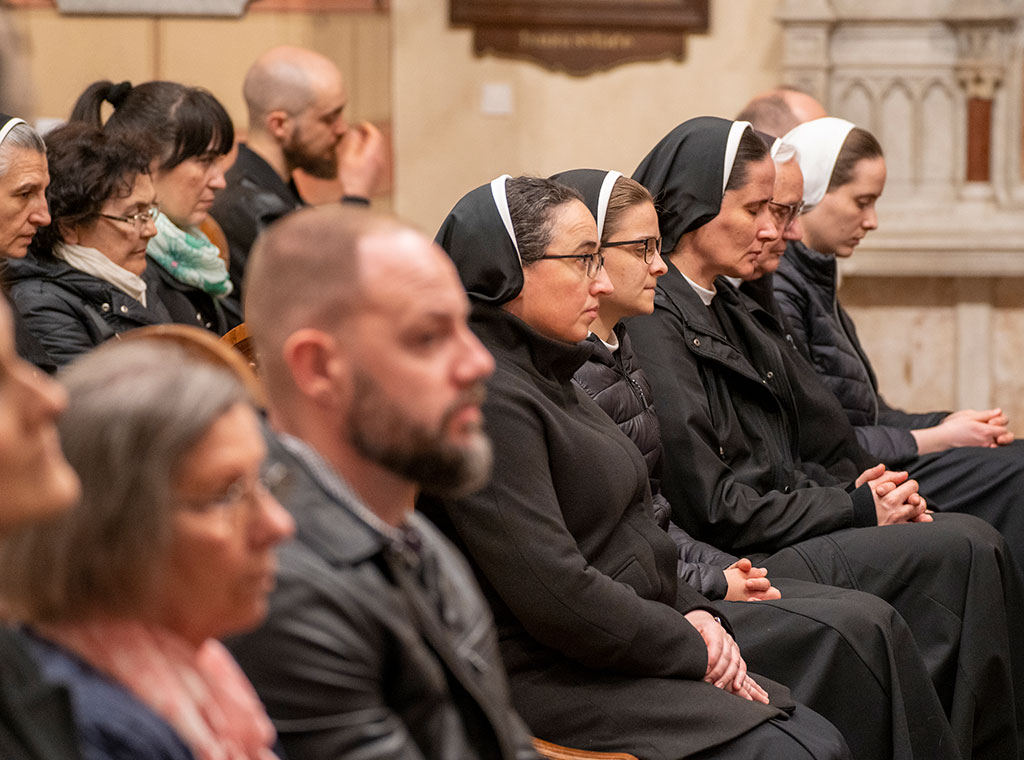
After the exhortation, there was a general prayer consisting of ten invocations, with an appropriate kneeling, which prayed for: the Holy Catholic Church, the Holy Father, all believers, catechumens, Christians who are not in full ecclesiastical unity with the Catholic Church, Jews, believers of non-Christian religions, those who do not believe in God, the rulers of states and finally for all people in need.
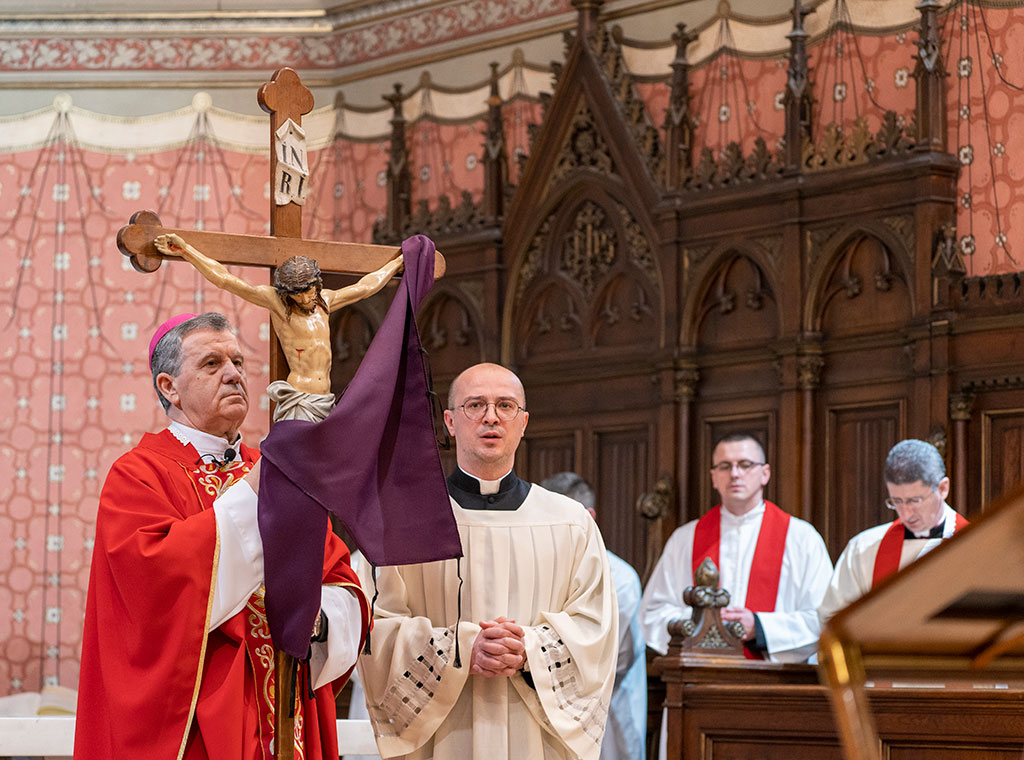
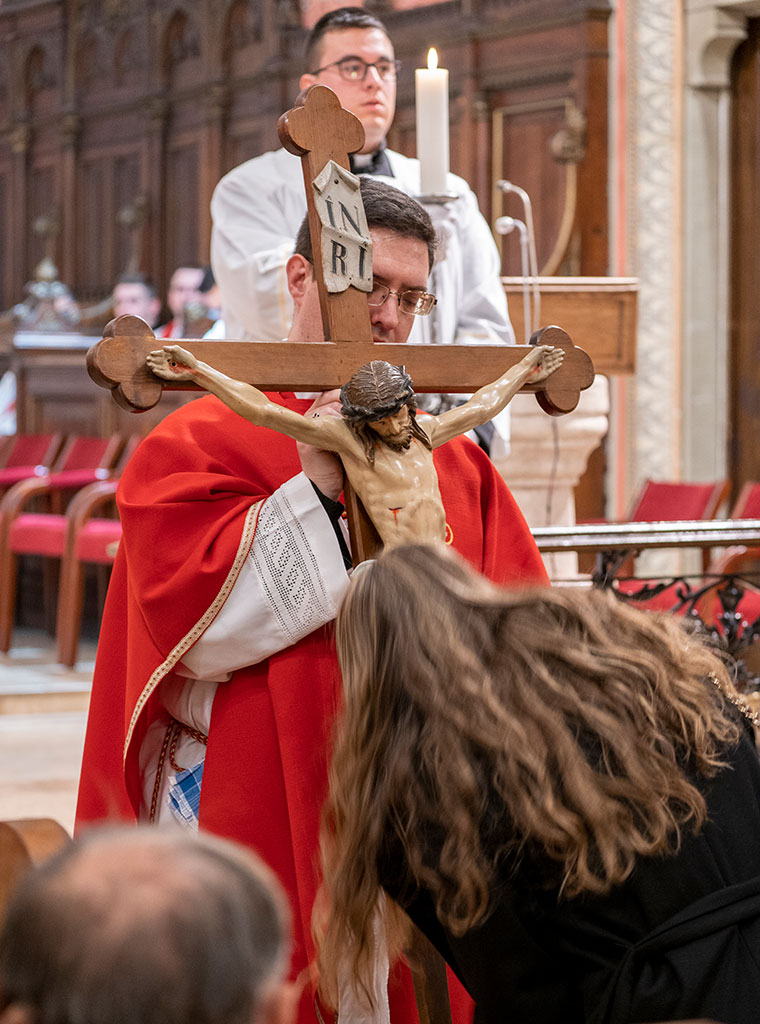
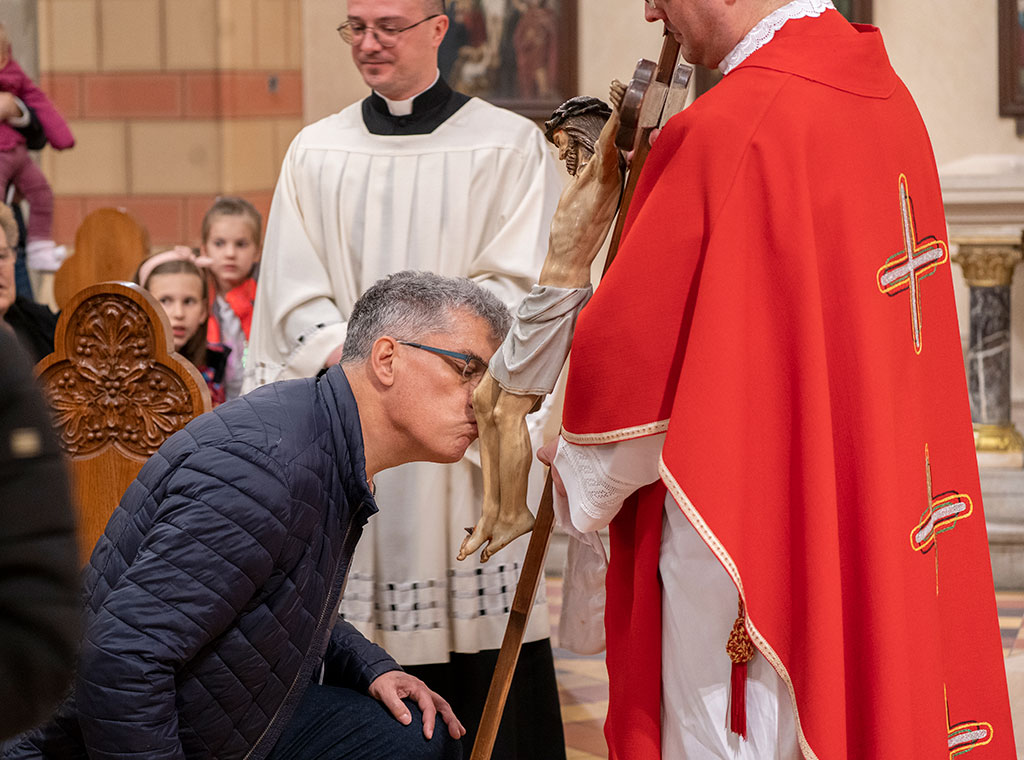
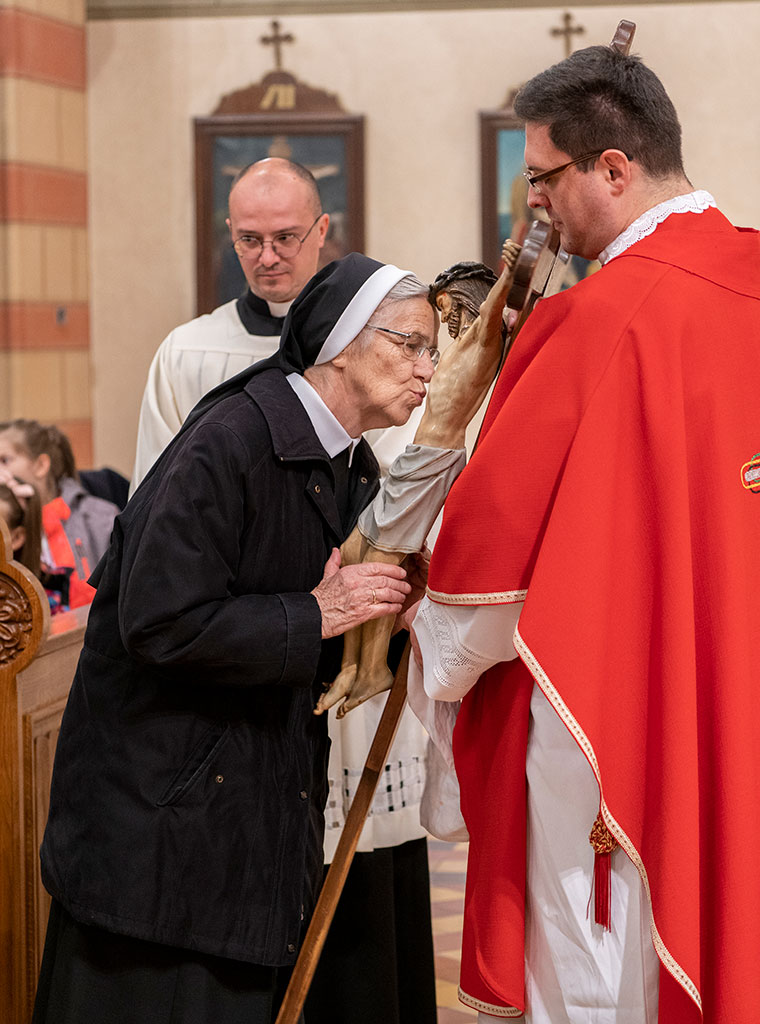
This was followed by the bringing of the covered cross of Jesus from the bottom of the cathedral to the altar and its unveiling and presentation to the gathered community with the words: "Here is the wood of the Cross, on which the salvation of the world hung". Then came the kissing of the Cross.
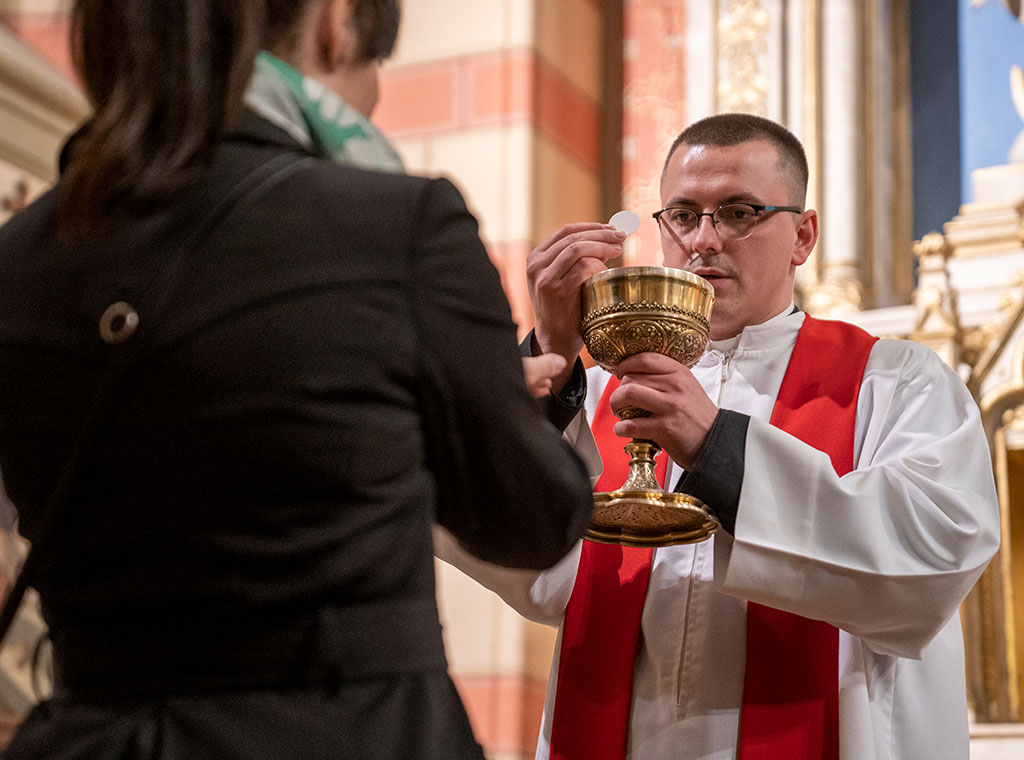
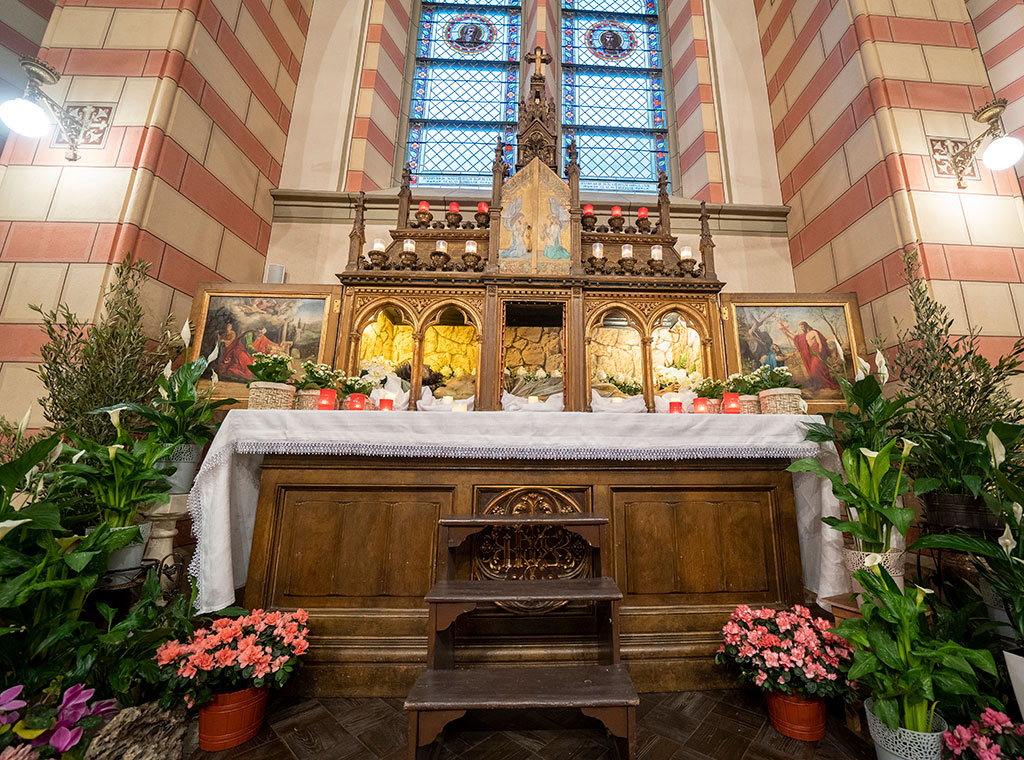
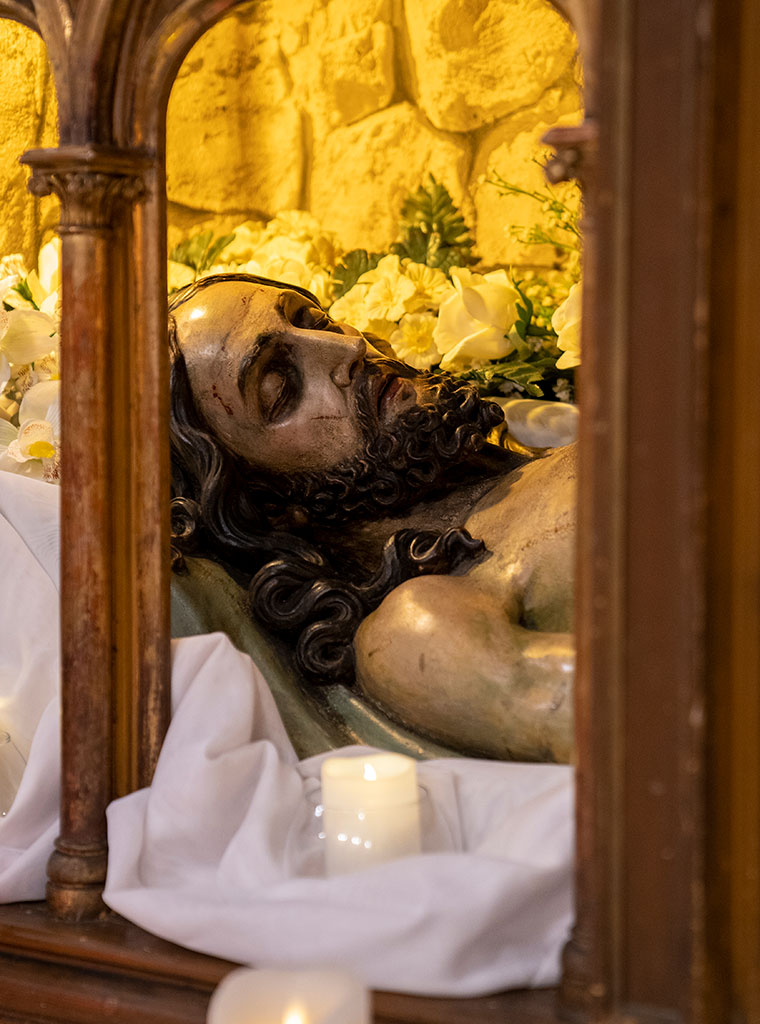
The last part of the Rite was communion, which was placed on the side altar on Maundy Thursday. After the Good Friday Rite, the prayer will continue on Holy Saturday until the Easter Vigil on Holy Night and Holy Mass at 9:00 p.m.


.jpg&w=420&h=235&zc=1&hash=bfa7d2c3c6d2fc4282187f8a3ace1b12)


