
VI. Meeting of BiH priests held
Priesthood is a gift, but also a direction
pet, 06. lipnja 2025. 12:12
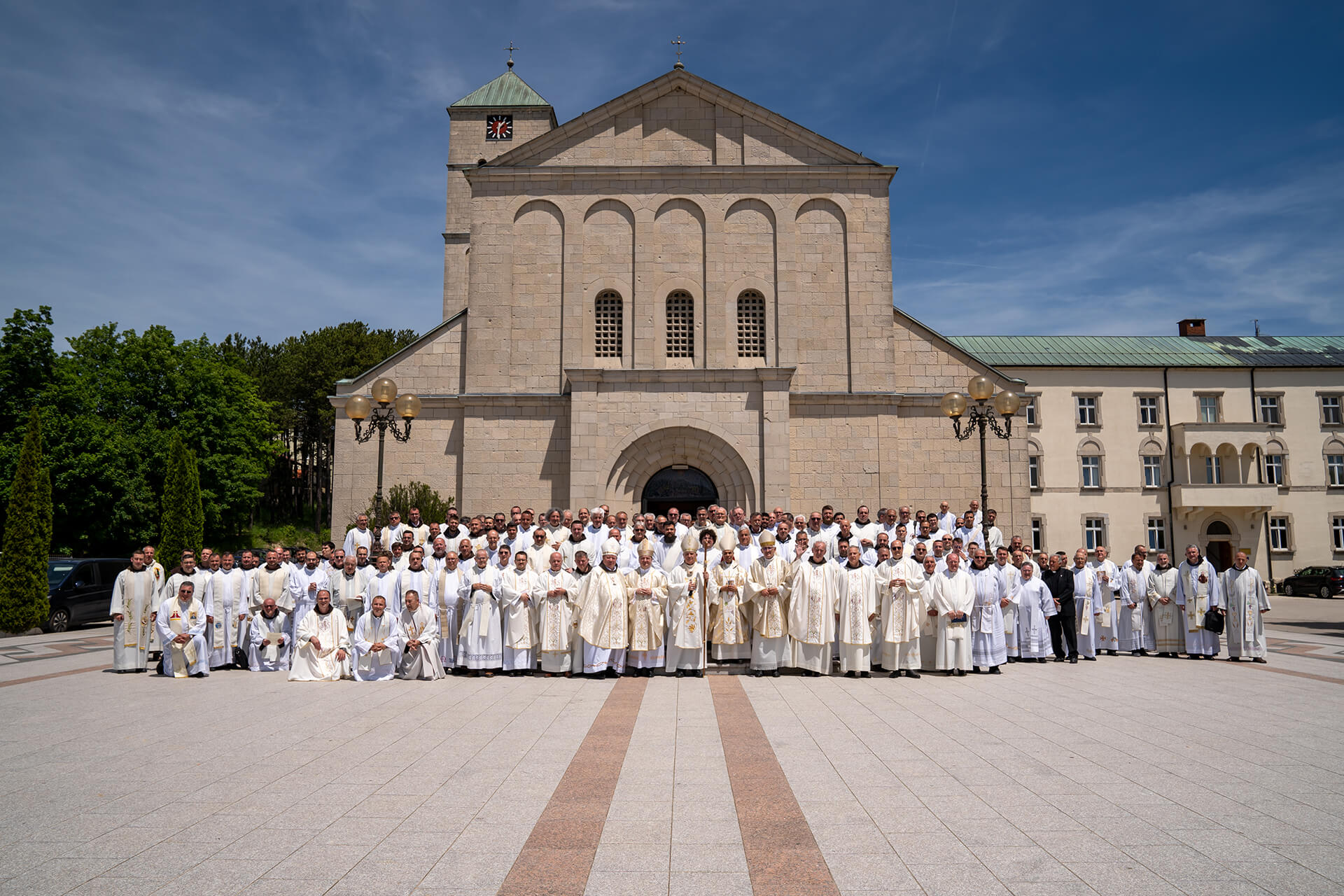
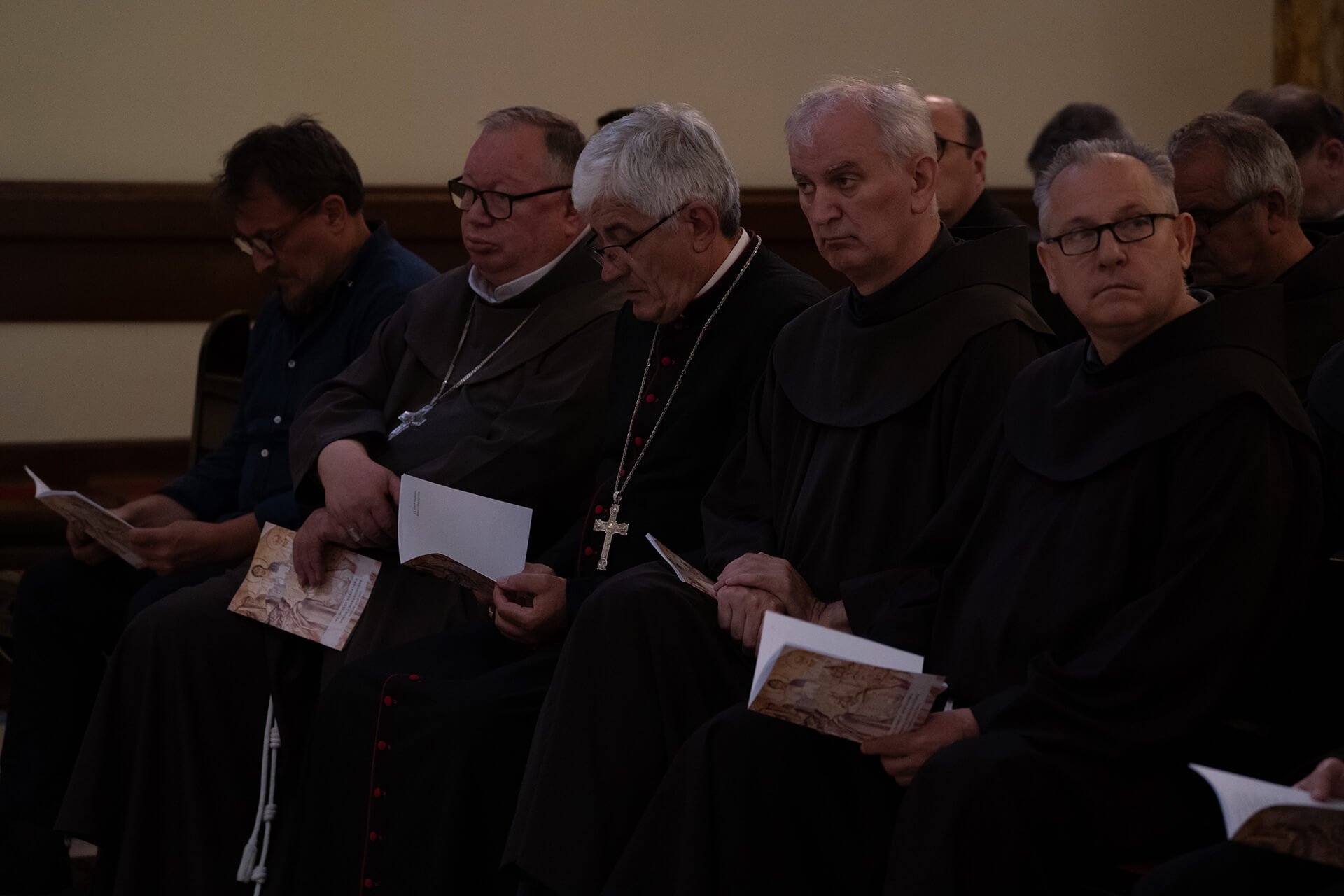
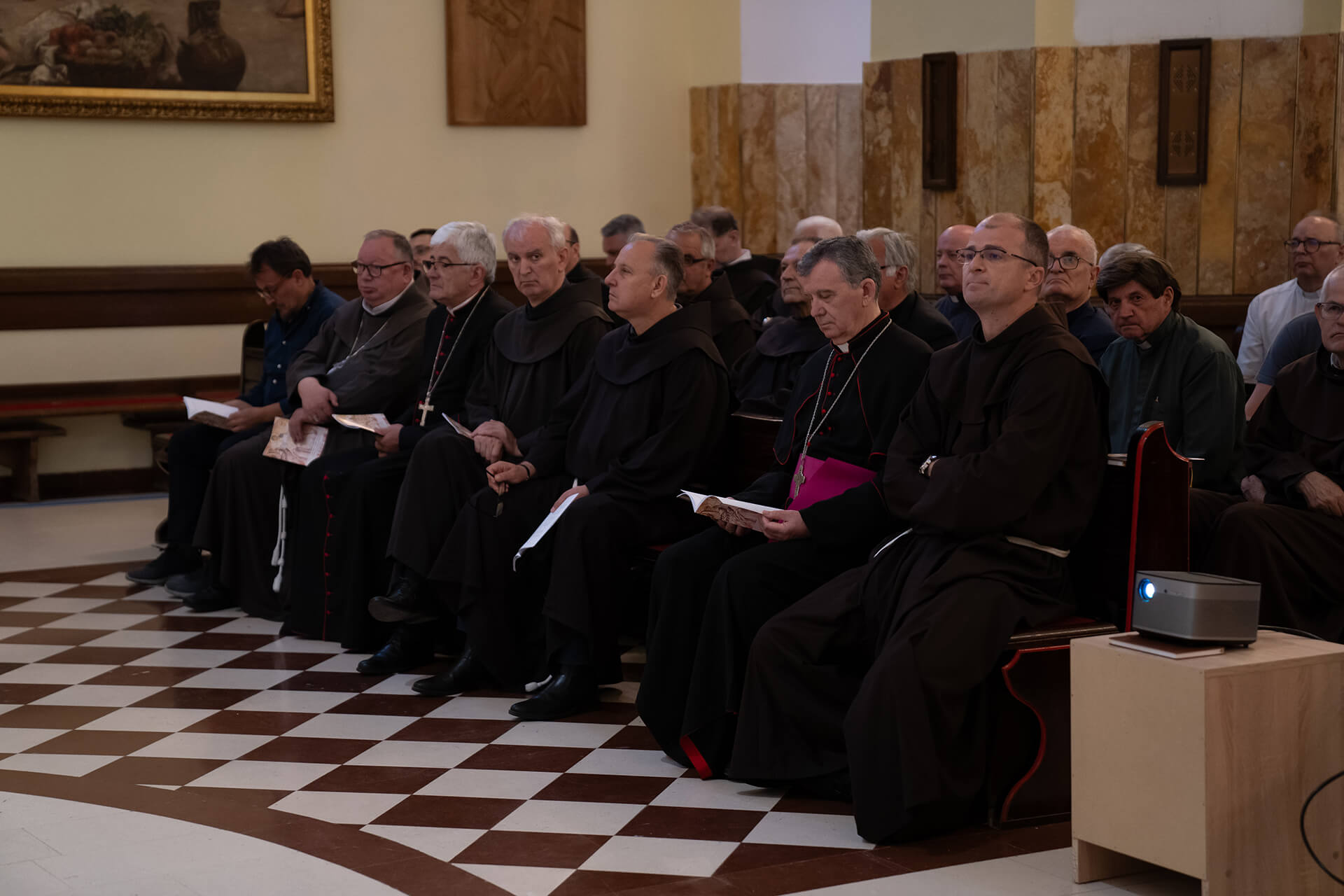
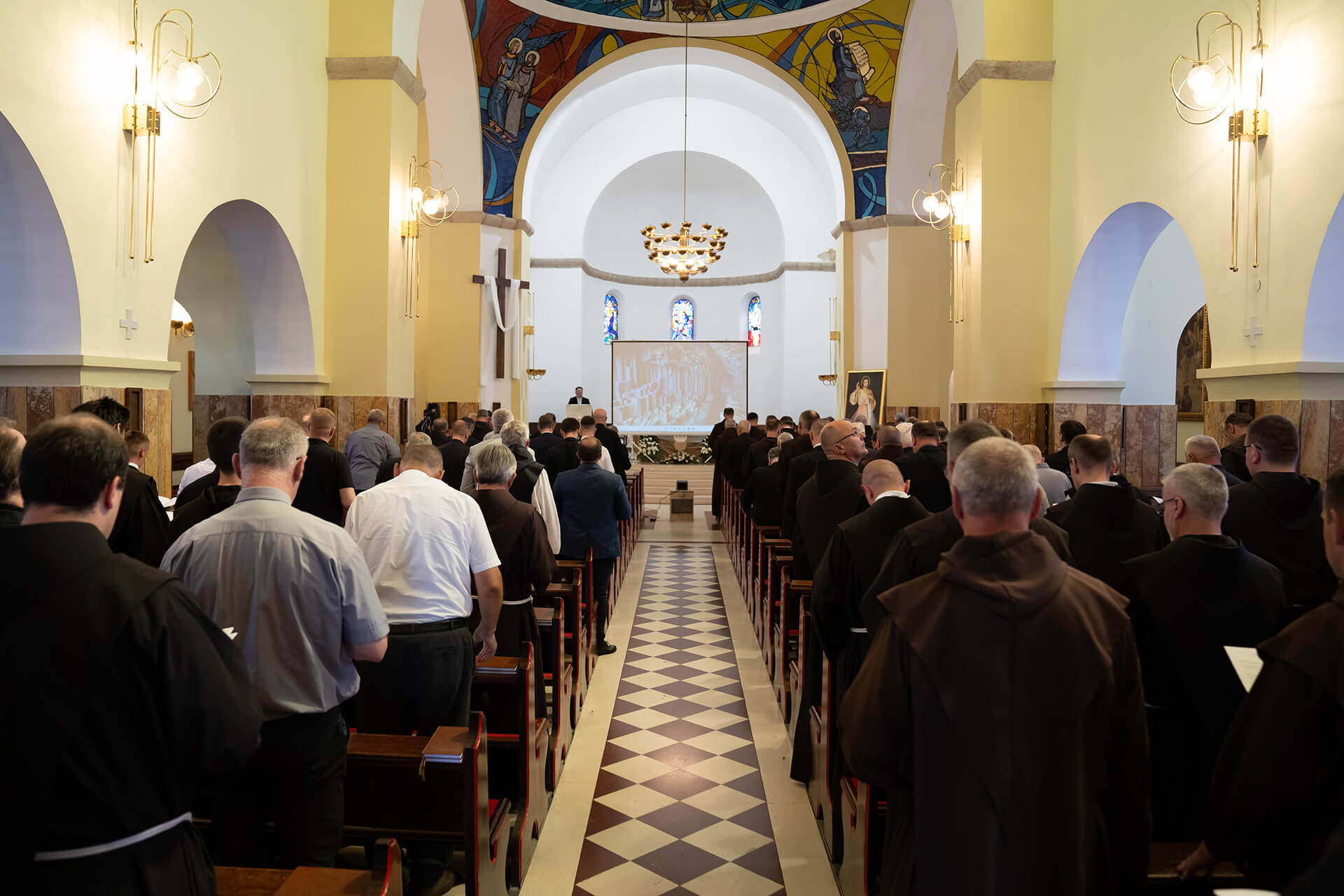
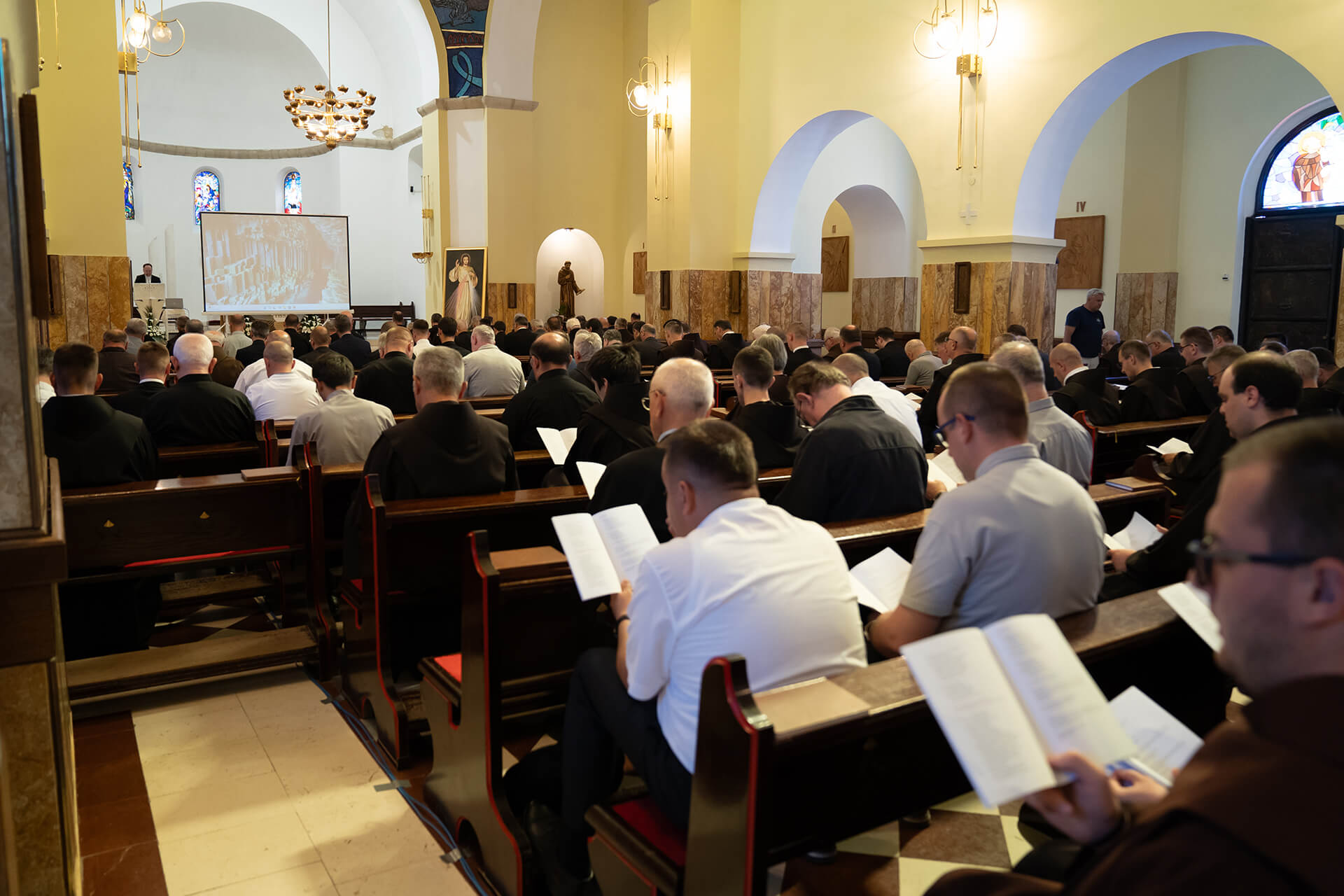
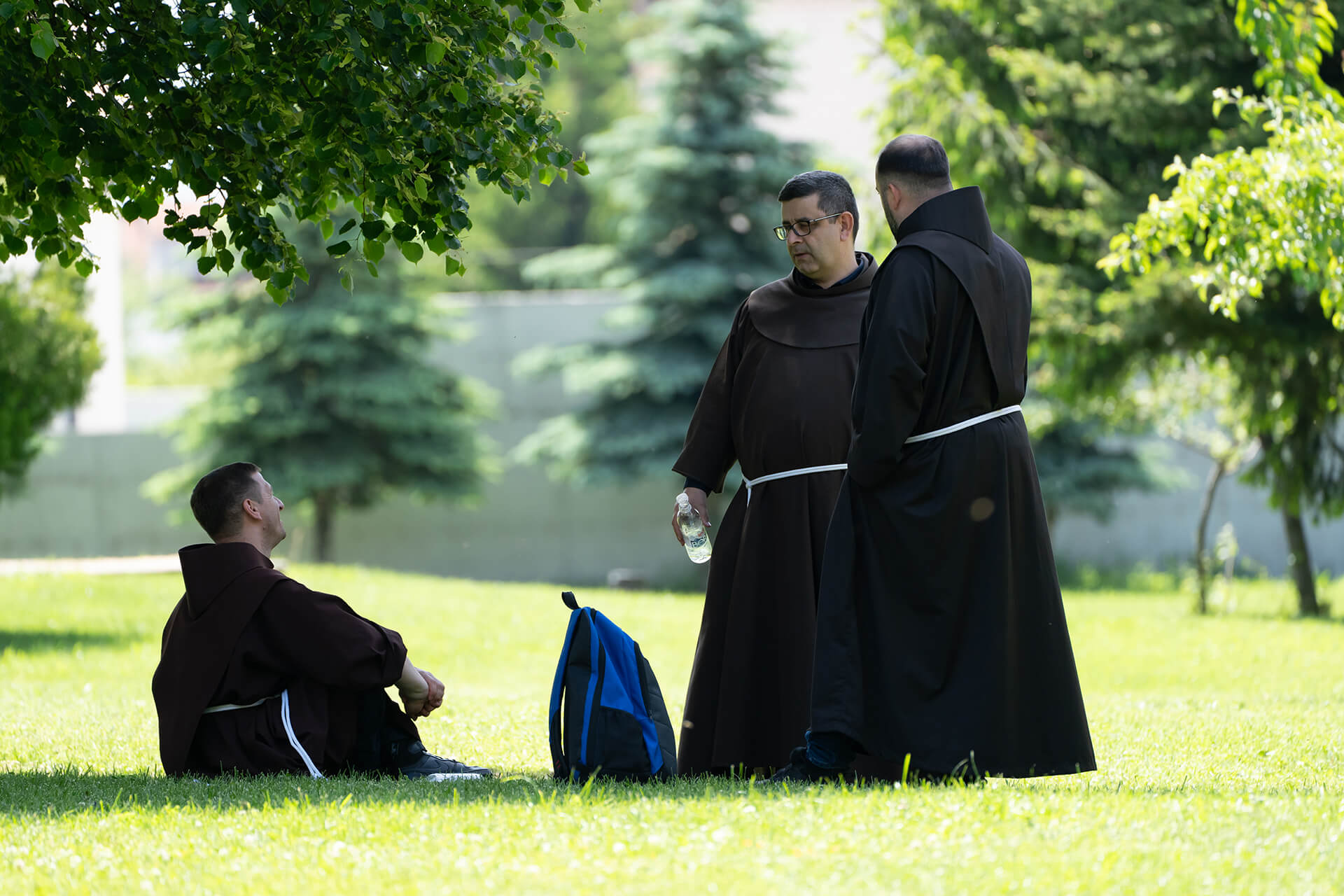
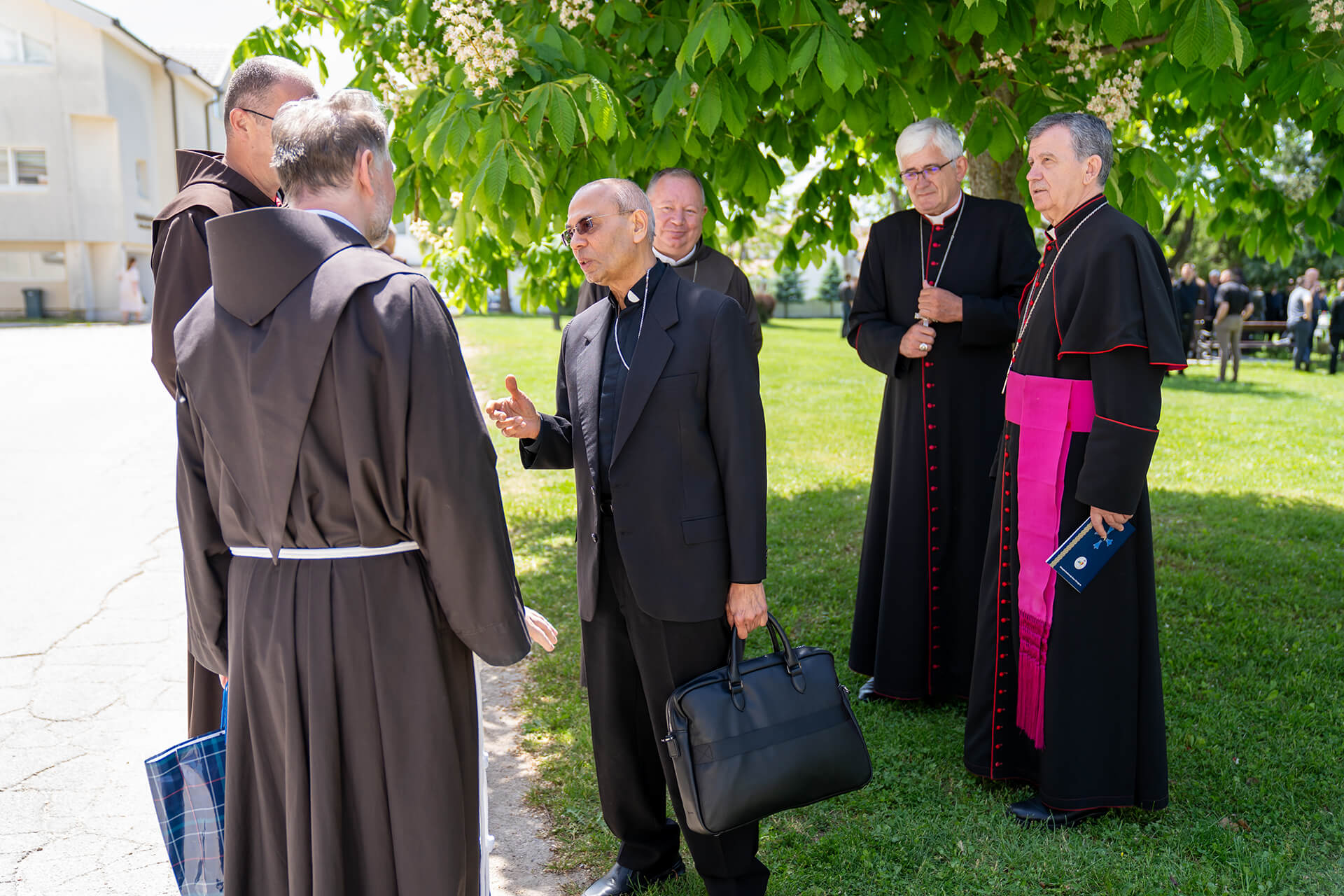
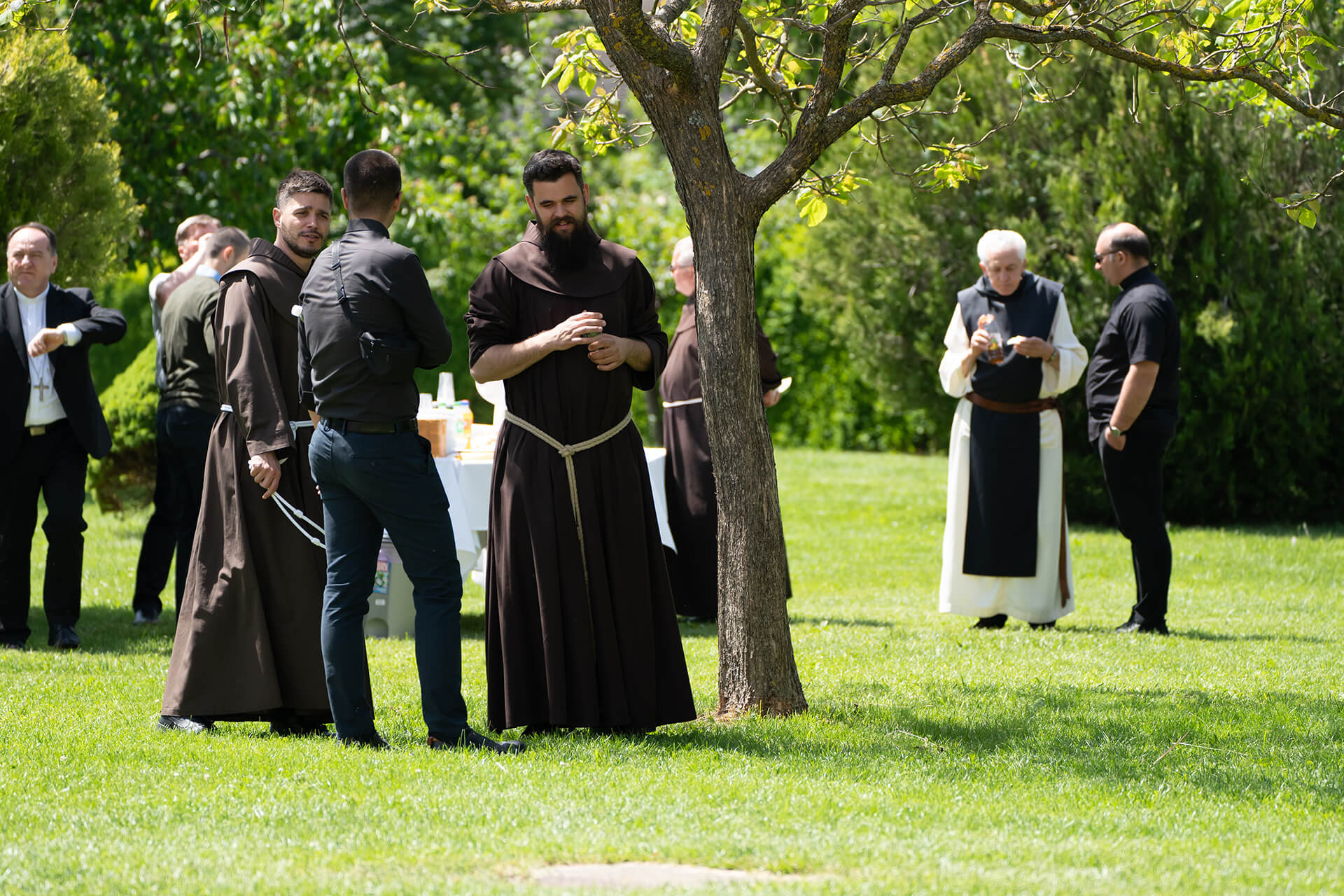
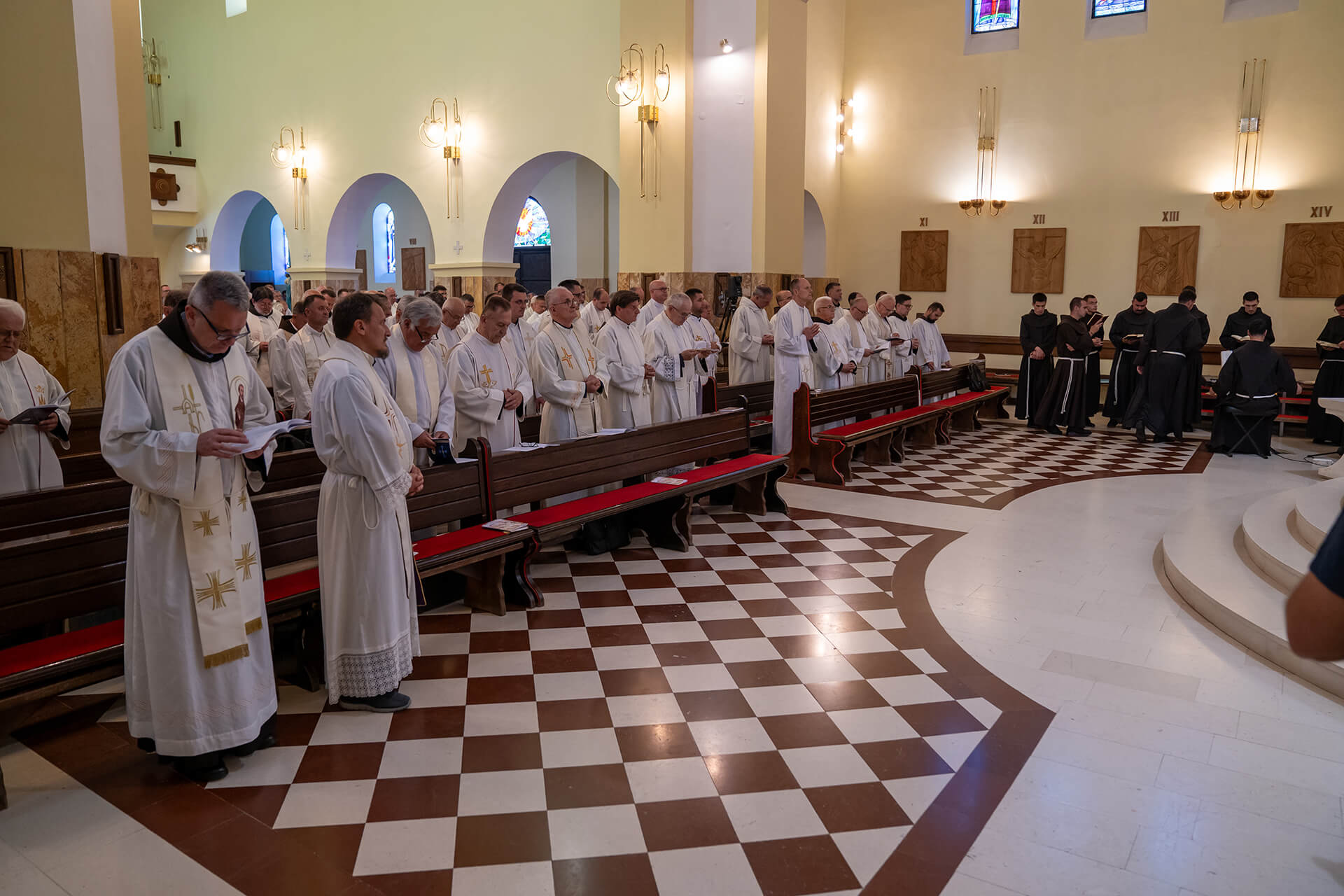
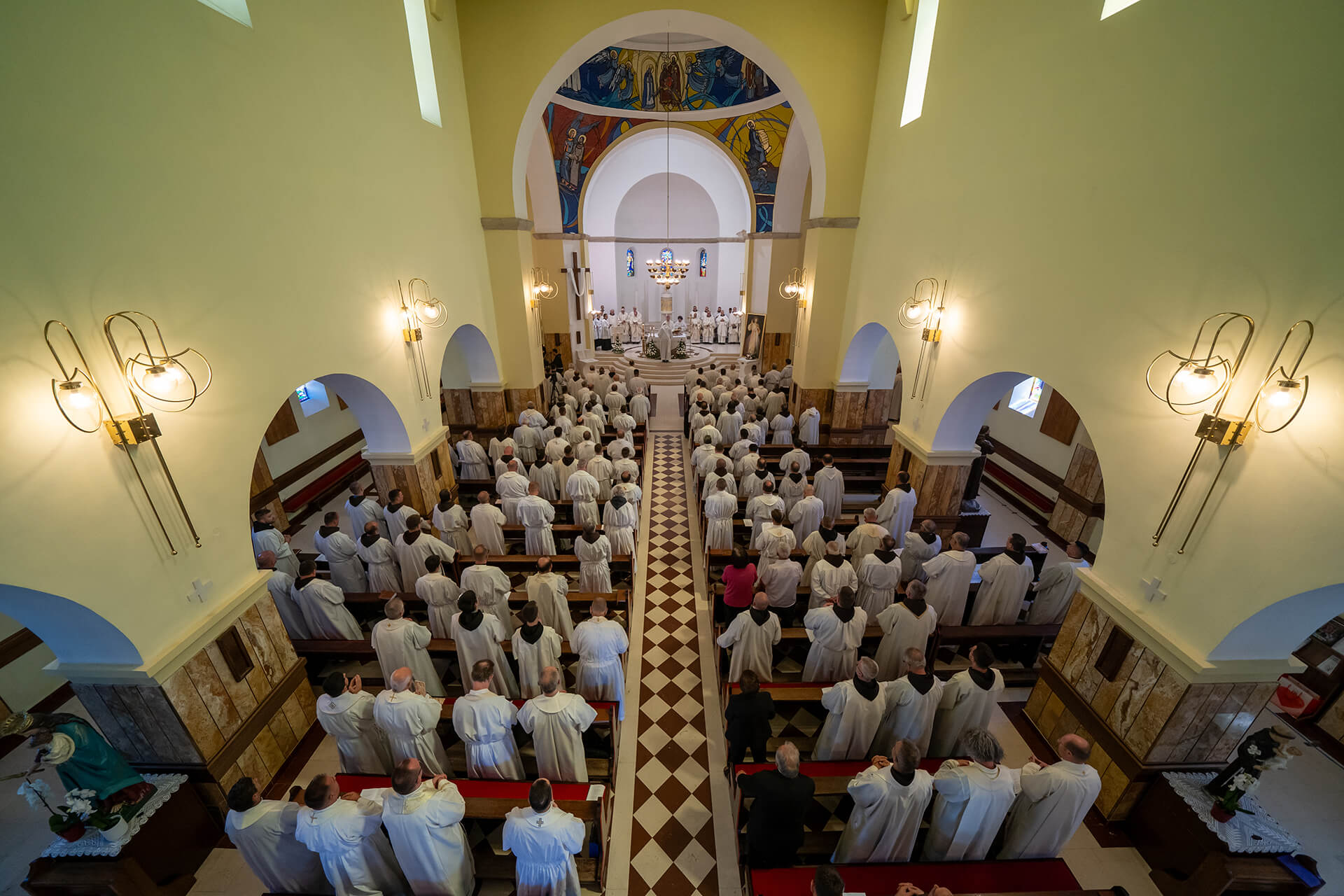
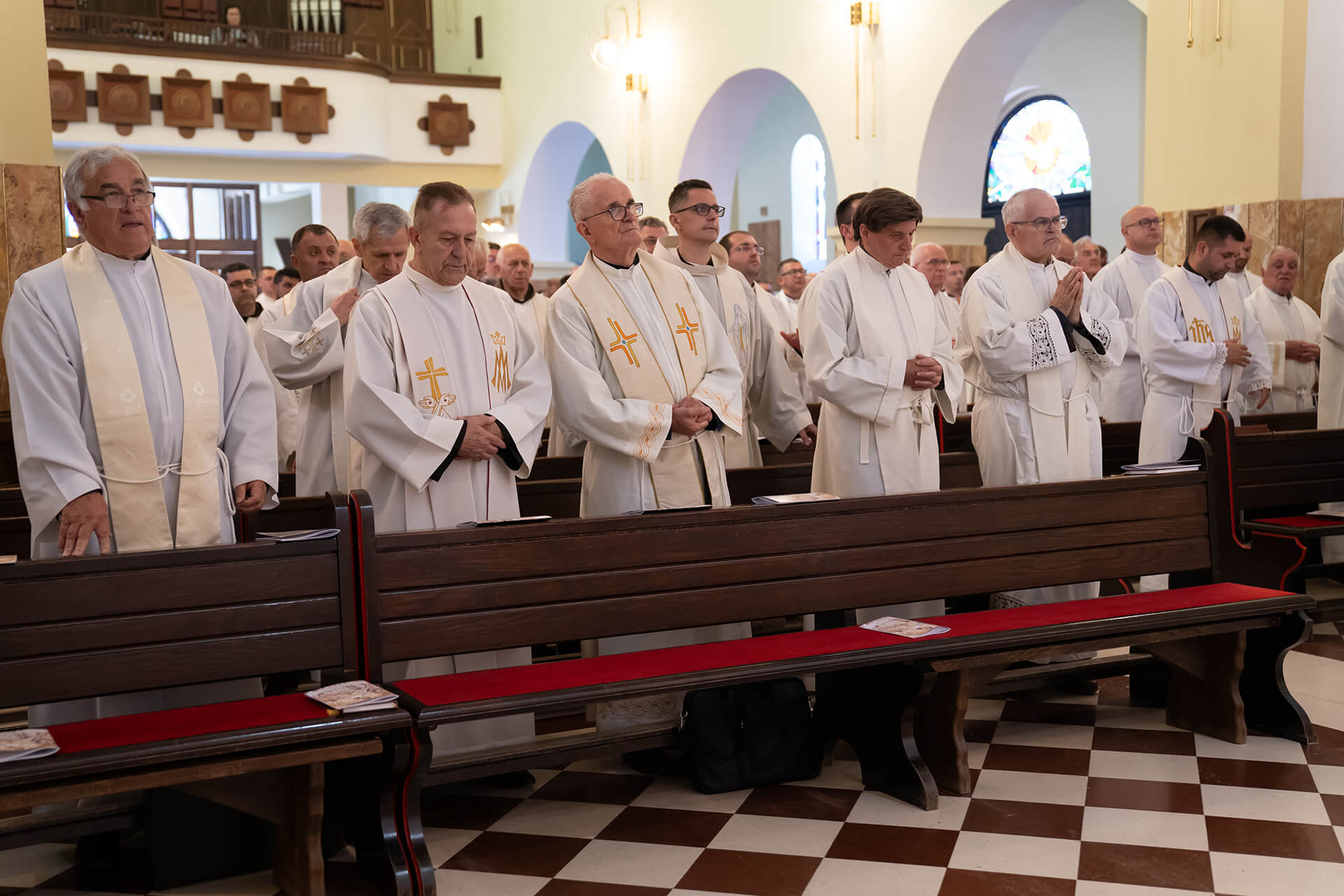
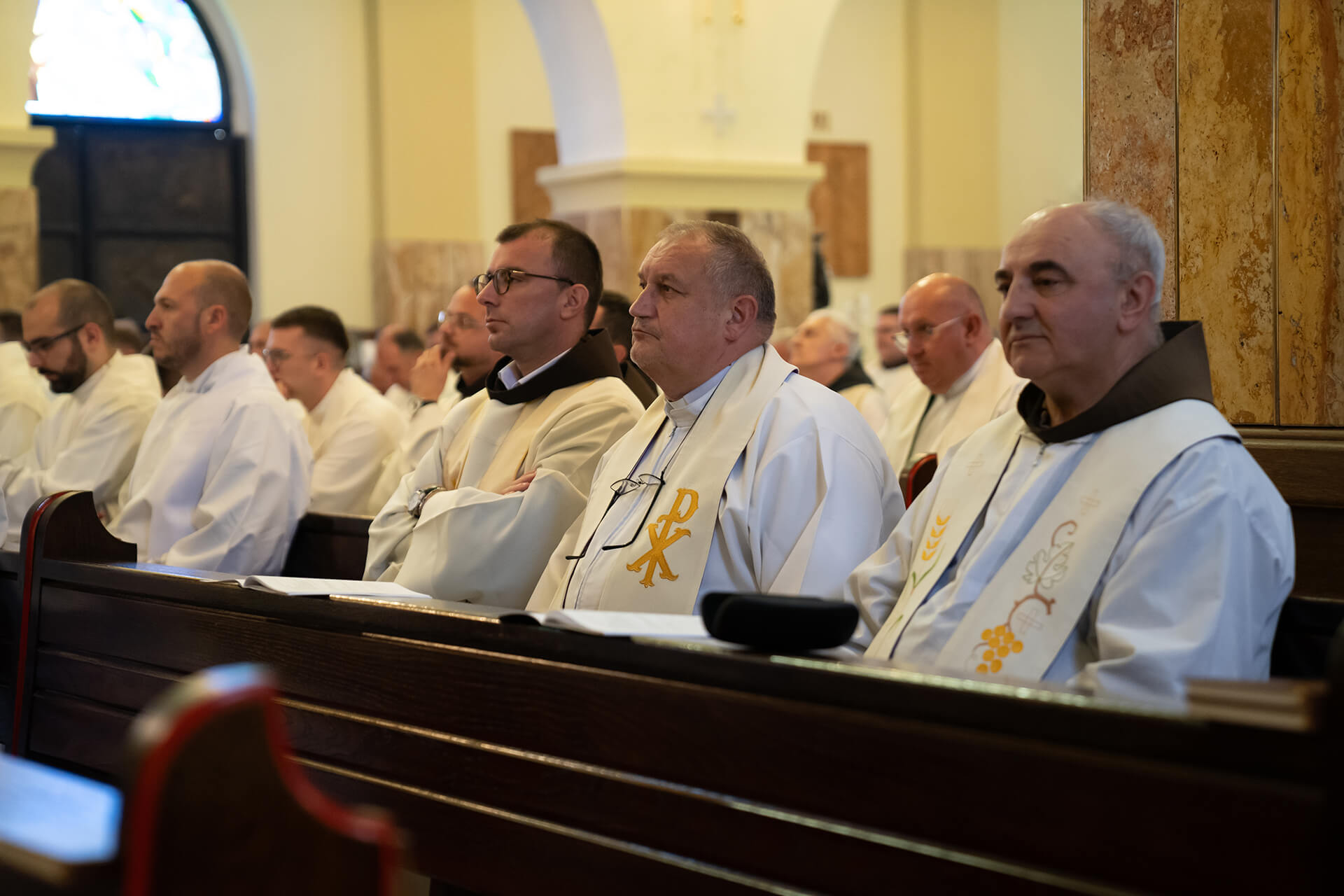
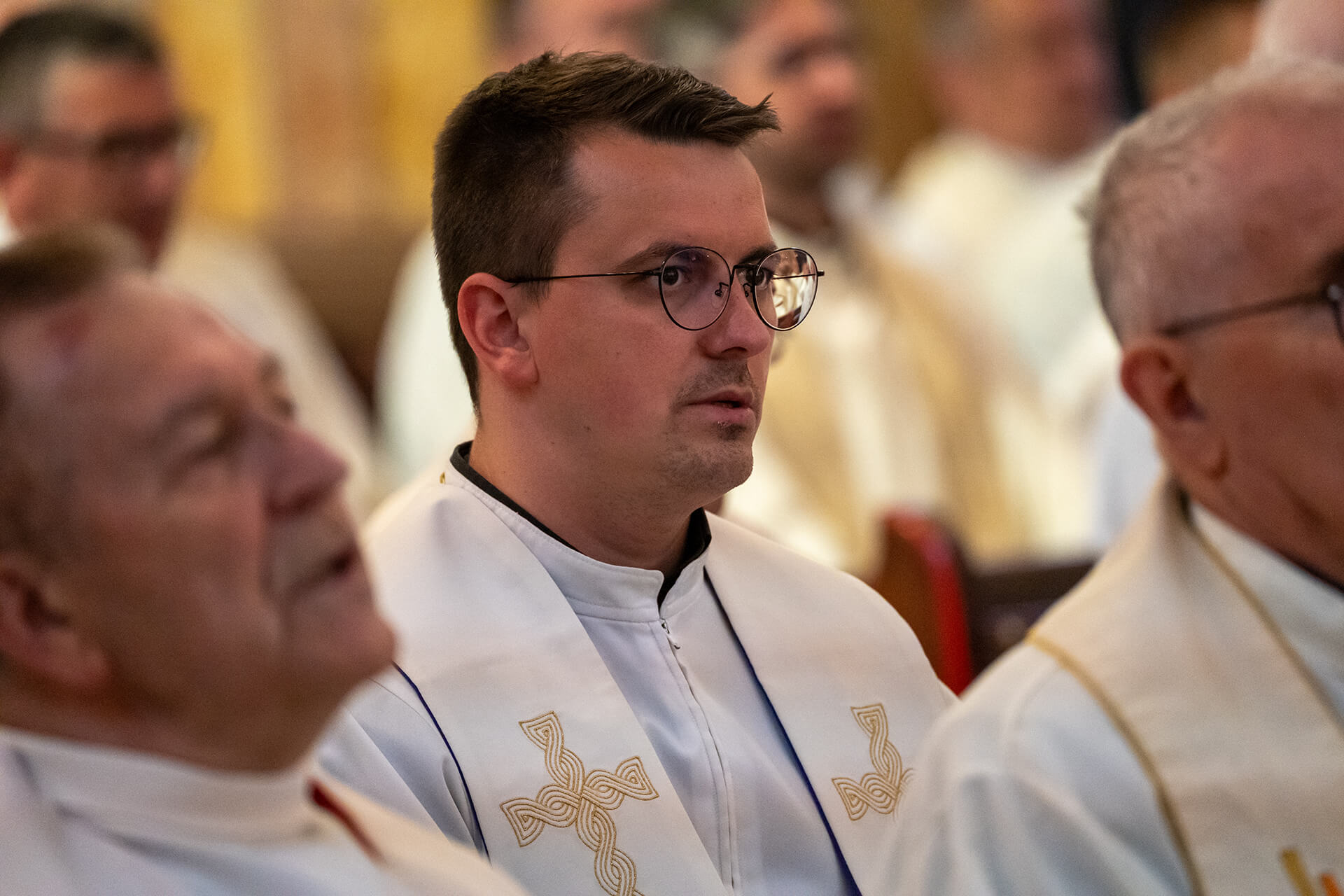
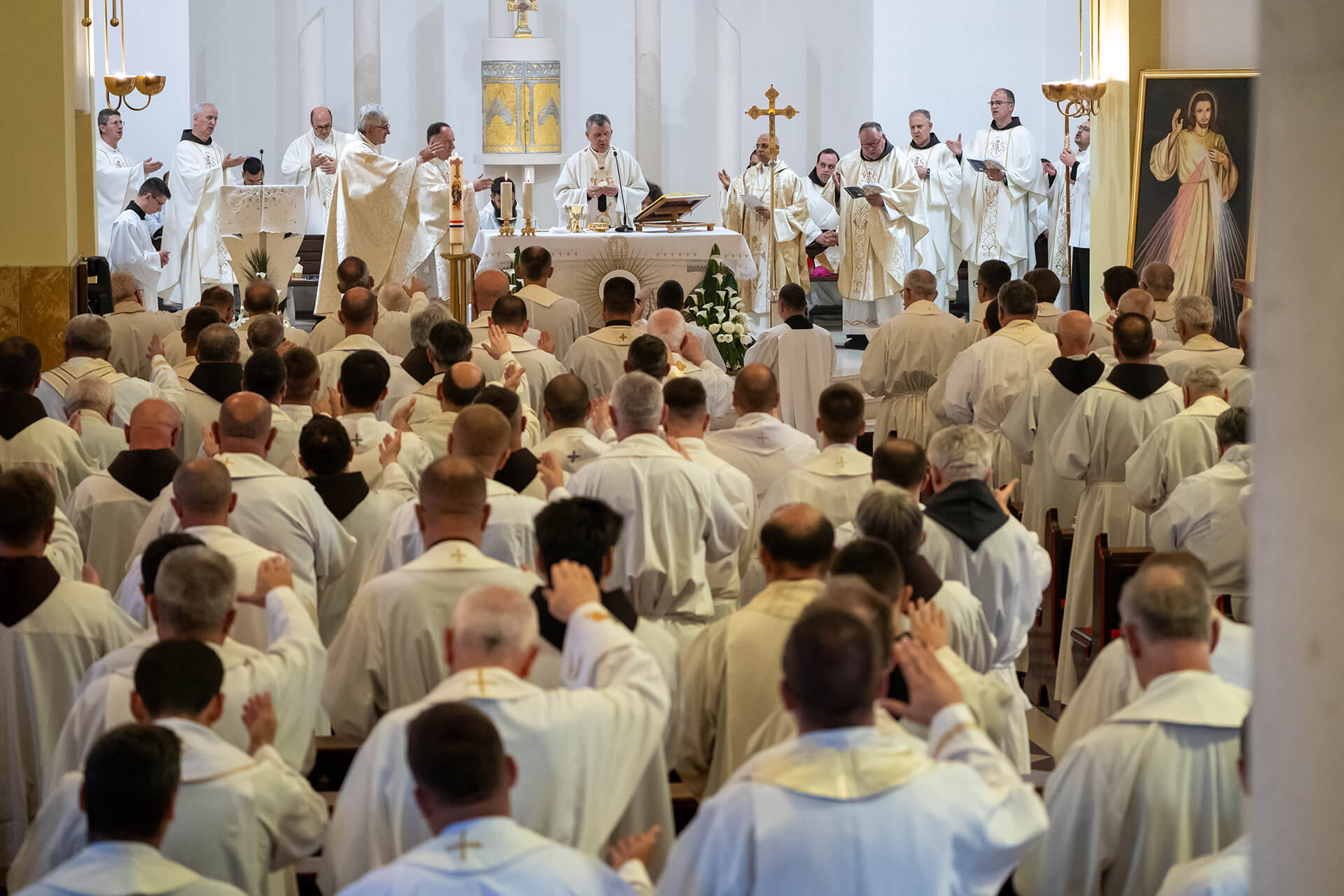
On Wednesday, June 4th, the Sixth Meeting of Priests was held in the Franciscan Monastery of St. Michael the Archangel in Tomislavgrad, which brought together about 200 priests from all over Bosnia and Herzegovina, as well as those of Bosnian origin.
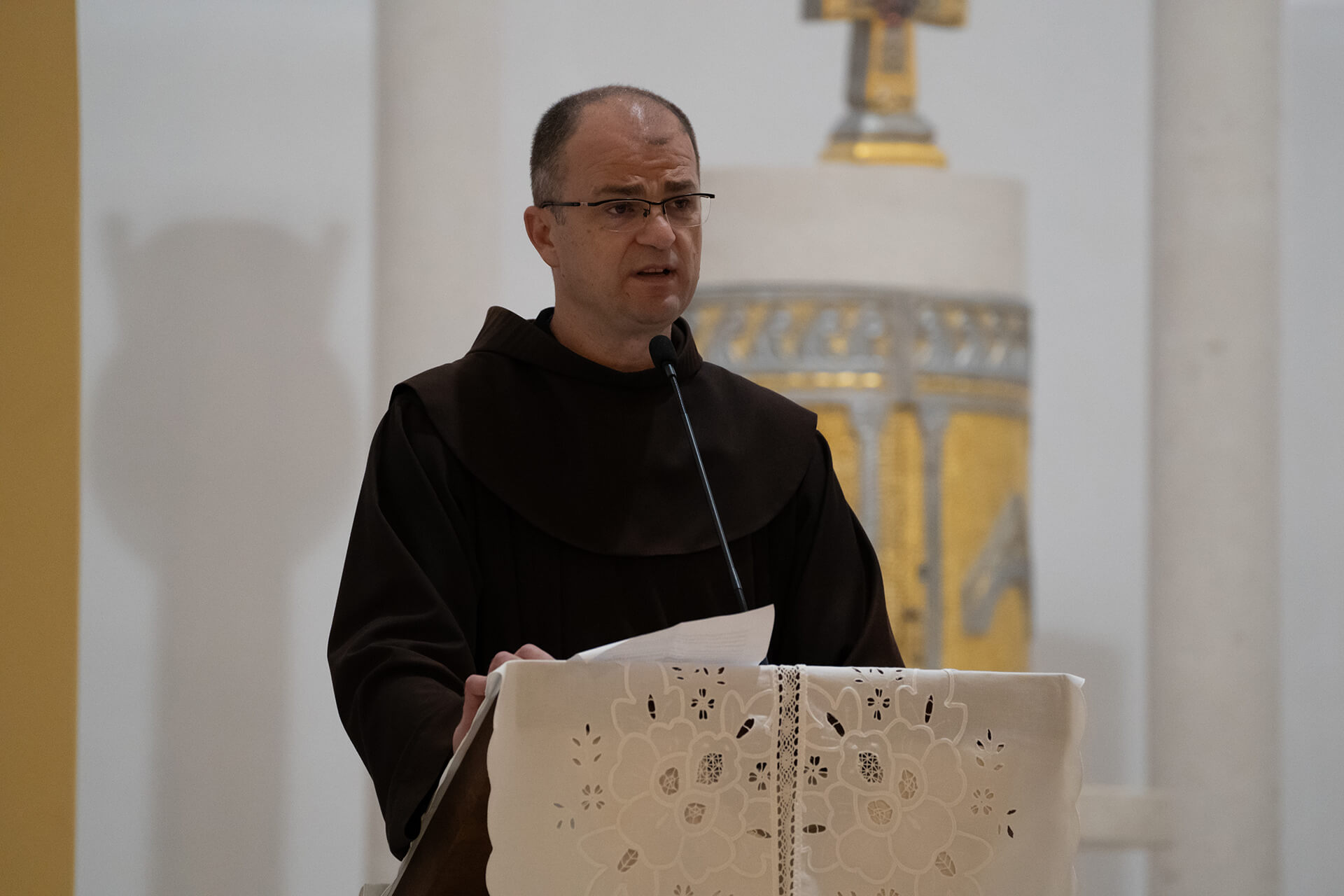
The program began in the Basilica of St. Nikola Tavelić with a greeting from the host guardian, OFM Božo Milić, who expressed his joy that the meeting was taking place in Tomislavgrad in the year of the Jubilee and the year of the 1 100th anniversary of the Croatian Kingdom, and then briefly presented the details of the construction of this monastery building.
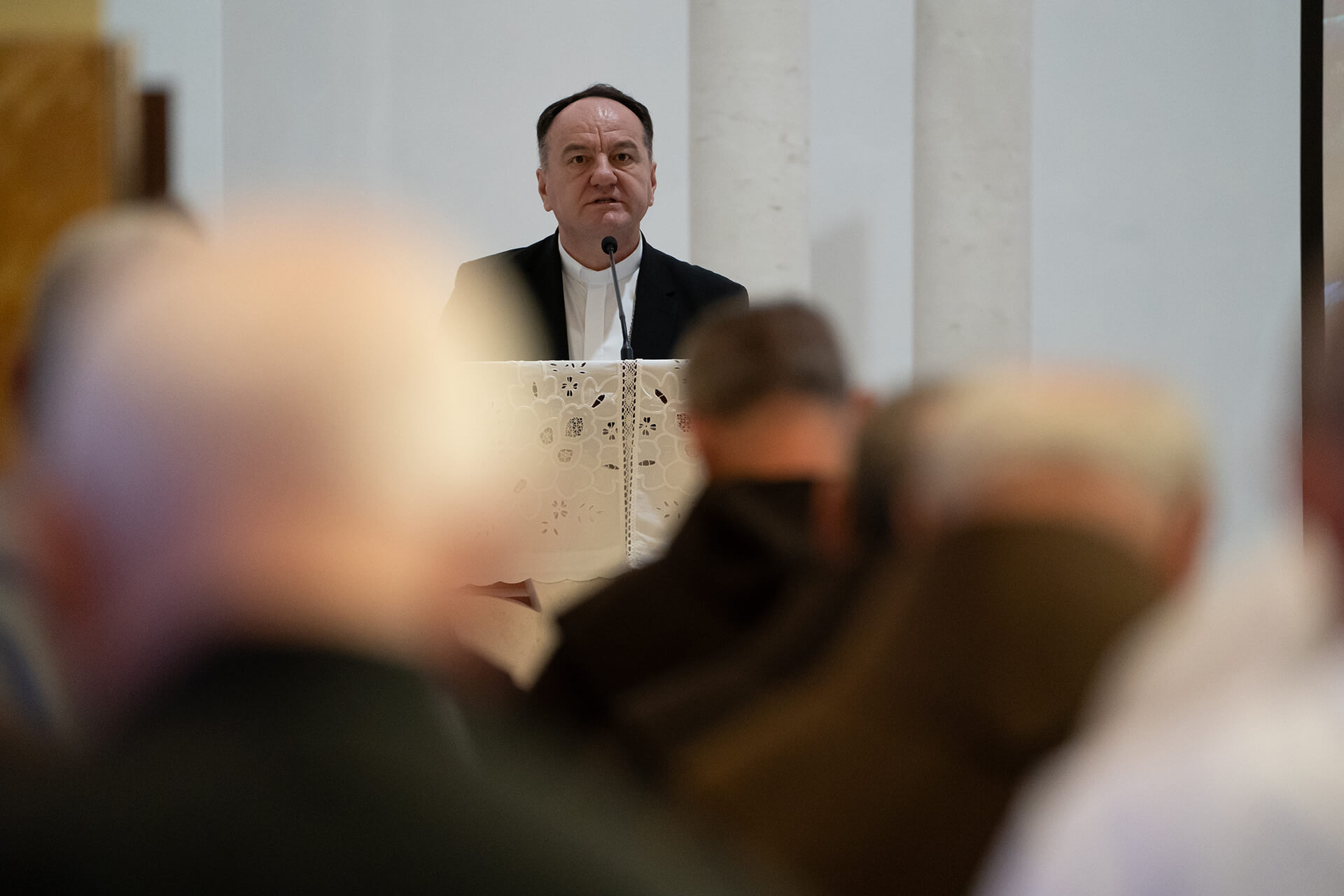
The meeting continued with the prayer of the Third Hour led by the Bishop of Mostar-Duvno and Apostolic Administrator of Trebinje-Mrkan, Msgr. Petar Palić.
The Split Church Councils
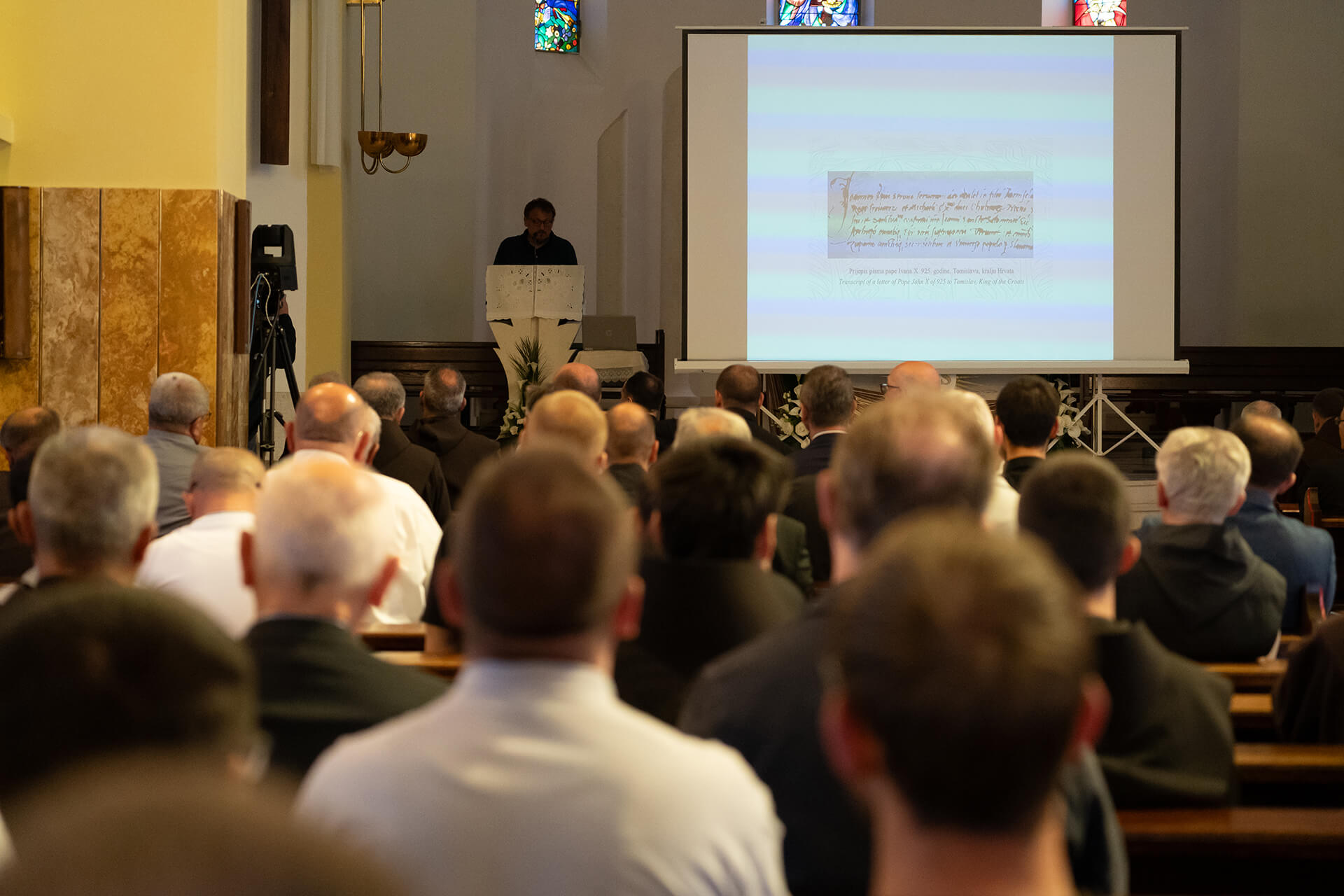
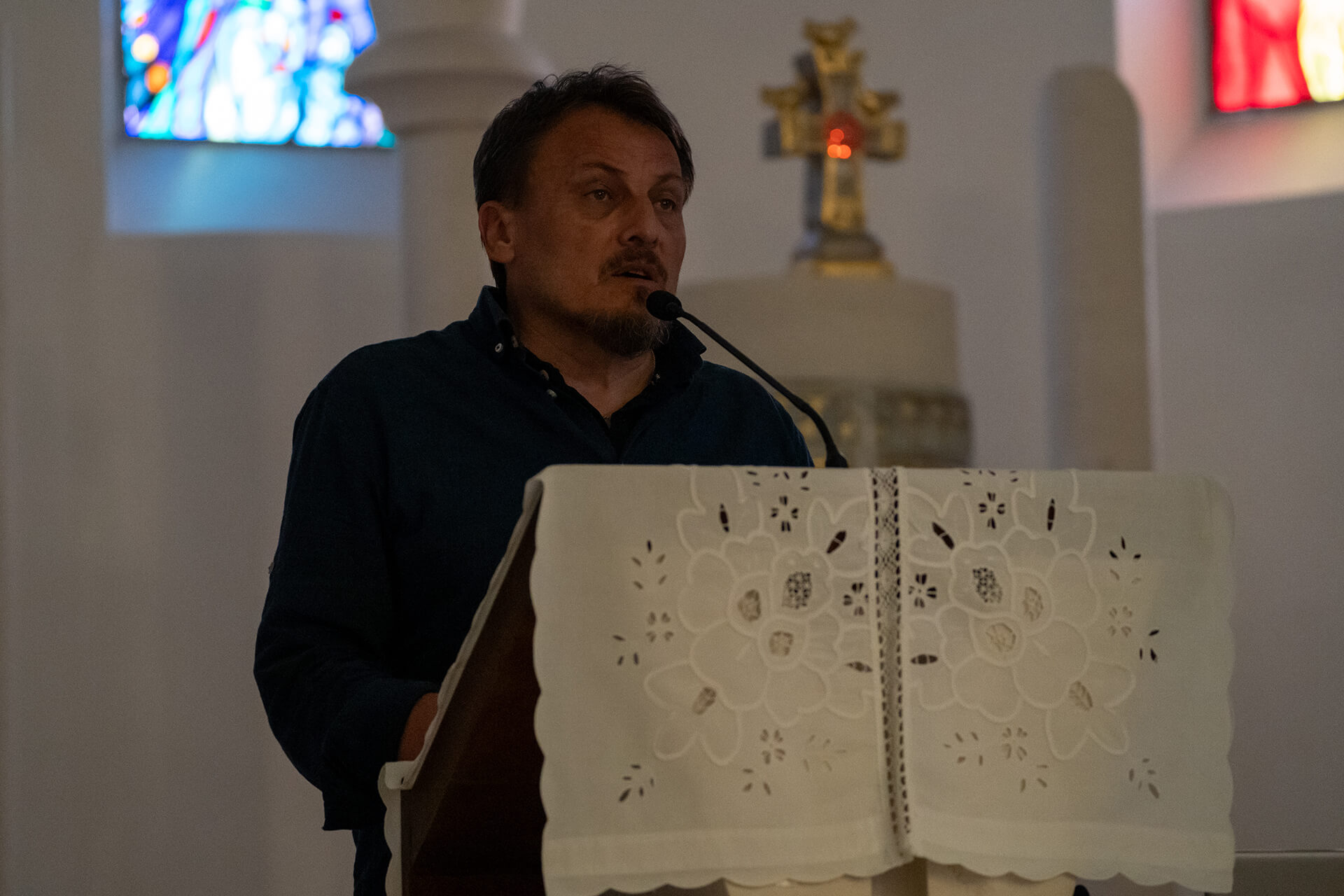
After that, a lecture on the topic of the Split Church Councils 925 - 928 and the beginnings of the Croatian Kingdom, authored by a professor at the Faculty of Philosophy in Split, Dr. Sc. Rev. Marko Trogrlić, who was absent for objective reasons, was read by Prof. Dr. Rev. Josip Dukić.
The lecture highlighted how King Tomislav is attested to by documents from the Split Church Councils (925 - 928), which contain letters from two popes and the conclusions of the two councils preserved in later transcriptions in a document entitled Historia Salonitana Maior (HSM). "Precisely in view of their late tradition, the content of this document, as well as the document itself, fuelled scepticism regarding its authenticity. However, a historiographical, scientific-critical analysis of the papal letters in which Tomislav is twice titled as King of the Croats (rex Crouatorum) confirmed their authenticity. And it is from these documents that we learn that Tomislav bears the title of king, that, based on the first conclusion of this council, the Archbishop of Split became the successor to the former Salonitan metropolis and that it is precisely here, in Split, where the bones of St. Domnius rest, is to be the seat of the metropolitan, whose suffragans are the bishops of Dalmatian and Croatian cities, and that, as we learn from the same council conclusions, the church organization in Croatia and Dalmatia was regulated with the consent of Pope John X (914 - 928) and precisely the Croatian King Tomislav", Dr. Trogrlić introduced the topic.
The lecture continued with a more detailed analysis of the source Historia Salonitana Maior (HSM), which is a compilation of several older, different records, and the lecturer presented six documents preserved in it.
Among other things, the author also touched on the issue of the place of King Tomislav's coronation as reported in the Chronicle of the Priest Dukljanin, and presented the issue of Church jurisdiction in the Croatian territory between antiquity and the early Middle Ages.
In conclusion, the lecturer emphasized that, although 11 centuries have passed, the church councils "are undoubtedly a heritage worth returning to; in the ecclesiastical sense, they set the direction of the church-territorial organization and our regions, connecting it with the roots of the first Christian beginnings in our area; looking at their decision nationally and politically, it rounded off and framed the Croatian area, and in the broader European context of the time, it could be counted in its development as a mature and completed political reality that, in the form of royal authority and structures from the time of Tomislav, a ruler with royal status from the Croatian national dynasty, coexisted alongside other similar and contemporary ones".
Finally, he emphasized the words of St. John Paul II during his visit to the Split Cathedral on October 4th 1998: "History was not silent here!"
After the lecture, the priests had the opportunity to approach the sacrament of reconciliation.
Gratitude to Christ
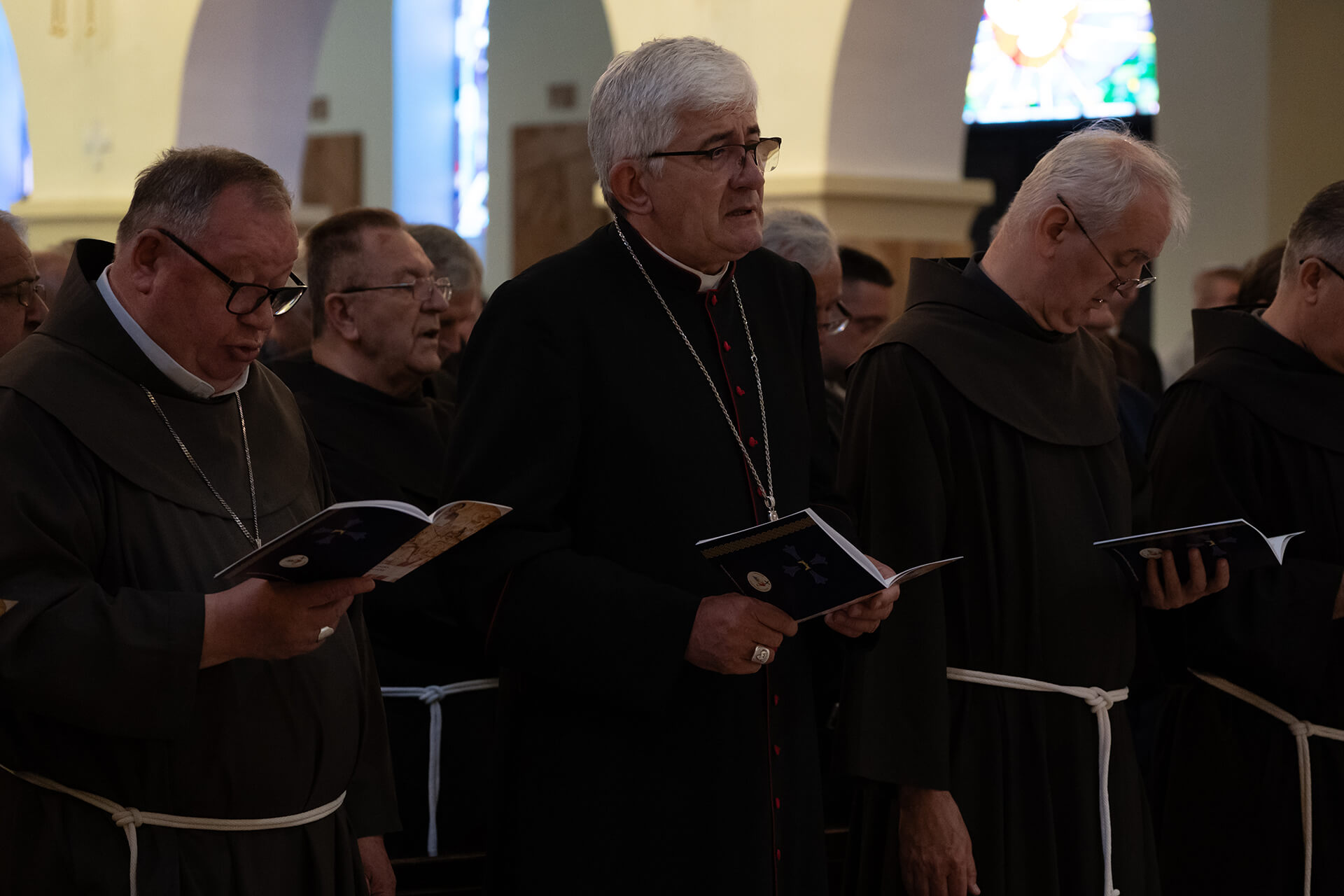
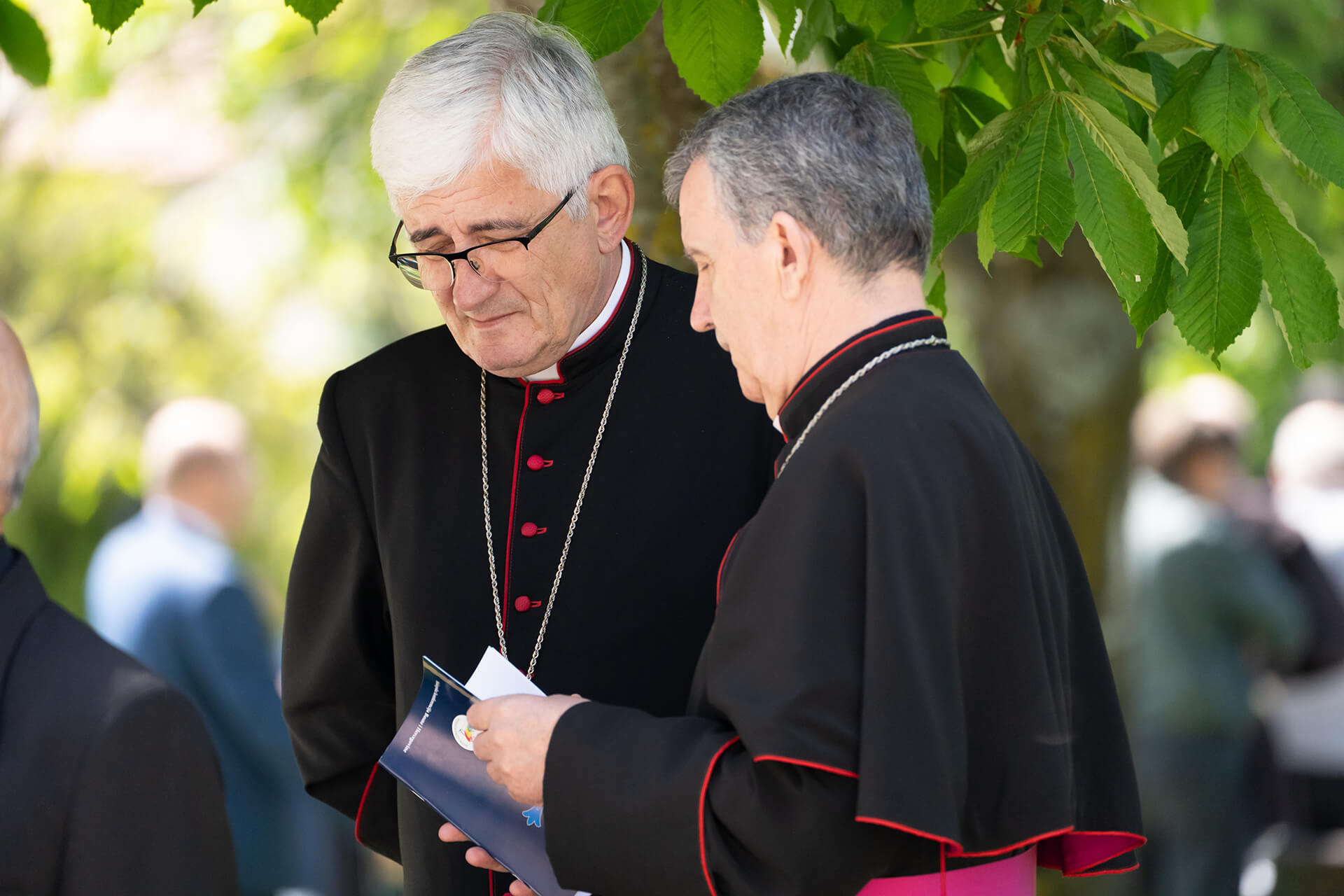
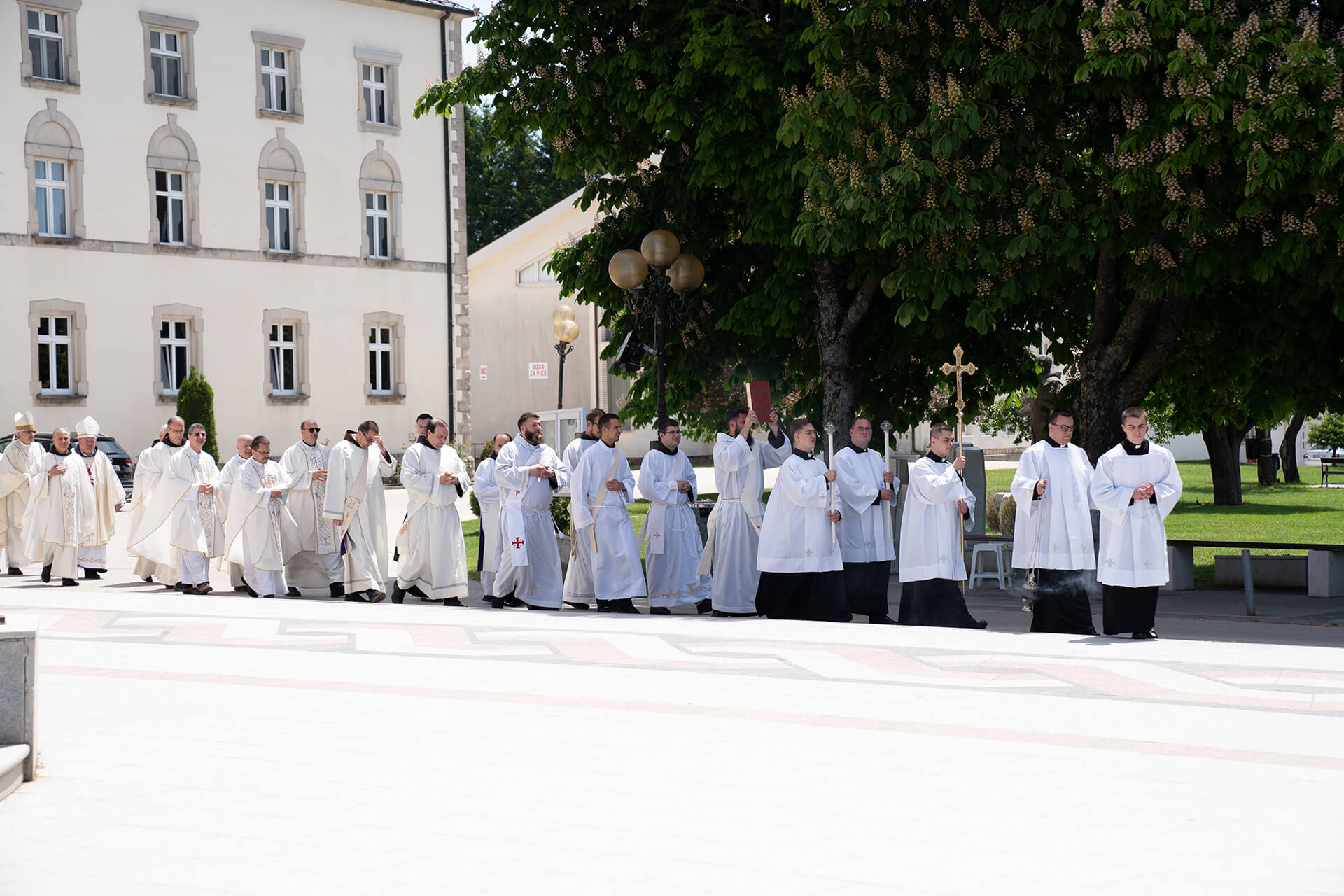
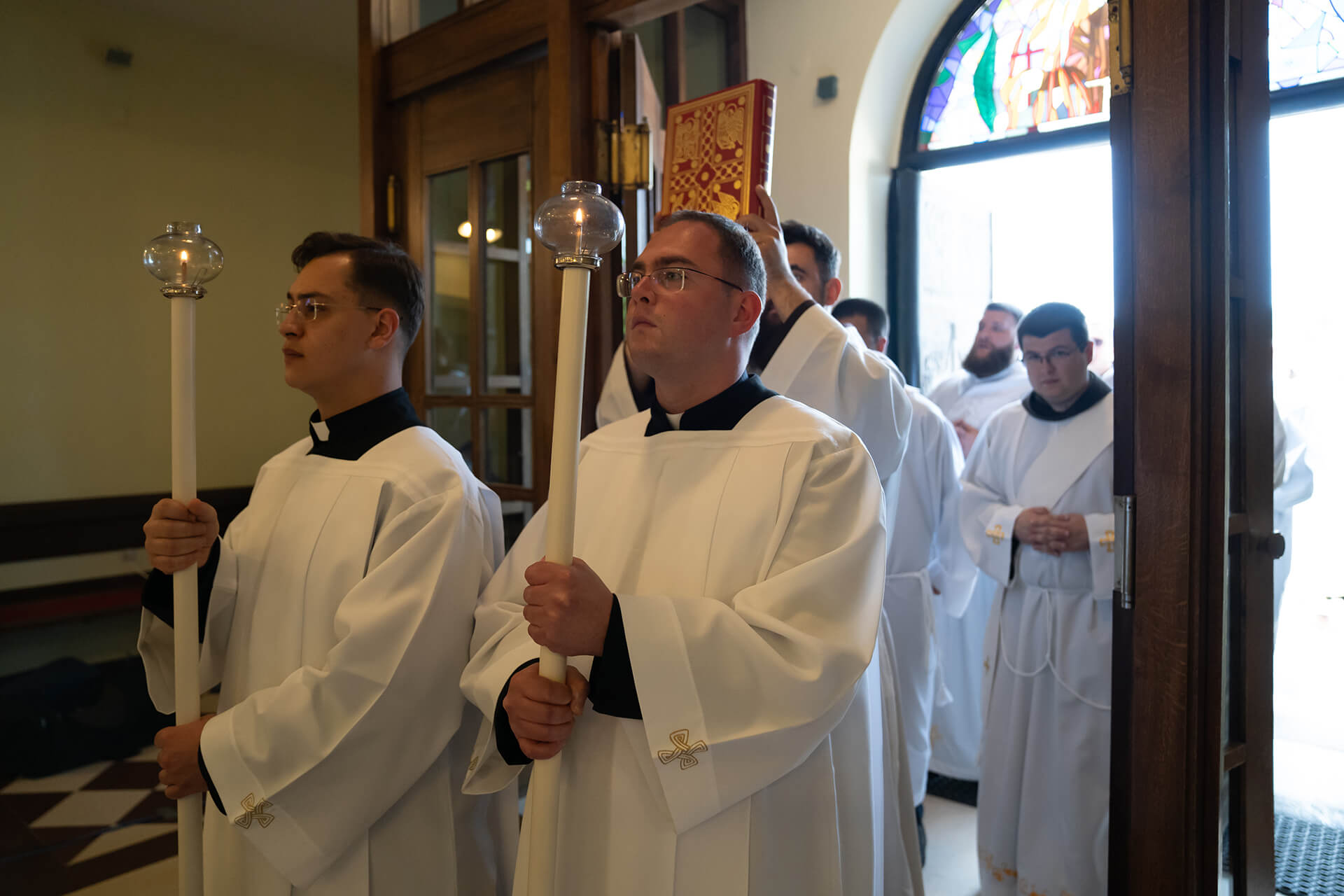
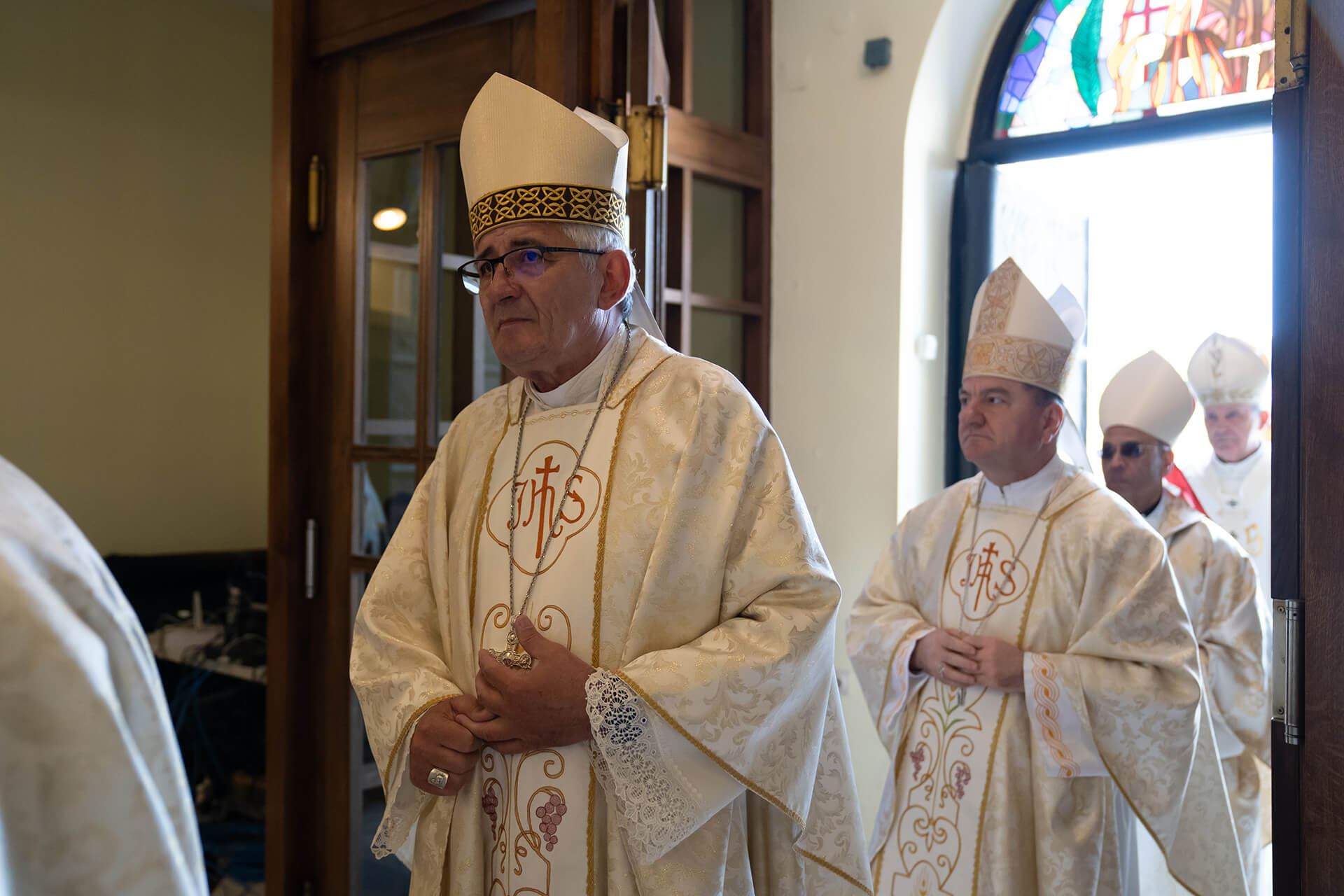
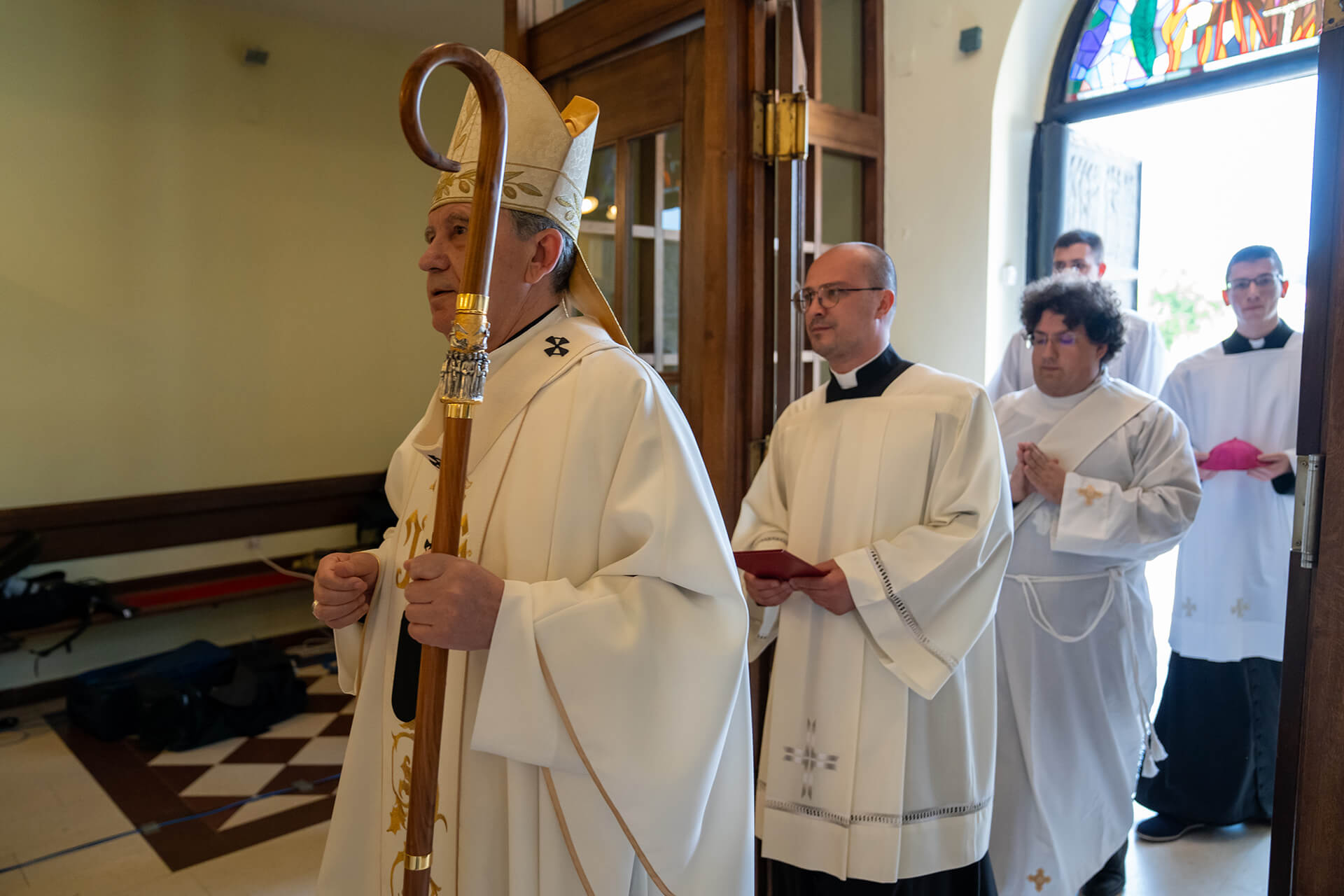
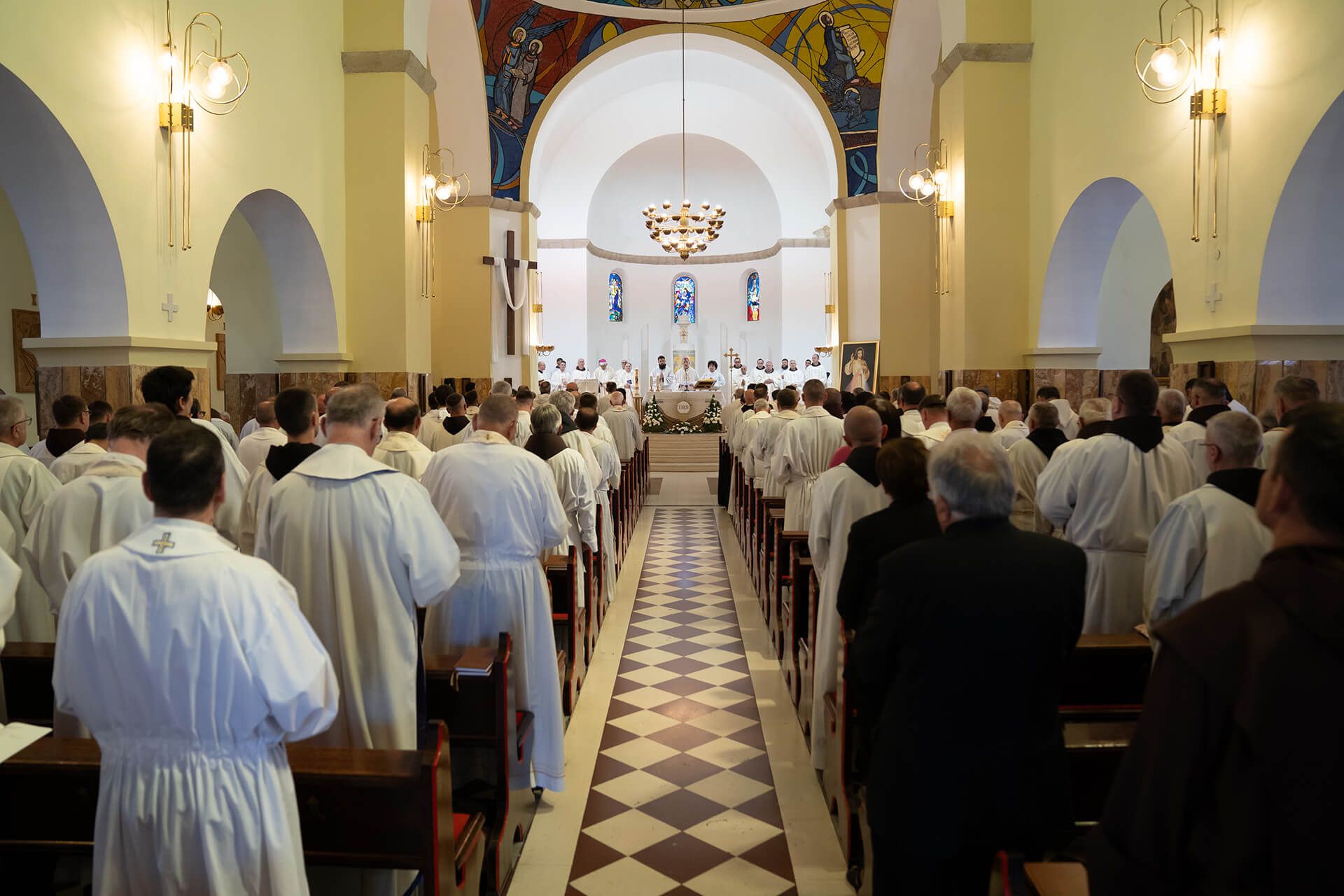
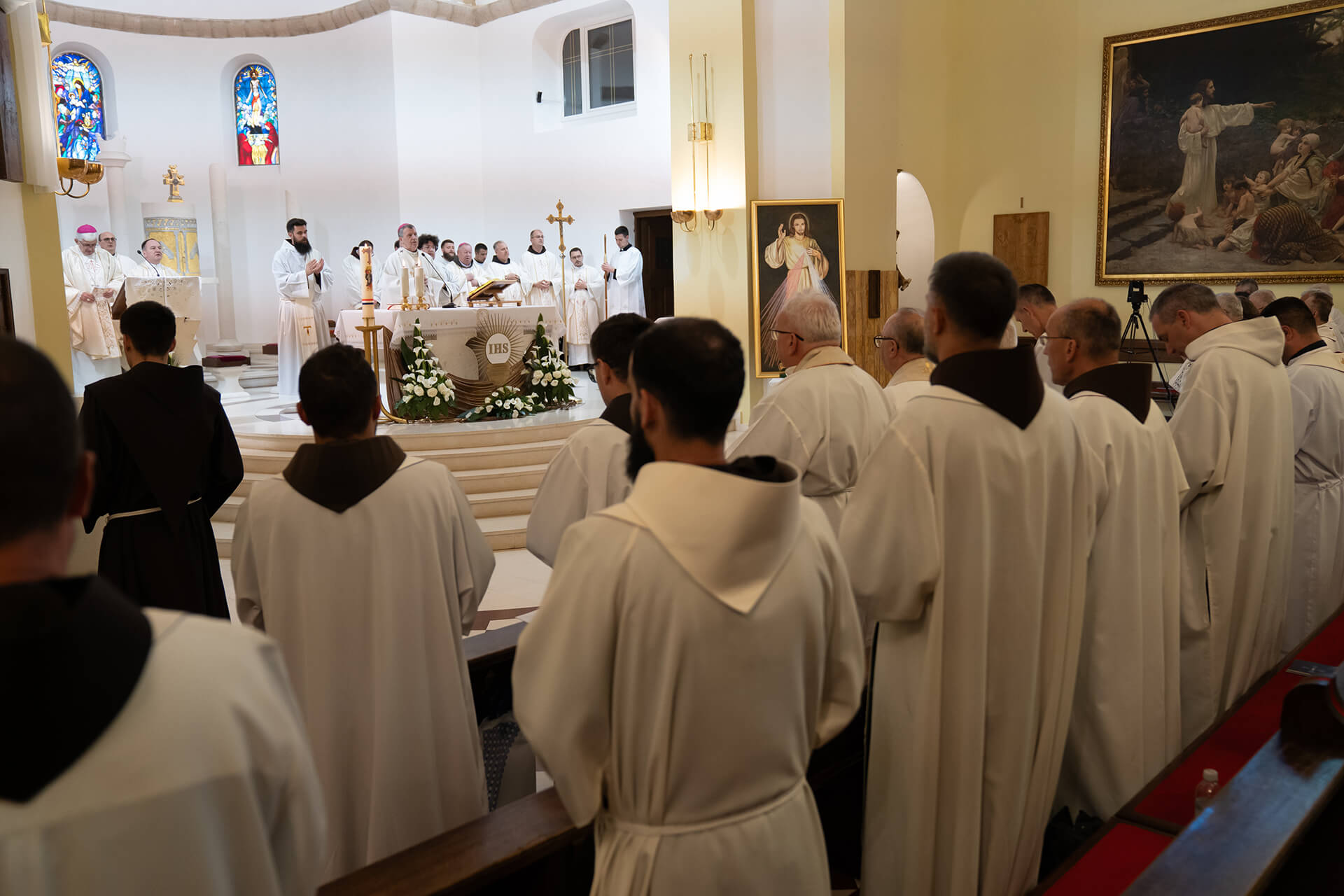
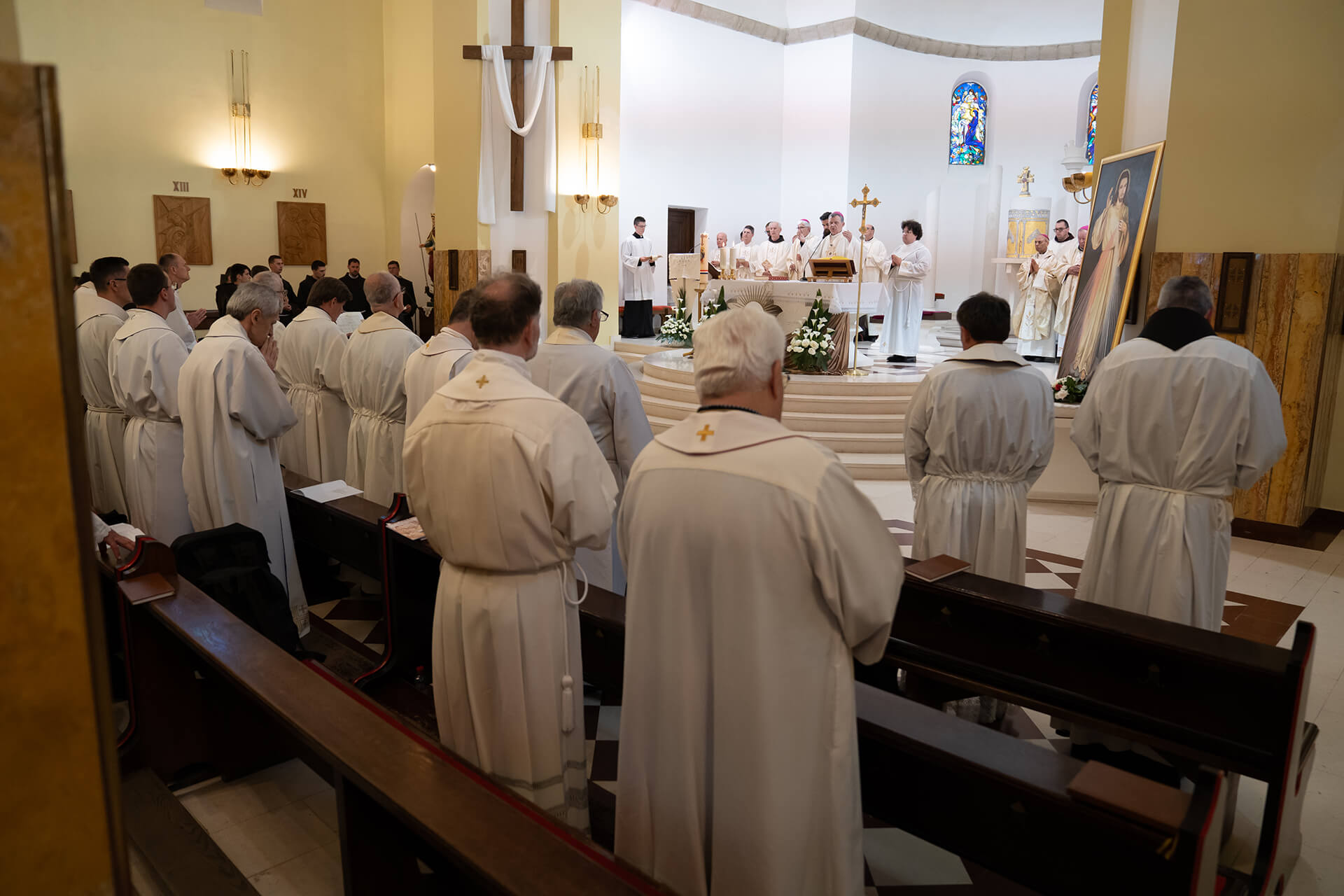
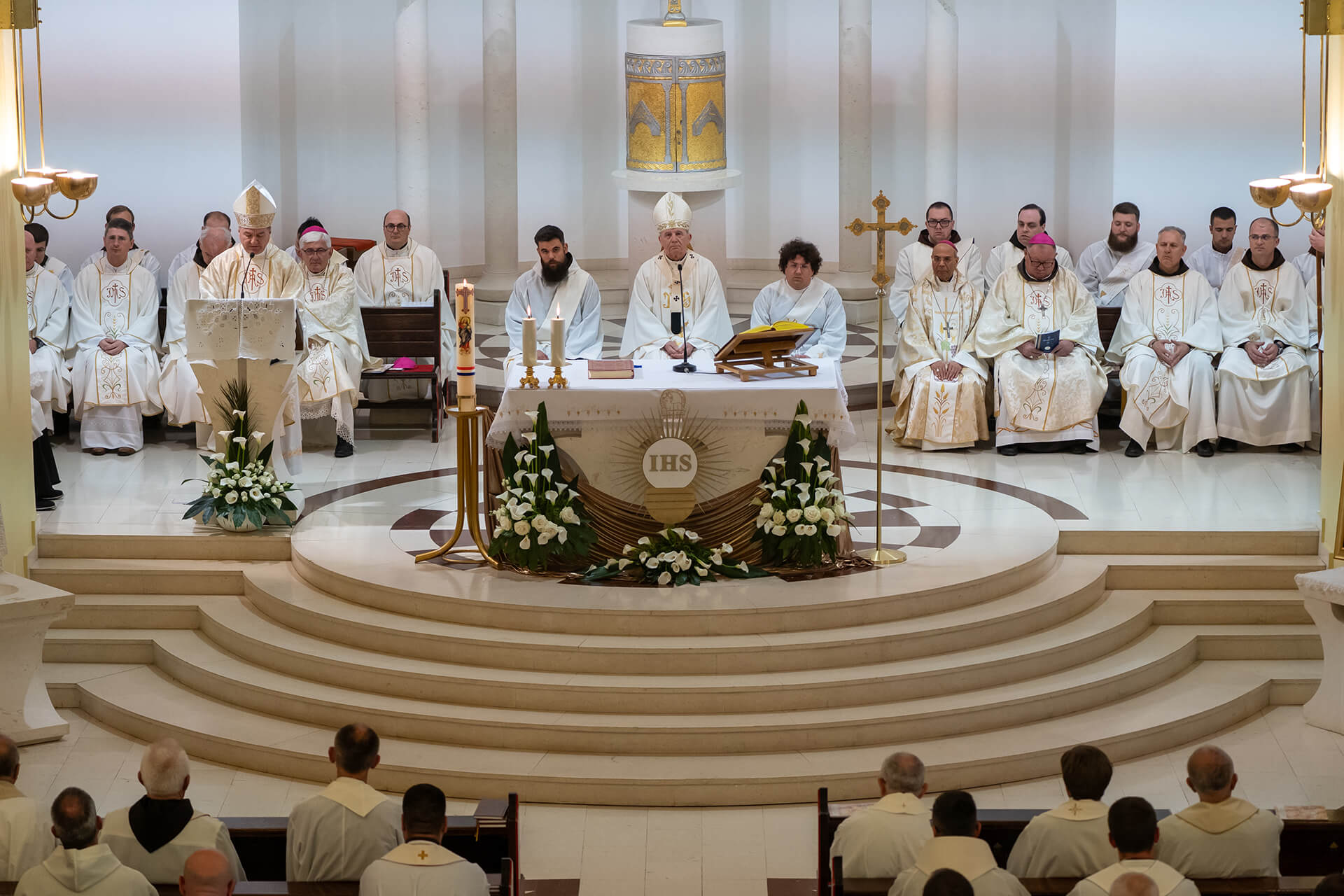
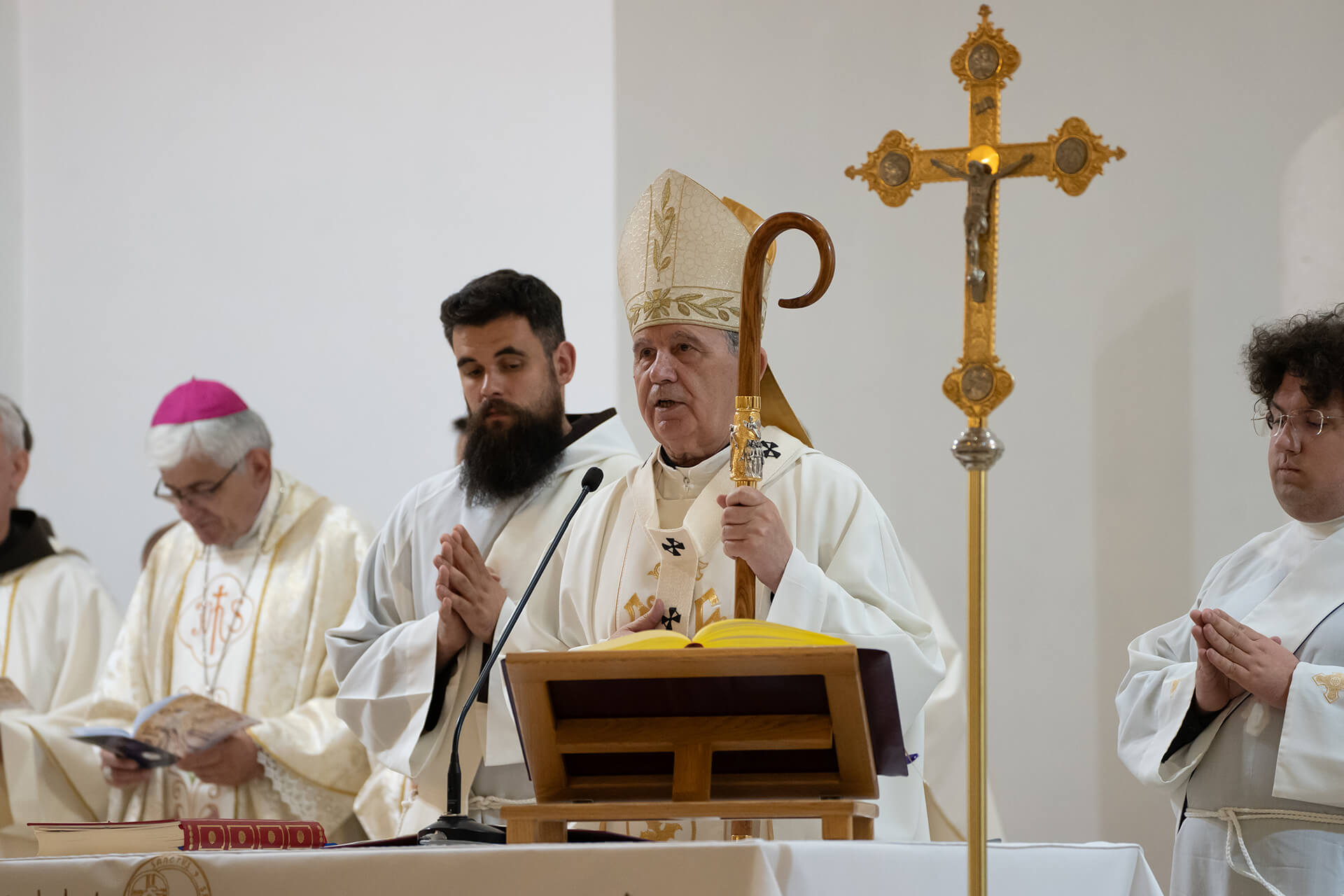
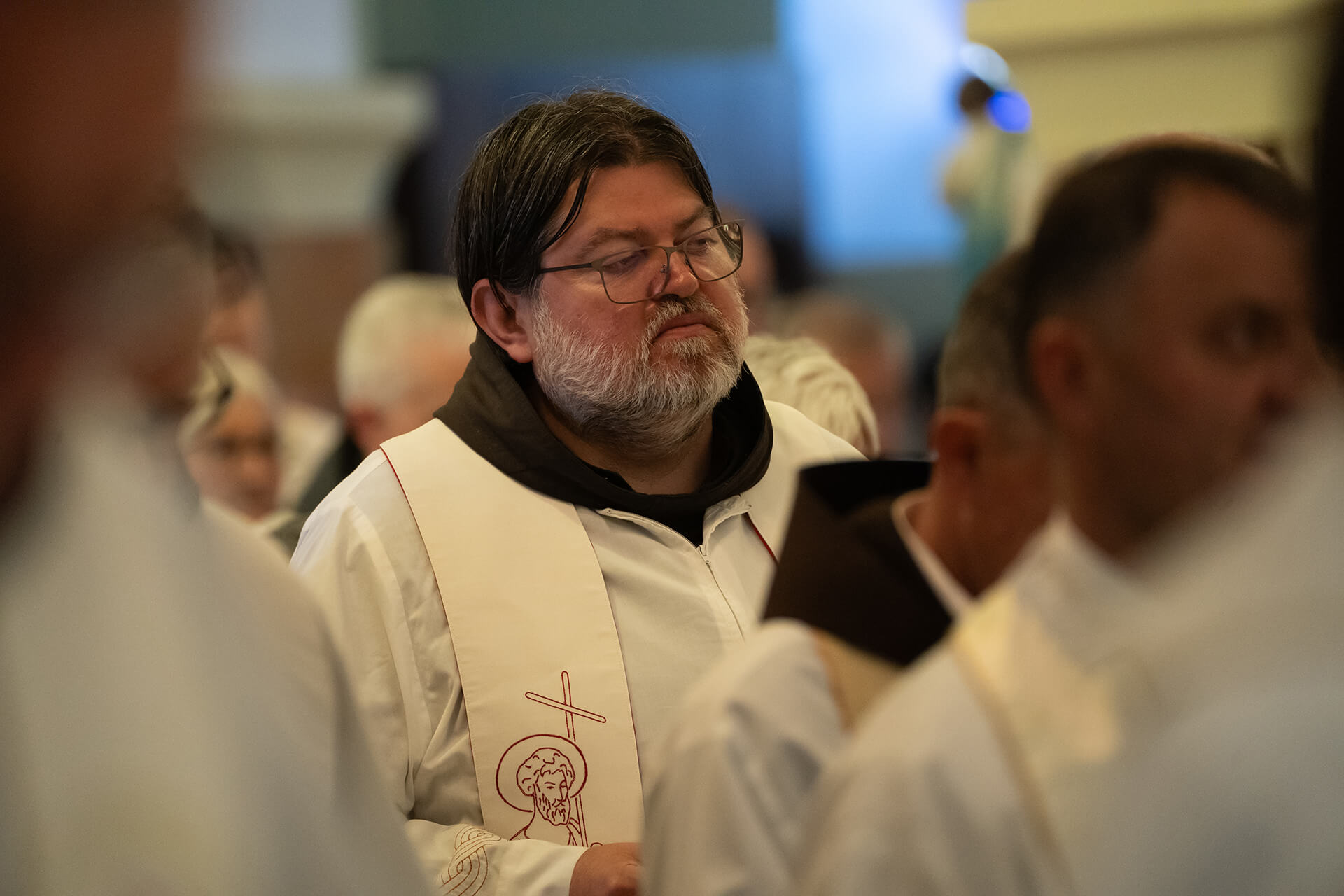
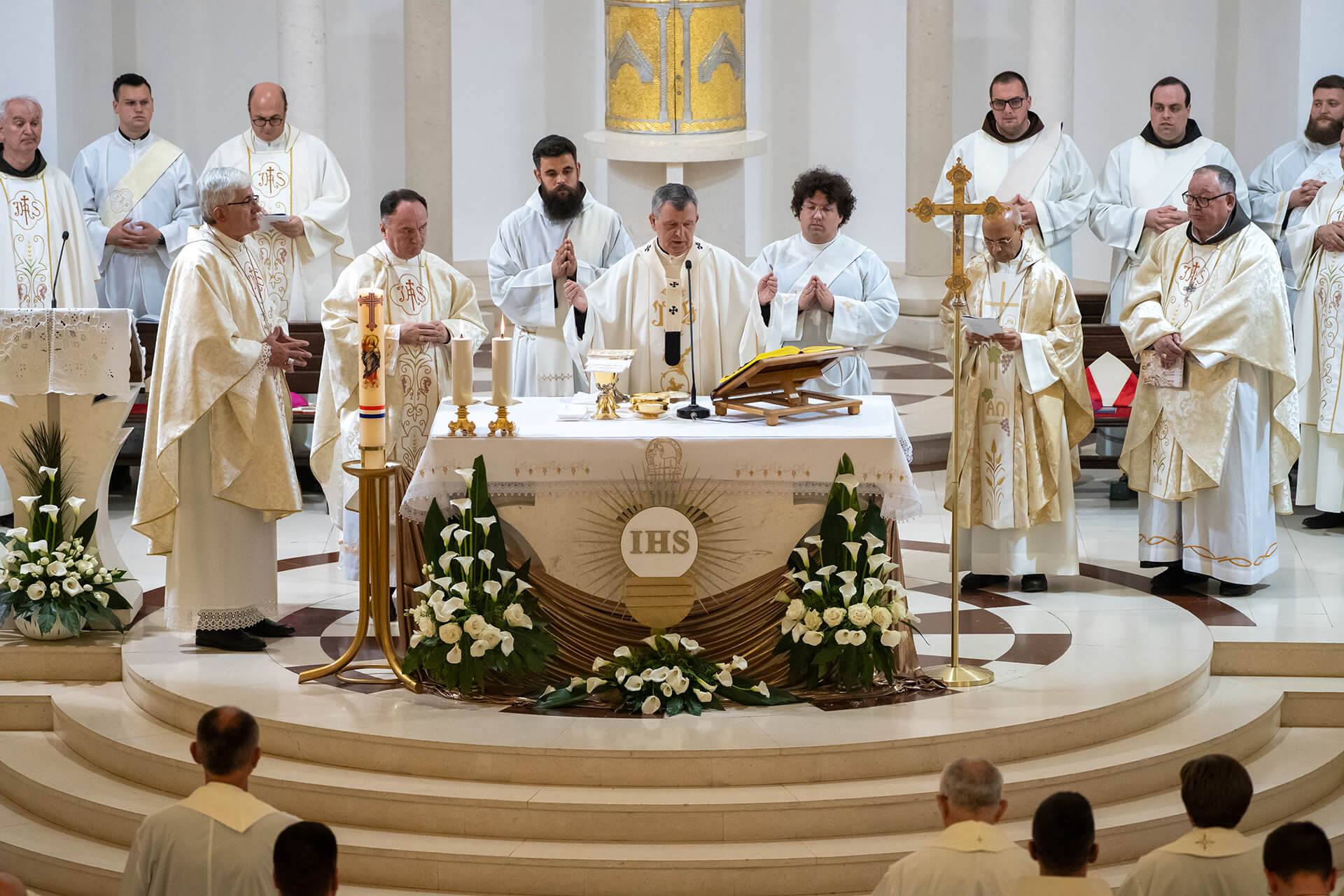
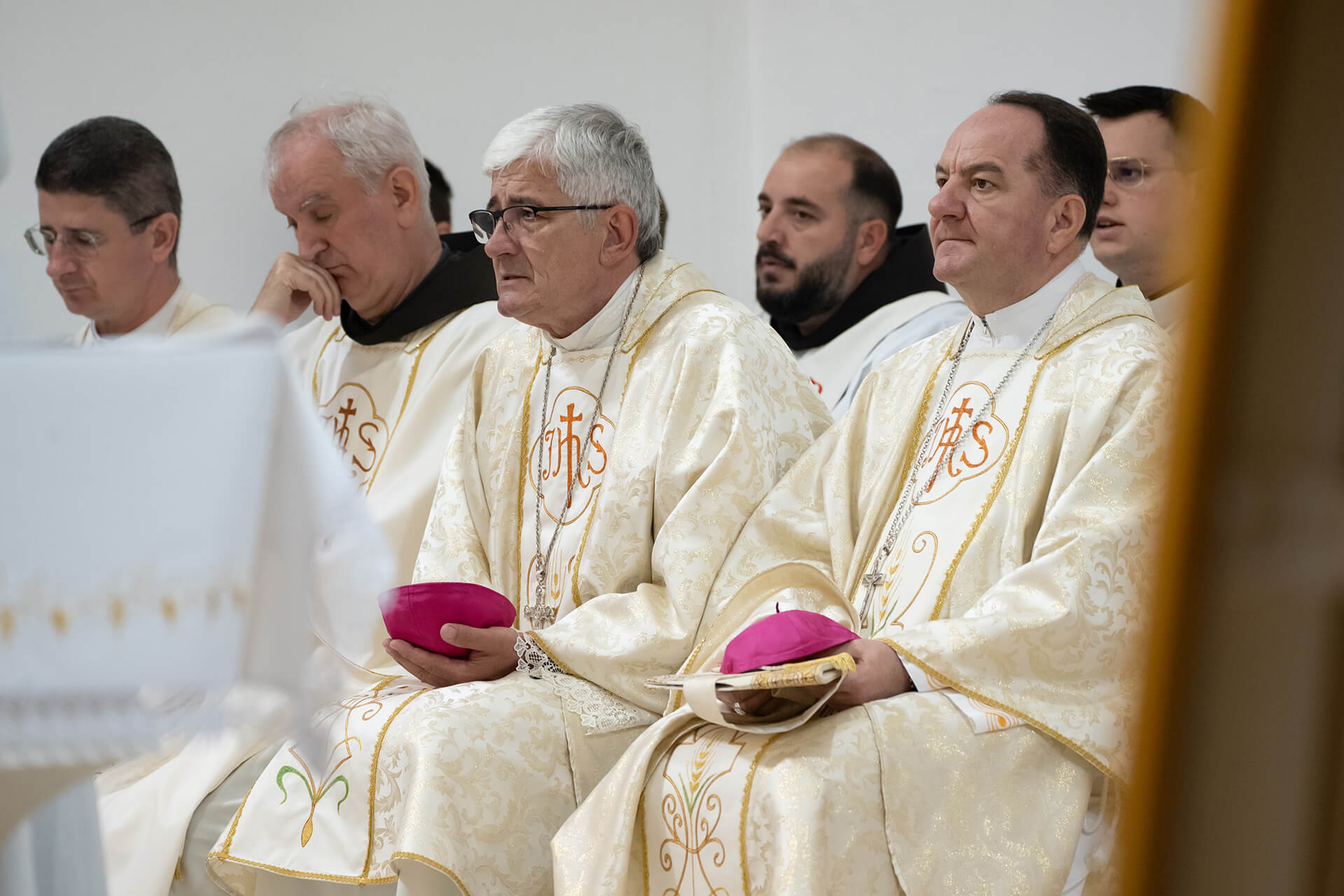
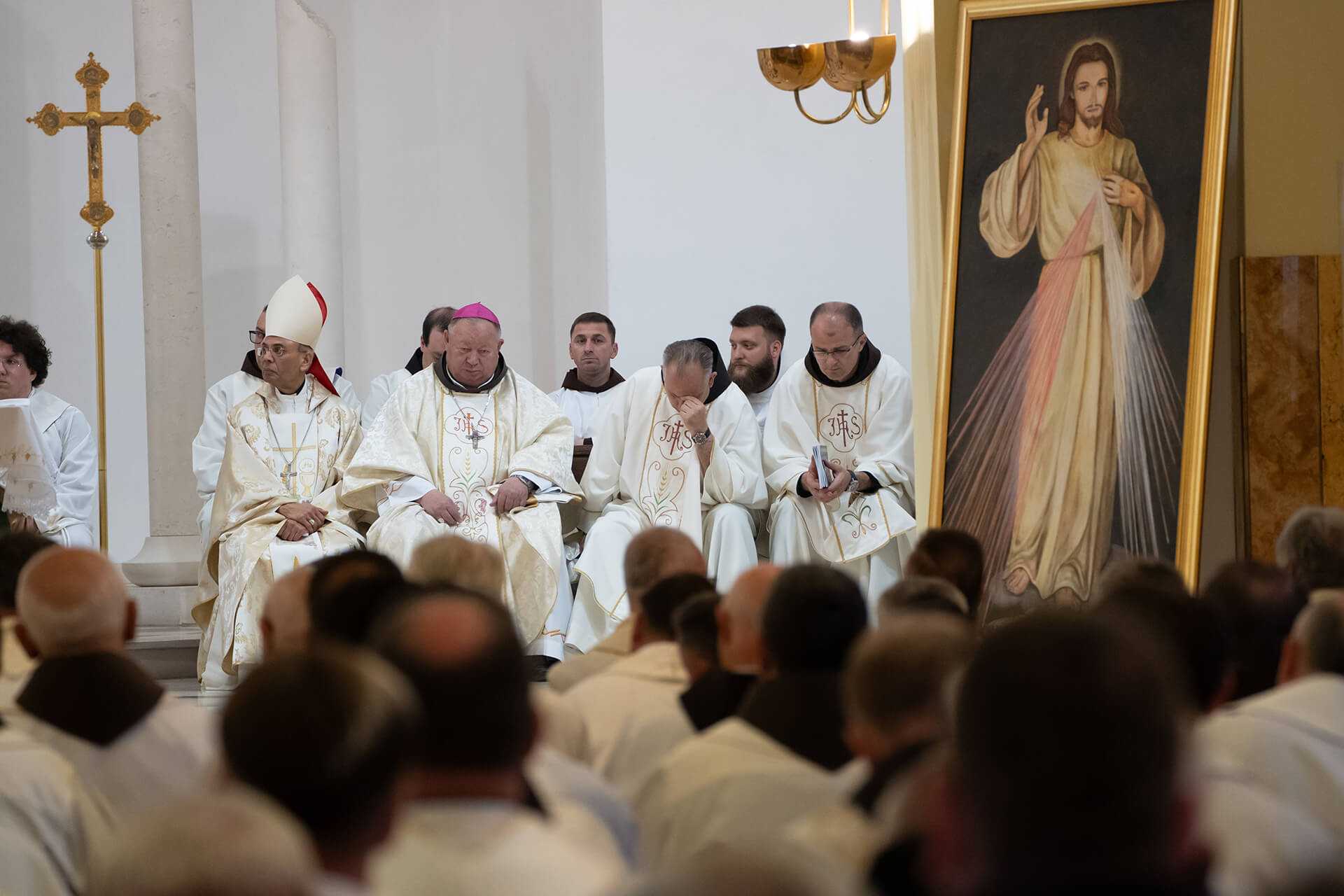
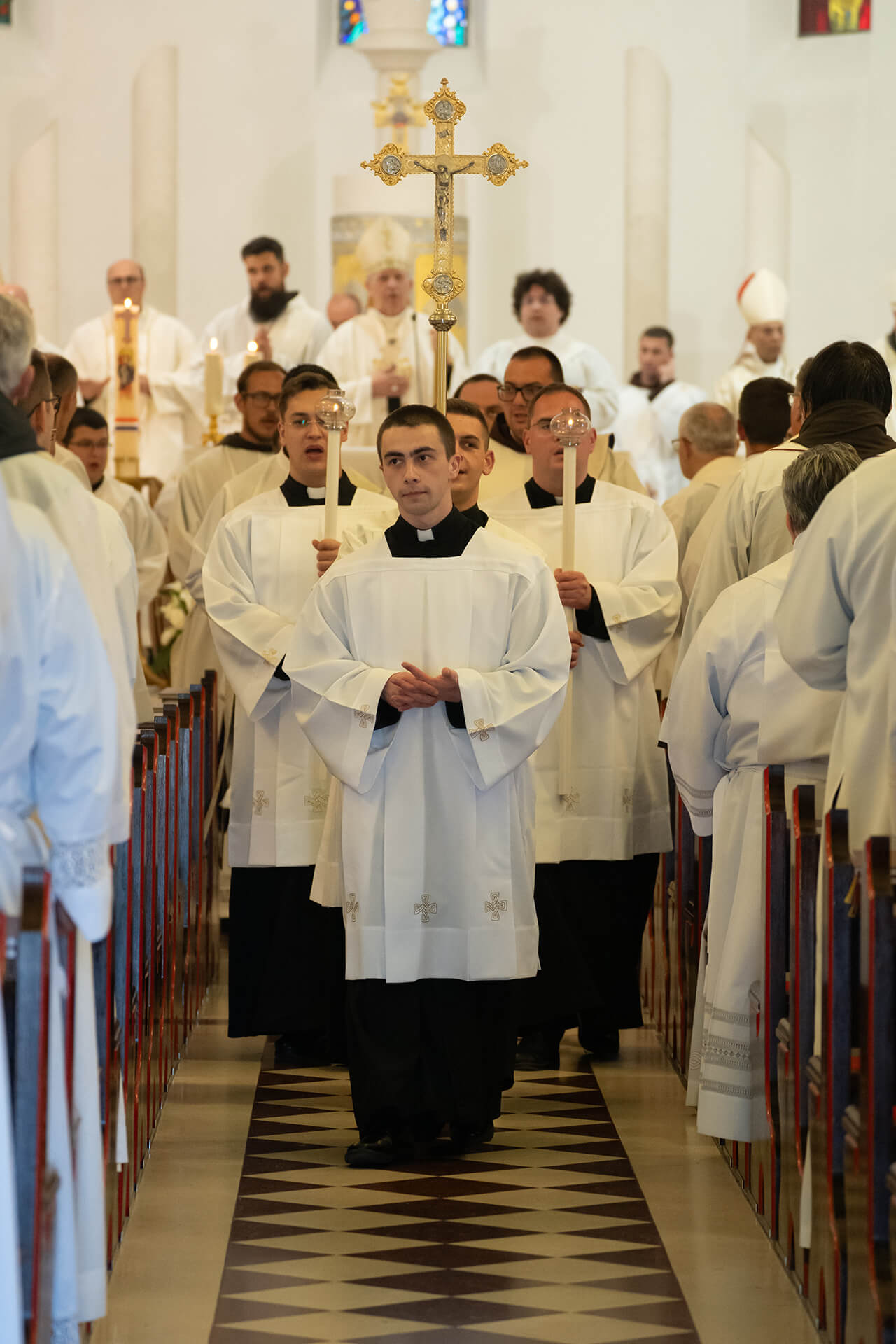
At noon, the Archbishop of Vrhbosna, Metropolitan Msgr. Tomo Vukšić – together with all the bishops of the BK BiH, the Apostolic Nuncio in BiH, Archbishop Francis Assisi Chullikatto, the retired auxiliary bishop of Banja Luka, Msgr. Marko Semren, the provincial of the Franciscan Province of Bosna Srebrena, OFM Zdravko Dadić, the provincial of the Franciscan Province of Herzegovina, OFM Jozo Grbeš, and the other 200 priests present – led the Eucharistic celebration that began with a solemn procession.
At the beginning, the Archbishop greeted the gathering, noting that among them were 12 deacons who would be ordained priests at the end of June, and expressed his joy for future cooperation.
"This gathering expresses our deep gratitude to Christ the Lord, the Priest of all priests and the Shepherd of all shepherds, in the jubilee year of 2025 since his birth. It also has a significant message of continuity because 1 100 years have passed since the Split Councils, which were held during the time of the Croatian King Tomislav, and which regulated the church organization and life in this region as well", said Archbishop Tomo, among other things.
He then presented data on the number of priests: the BiH dioceses and provinces together have 785 priests (Vrhbosna 215, Banja Luka 29, Mostar 64, Trebinje 28, Bosna Srebrena 257, Herzegovina Franciscans 192), of whom 529 live and work in Bosnia and Herzegovina, and to them should be added 10 Salesians, Jesuits and Carmelites whose administrative headquarters are in Croatia. He encouraged prayer for the souls of those priests who have passed away since the last meeting in 2022 (43 of them).
Personal role model
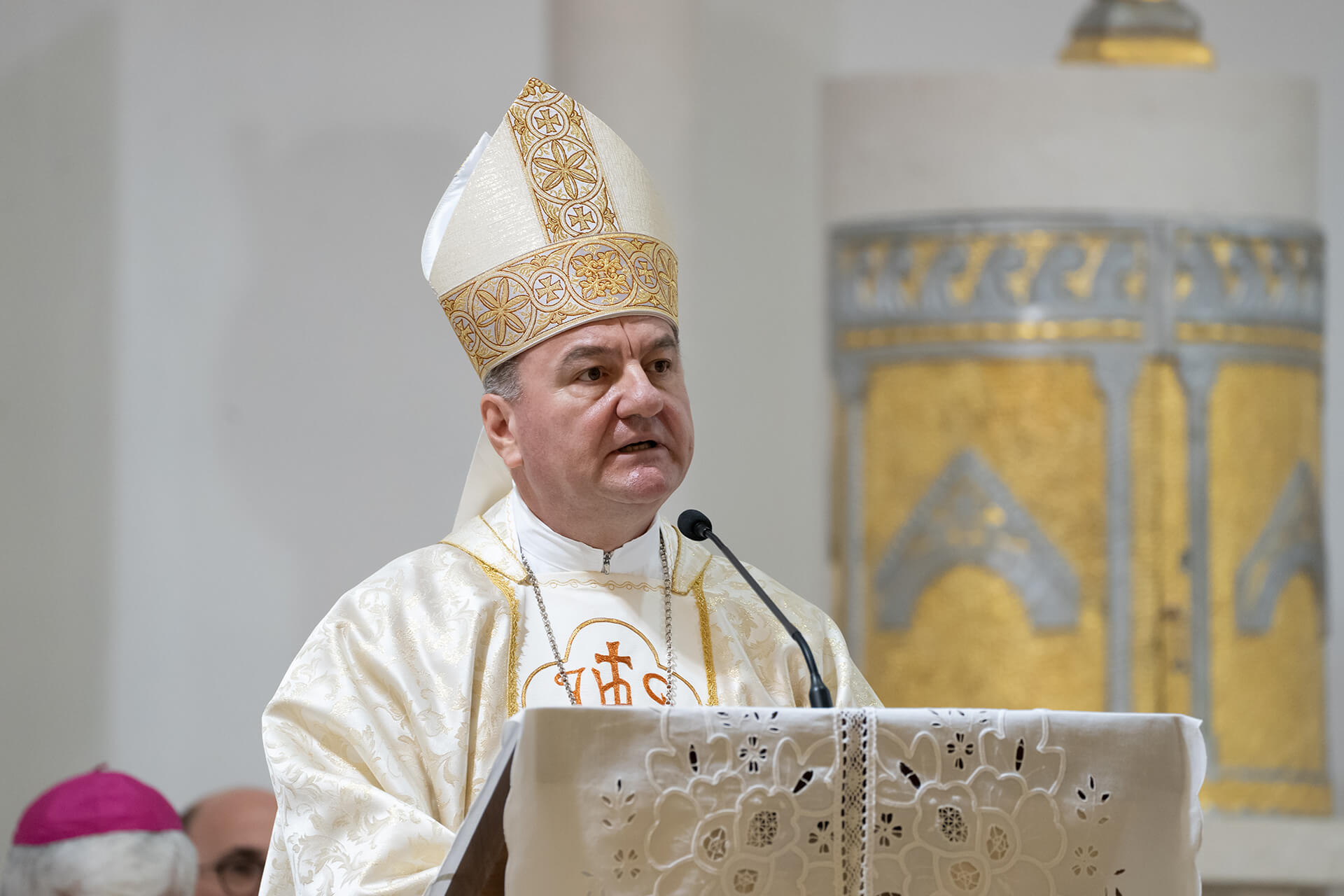
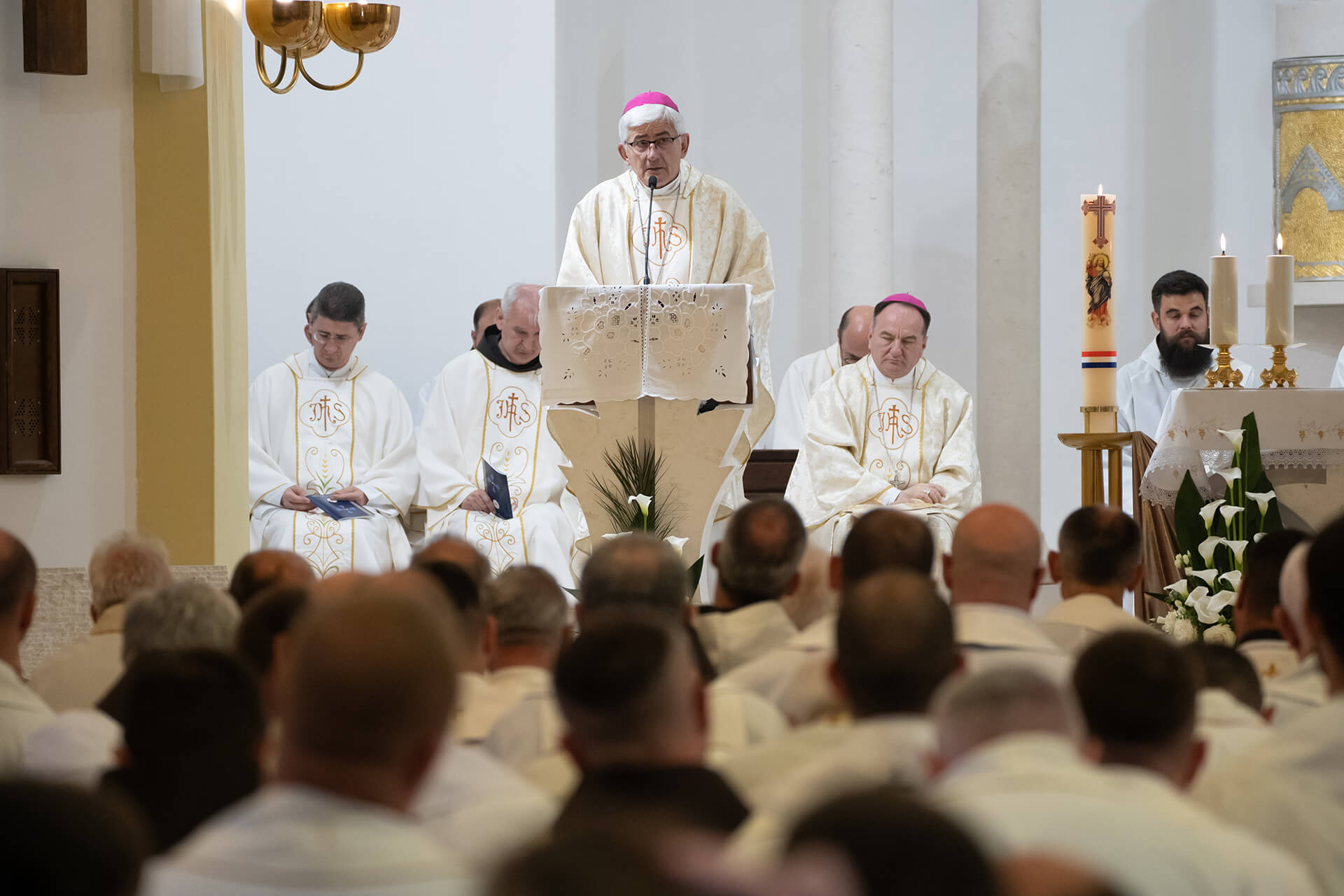
The homily delivered by Bishop Petar emphasized that the priesthood is a gift, but also a direction.
At the beginning, he explained that we are gathered in Tomislavgrad not only as priests, but also as heirs of more than a thousand years of faith, sacrifice, church awareness and national responsibility, and that the jubilee of 1 100 years of the Council of Split and the beginnings of the Croatian kingdom calls not for mere remembrance and celebration of the past, but for conscious and responsible living of the priesthood in a time that demands clarity, humility and holiness.
He then interpreted the liturgical readings which, as he said, provide two great spiritual foundations: Paul's farewell speech in Miletus (Acts 20) and Jesus' high priestly prayer (John 17).
He pointed out that according to Paul's words to the Ephesian elders: "Take hcare of yourselves", the call to take care of the flock comes only secondarily. "It is not the achievements, nor the service of Jesus' disciples that is most important before God, but their person, their own inner growth, their personal sanctification. The most diligent and diverse work in the Lord's vineyard can become a repulsive caricature if the worker exposes himself to all kinds of weaknesses in his life and behaviour.
If we take care of ourselves, our work on the flock will not be in vain. But if we do not discipline ourselves, others will not accept anything from us", Bishop Peter reminded, further explaining that St. Paul also reminds that the priest is not placed above the flock, but is in it and that the servant of God must always remember that he is nothing more than a pardoned sinner who needs the blood and righteousness of Christ just as much as the weakest in the flock.
Pastoral Care as a Struggle
He then spoke about the fact that pastoral care does not only involve preaching and distributing the sacraments, but that it always means a struggle.
"The history of the Church teaches us this: where the Christian community is threatened from outside by ravenous wolves, it will eventually emerge from that threat stronger. The external threat may be felt and experienced as painful, but it is not the real danger that threatens the Church. The real danger that threatens the Church of Jesus Christ comes from within, from its midst, from those who should be shepherds of the Church of God, but instead poison it with false teachings. The Church of Christ does not exist everywhere where the word 'church' is used, just as the true gospel is not truly heard where the word 'gospel' is used. It is neither pleasant nor easy to have to be constantly on guard against such false teachings. But Paul makes it clear: Where shepherds do not warn and protect their flock from such false teachings, they are not properly fulfilling their task as shepherds of the Church of God. The best antidote to false teaching is sound evangelical doctrine, proclaimed by the whole word of God, in accordance with the Magisterium of the Church", said Msgr. Palić.
He then touched on the First Church Council among the Croats which, according to him, sends a deep spiritual message, which is that the Church is called to be the mother of the people, the guardian of the heart and the one who shapes the history of that people.
"Today, when we celebrate 1 100 years of that event, we can rightly ask ourselves: are we, the priests of the 21st century, as courageous, as faithful, as responsible as our predecessors in the 10th century? Are we still ready today to dedicate ourselves in truth, not for the sake of reputation, but for the sake of fidelity and not for the sake of the past, but for the sake of the future of the people?", Bishop Petar encouraged reflection, saying that the priesthood is a gift, but also a direction: "Christ, the cross, communion, prayer, service, holiness."
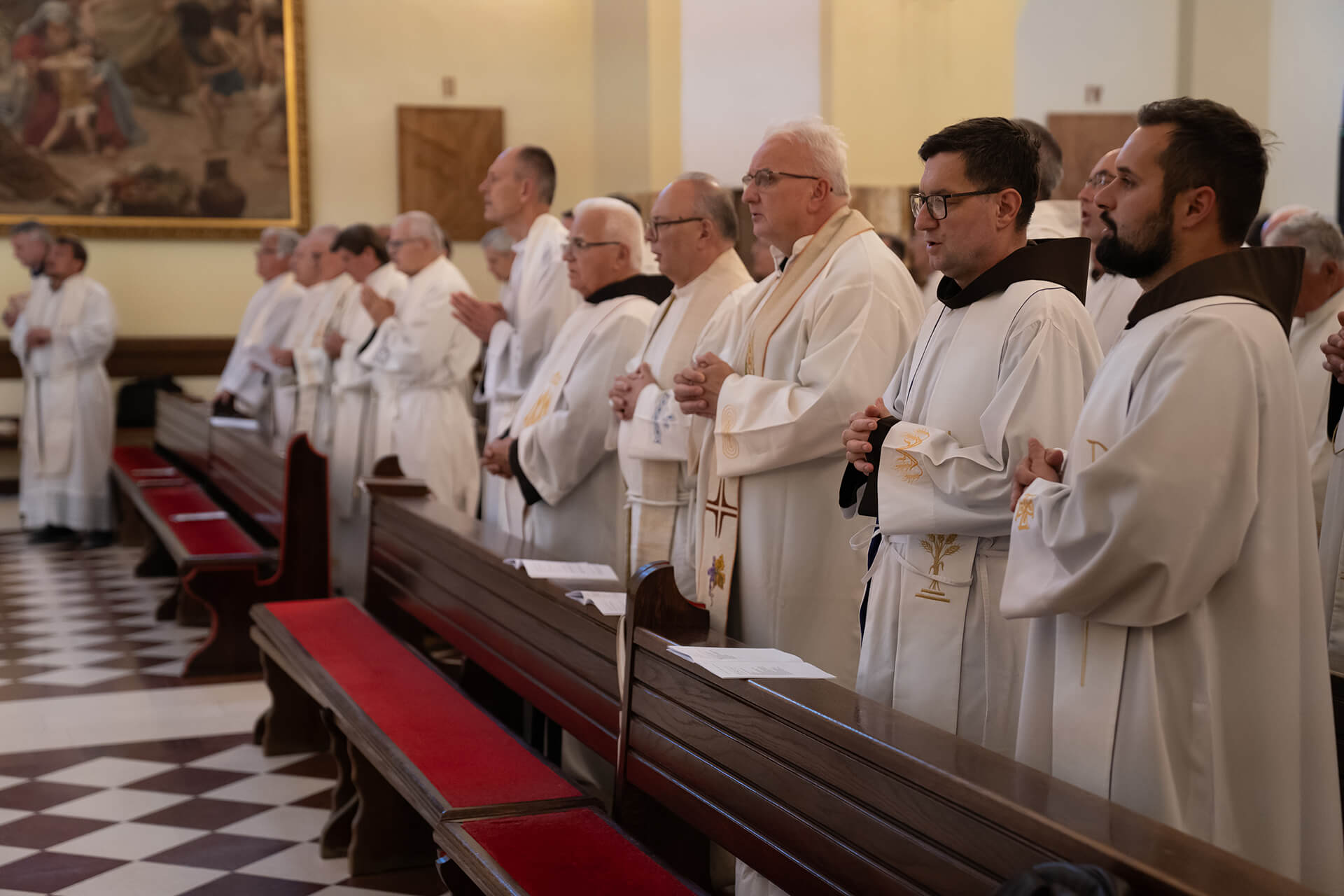
The homily was followed by the renewal of the priestly promises of the gathered presbyters.
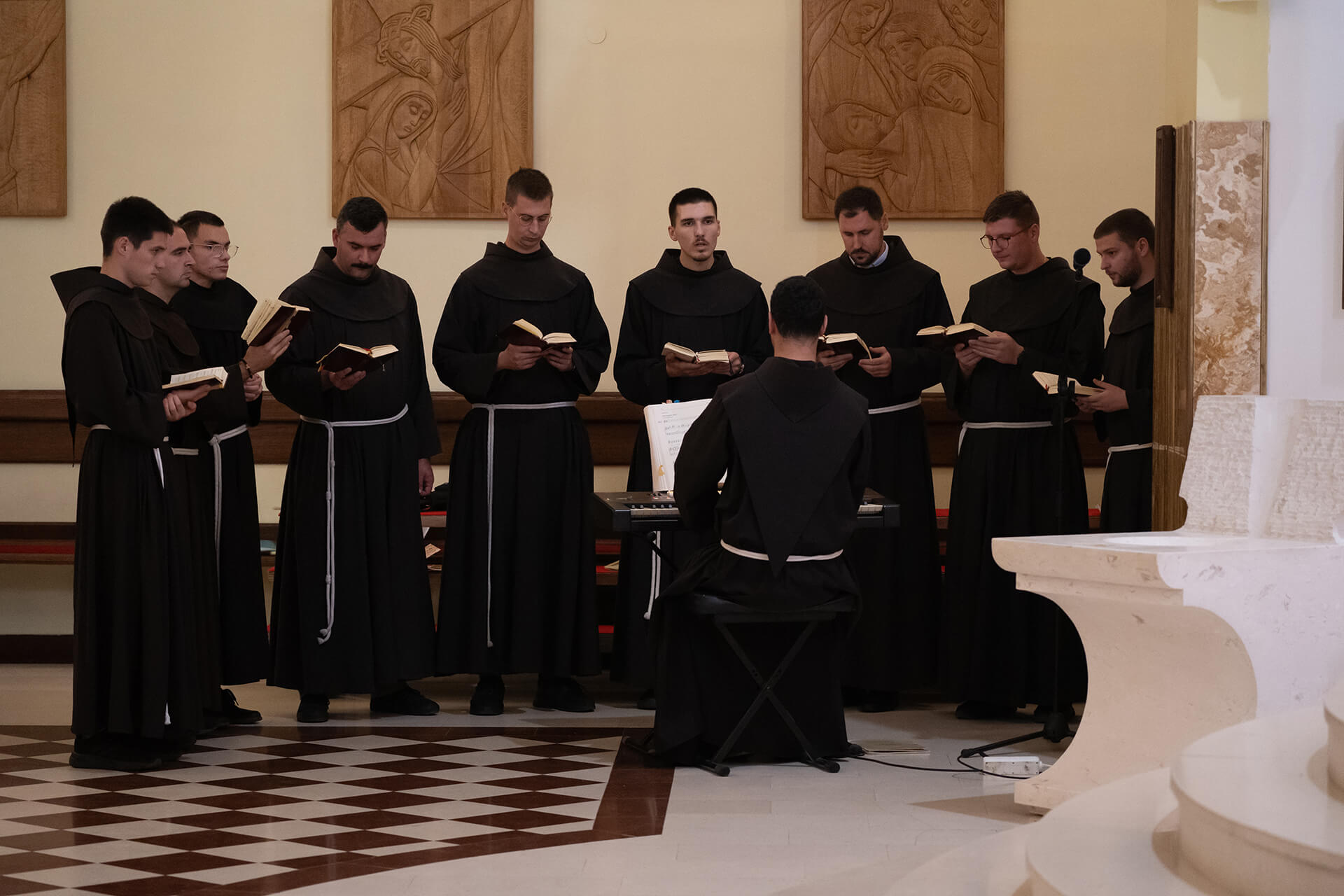
The celebration of the Holy Mass, as well as the prayer of the Third Hour, were animated by harmonious singing by the novices of the Herzegovina Franciscan Province of the Assumption of the Blessed Virgin Mary.
The Beauty of Mission
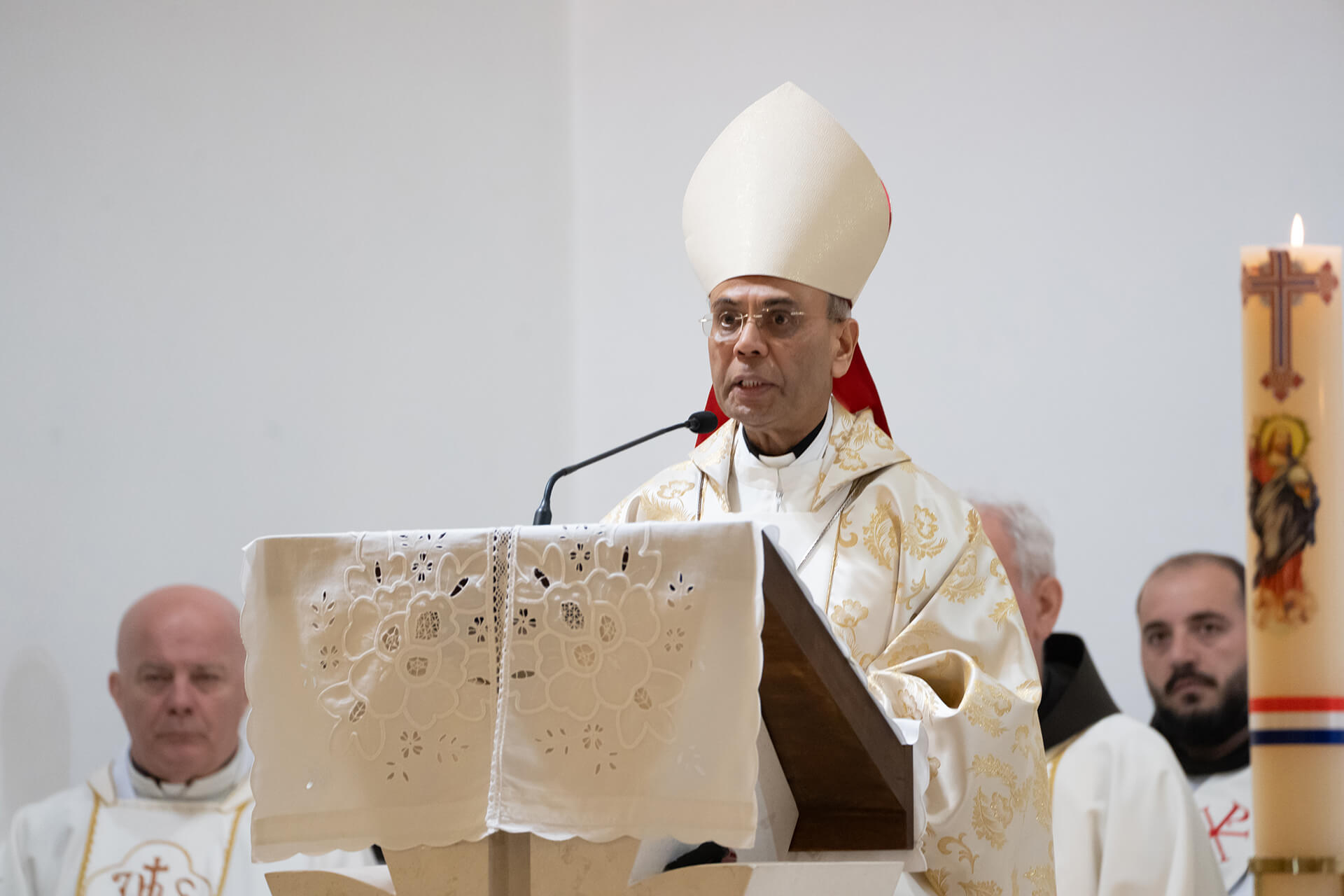
At the end of the Holy Mass, the audience was addressed by Nuncio Chullikatt, who thanked them for the invitation to participate in this “valuable three-year meeting of priests” because it is “a tradition that strengthens our ecclesial and priestly communion and reminds us of the beauty of mission”.
He then shared a few thoughts from the homily delivered by Pope Leo XIV on the occasion of his priestly ordination in the Vatican, on the feast of the Visitation of the Blessed Virgin Mary, May 31st.
Then, Bishop Željko of Banja Luka presented the program of the VIII. Family Day, which will be held on July 26th and 27th in Kupres, encouraging priests to participate with parishioners in as many numbers as possible.
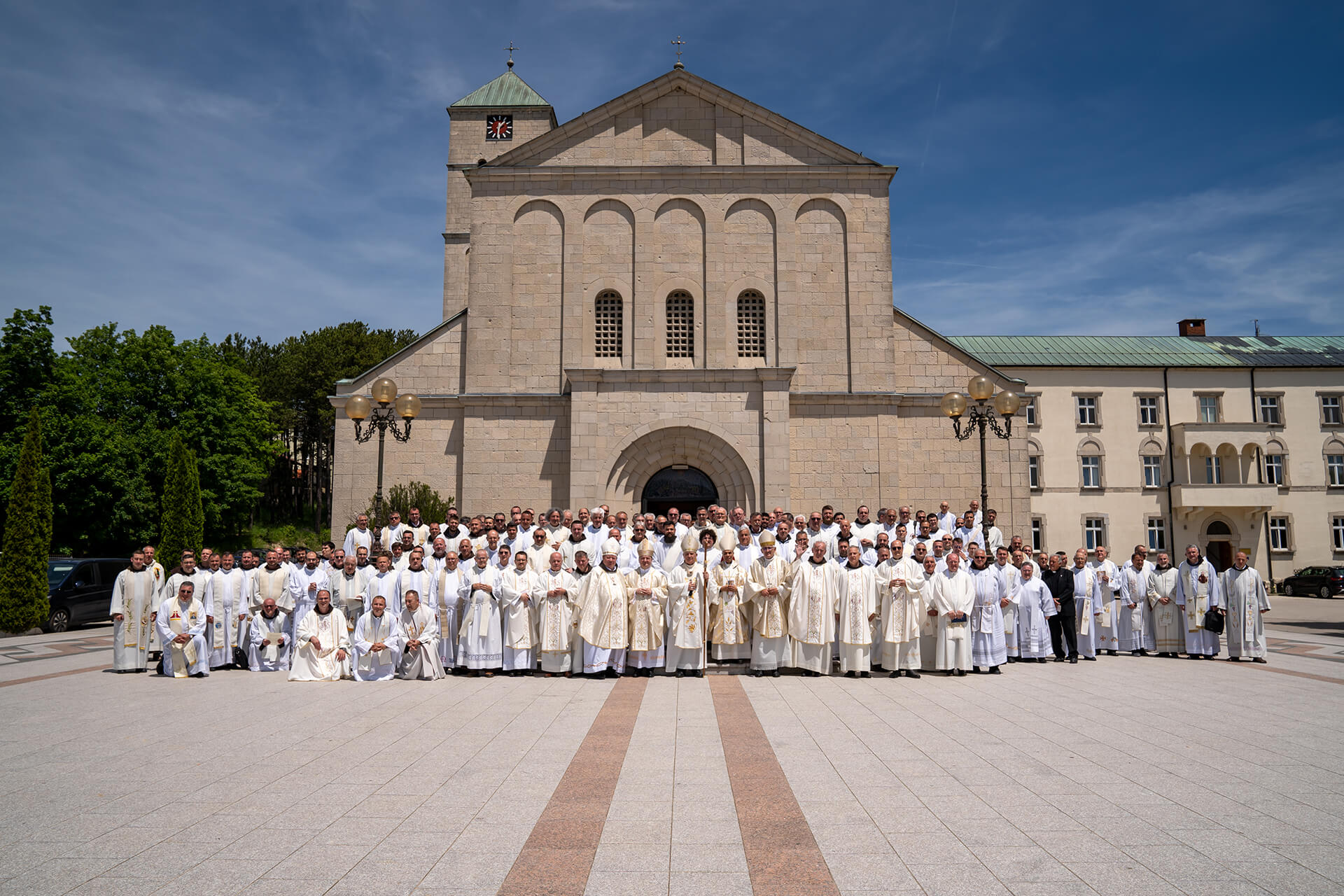
After the ceremonial blessing, a joint photo session was held in front of the parish church, and the gathering continued with a shared meal.
Let us remind, that the meeting was held in accordance with the previous decision of the Bishops' Conference of Bosnia and Herzegovina to organize such a gathering of all priests in BiH every three years, which was conceived by the Council for the Clergy of the Bishops' Conference of BiH.

.jpg&w=420&h=235&zc=1&hash=e106aa4c03620f401d3905d5651c685a)


