
Sarajevo
XXIXth meeting of diocesan priests
Priestly life should be based on the example of Jesus
pet, 19. rujna 2025. 11:19
The XXIXth meeting of diocesan priests of the Archdiocese of Vrhbosna was held in the Cathedral of the Sacred Heart of Jesus in Sarajevo and the Pavao VI Hall in the Vrhbosna Theological Seminary on September 17th.
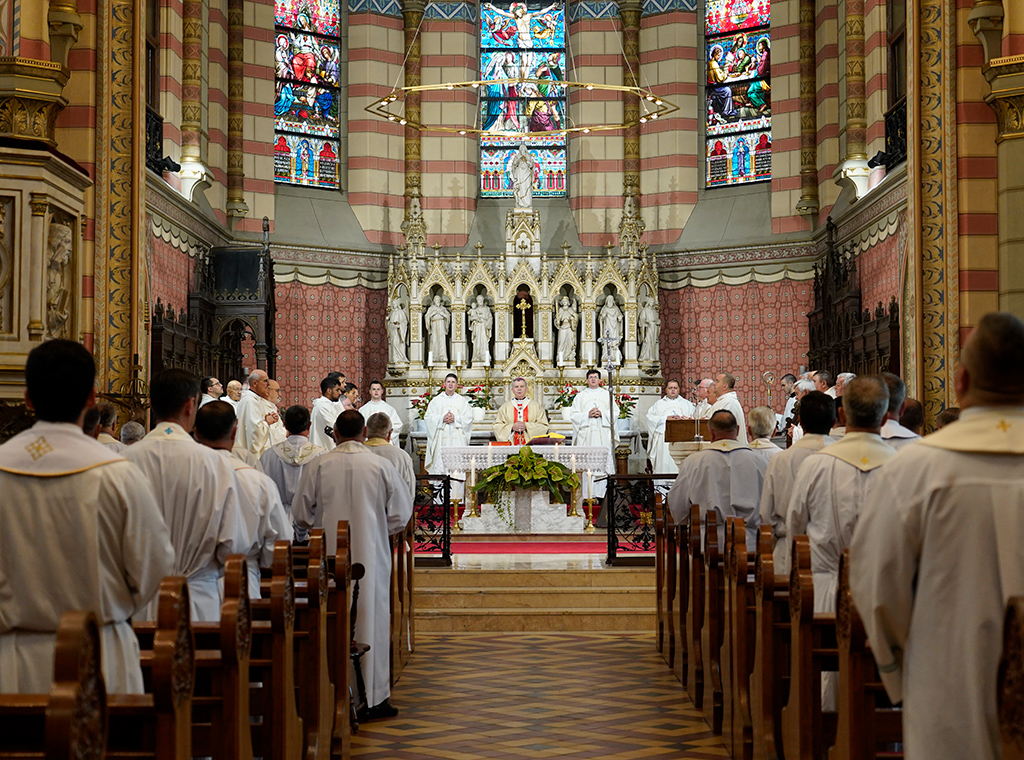
The meeting, which brought together about 100 priests who work pastorally in this local Church, but also elsewhere, began with a Holy Mass led by the Archbishop of Vrhbosna, Metropolitan Msgr. Tomo Vukšić, with the concelebration of the priests present.
Governance in the House of God
In his homily on the occasion, the Archbishop referred to the Scripture readings and a few lines from the First Epistle of the Apostle Paul to the disciple Timothy, the head of the church community in Ephesus, and to how one should govern oneself in the house of God. "First of all, it tells him that the Church is the house of God. It is the home of the living God. It is also the pillar and ground of truth. In addition, according to the general belief of the community of believers, it is also a great mystery of piety and is therefore accepted only by faith", said Archbishop Tomo, explaining that this passage is important because it defines the nature of the Church and summarizes the central points of the Christian faith that relate to the incarnation of Jesus, his mission and eternal glory. He then explained why the Church is the house of God and how it is not governed by relationships in which friends are chosen according to one's own inclinations and sympathies, but by relationships based on the blood relationship of members with the Head, with Christ, who established these new relationships with his blood, commanded them and remains their progenitor. Finally, he emphasized that in a time when people are increasingly feeling self-sufficient and ordering their lives without God, priests are often in an uncomfortable situation. "A Church official can be compared to an ambassador of a king who is problematized and ignored, and a representative of a kingdom that is considered strange, superfluous, and unnecessary. Therefore, compared to ambassadors of other kings of this world, in such a situation, Christ's ambassador is often in an uncomfortable position. You see, God's sovereignty in our time is strongly contested and increasingly not recognized, and the Church is viewed as one of the interest groups and communities, and the authority of an ambassador regularly stems from recognizing the sovereignty of the one who sends him to be his representative. In such a situation, exposed to the discomfort of not being accepted, a priest is tempted to look to other kingdoms and adopt a way of behaving according to their rules and strengthen the sovereignty of his King in their way", warned Monsignor Vukšić at the end, calling for the example of Jesus, the witness of God, to be the starting point in every doubt and reflection. The liturgical celebration on the organ was animated by Rev. Marko Stanušić, regens chori of the Sarajevo Cathedral.
On the anniversary of the Council of Nicaea
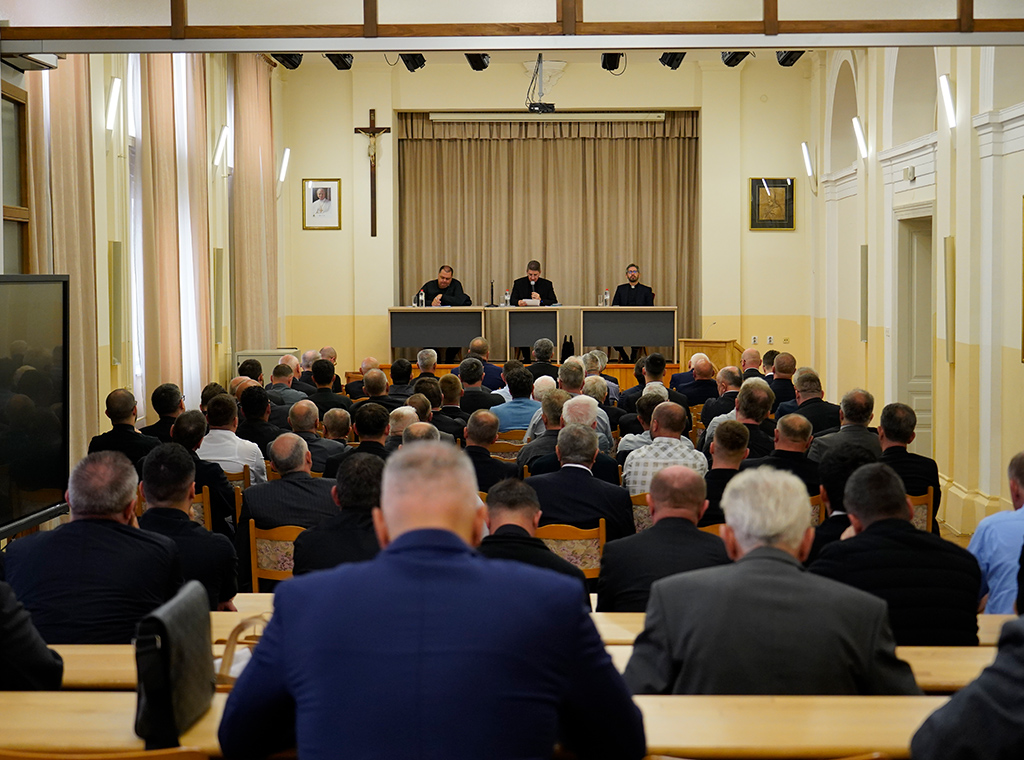
The Holy Mass was followed by the working part of the meeting, which took place in the Pavao VI Hall in the premises of the Vrhbosna Seminary, where a lecture on the 1700th anniversary of the Ecumenical Council of Nicaea was given by Prof. Dr. Rev. Josip Knežević. Introducing the topic, Prof. Knežević reminded that the deposit of faith rests on the Holy Scriptures and tradition, and that the New Testament already brings the basic ex
In conclusion, Prof. Knežević explained that the debate on Arianism did not end at the Council of Nicea but continued later, but that more will be said about it at a symposium organized by the Catholic Faculty of Theology in Sarajevo in early November. After the lecture, those present were able to ask questions to the lecturer.
Various reports
Then, representatives of the institutions of the Vrhbosna Archdiocese presented reports on the activities of these institutions, namely: the Vrhbosna Theological Seminary, the Archdiocesan Missionary International Seminary Redemptoris Mater, the Travnik Seminary, the Archdiocesan Centre for Youth Pastoral Ivan Pavao II, Caritas, the Media Centre of the Vrhbosna Archdiocese and the Priests' Home. Finally, the spokesperson of the Vrhbosna Archdiocese, Rev. Dražen Kustura, presented details about the archdiocesan pilgrimage to Rome, which is planned from 6th to 11th October, on the occasion of the Jubilee Year. After the reports were presented, those present had the opportunity to make their suggestions and ask questions. The fellowship continued with a social gathering over lunch in the premises of the Priests' Home.
.jpg)
.jpg)
.jpg)
.jpg)
.jpg)
.jpg)
.jpg)
.jpg)
.jpg)
.jpg)
.jpg)
.jpg)
.jpg)
.jpg)
.jpg)
.jpg)
.jpg)
.jpg)
.jpg)
.jpg)
.jpg)
.jpg)
.jpg)
.jpg)
.jpg)
.jpg)
.jpg)
.jpg)
.jpg)
.jpg)
.jpg)
.jpg)
.jpg)
.jpg)
.jpg)
.jpg)
.jpg)
.jpg)
.jpg)

.jpg&w=420&h=235&zc=1&hash=bfa7d2c3c6d2fc4282187f8a3ace1b12)


