
Sarajevo
International conference „Hope and despair of religions“
sub, 27. travnja 2019. 15:02
European society for intercultural theology and interreligious studies, from 24th to 27th April in Sarajevo held its seventh conference themed: “Hope and despair of religions: research of connection between theology and practice”.
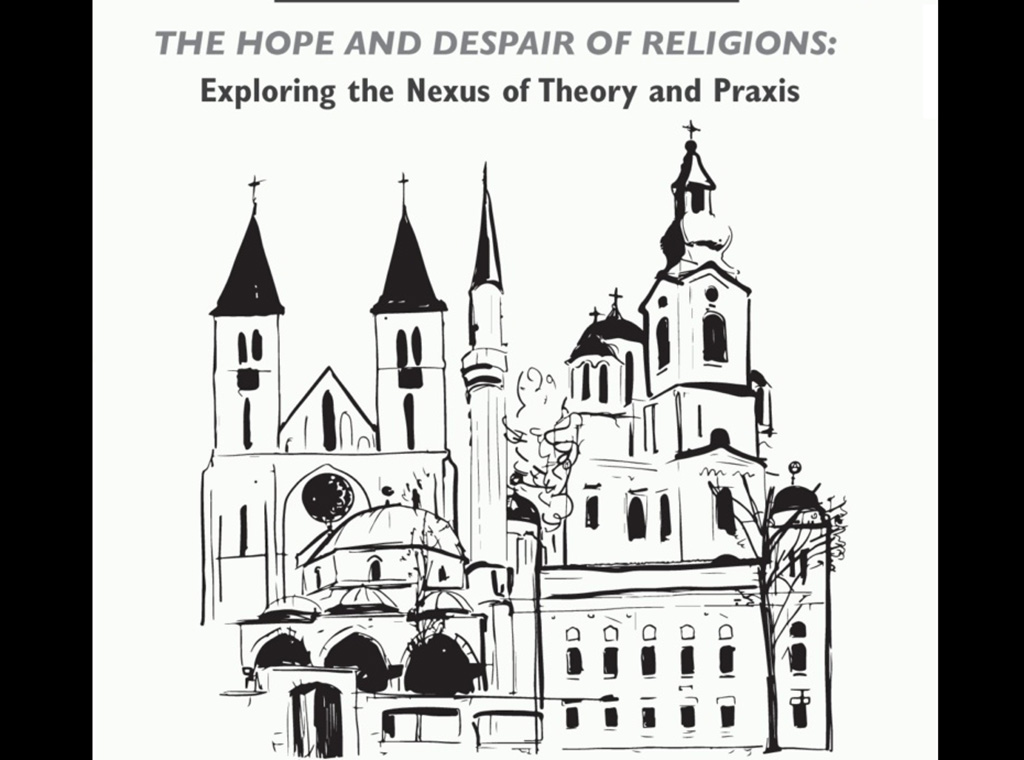
Local associates of the organisers were the Faculty of Islamic Sciences (FIN) and Catholic theological Faculty (KBF) of the University in Sarajevo. The plenary sessions and the working section were completed in accordance with the announced program, on the first day at FIN, and the other three at the KBF. On the first day, the Anglican believer and the sociologist of religion, Grace Davie, set the general framework with the theme Thinking over the Eurocentrism and the traditional paradigms of religion. Her book “Religion in Contemporary Europe: Mutations of Memories” has been translated into Croatian (Zagreb 2005.) and her most recent book is “Religion in Public Life: Levelling of Ground”, 2017.
On the same evening, Darko Đogo, professor of Orthodox Theological Faculty in East Sarajevo, then Pavle Mijović, a professor at the KBF and three students from the Master's program, spoke at the round table.
Plenary expositions of the second day were devoted to apocalypticism in various religious movements today.
Jakob Wiren, who studies dialogue between Islam and Judaism, and who is a consultant of the Archbishop of Sweden, spoke about Apocalyptic hospitality: comparative insights over soteriology.
Marloes Janson, a professor of African Anthropology at the University of London, spoke of the social context of intermingling Christianity and Islam in Nigeria.
That afternoon, Dean of KBF, Darko Tomašević, welcomed the participants in English in the hall of Paul VI.
The topic of religious guidance between the prophetic and protective service was handled by Halima Krausen, who with a group of associates translated the Qur'an into German and wrote a commentary. She advocates a dialogue between Muslims, Jews and Christians in Europe.
OFM Ivo Marković, a professor at the Franciscan Theology in Sarajevo, handled the same topic based on the experience of conflict and the need for reconciliation that can be significantly contributed by religious officials and leaders.
Among the presentations on the section of the day was an interesting presentation by Franziska Singer who at the University of Marburg is writing a dissertation on educated Bosnian Muslims in Sarajevo who find religion important but not a mean of political manipulation. For this purpose, she cooperates with NGO Nahla in Sarajevo.
Exhibitions of the third day were devoted to the relationship of gender, religion and violence. First spoke through Skype call, Lieve Troch from the Netherlands, who finished the theology and criminology studies and she scientifically deals with violence against women. She pointed out: “It is more dangerous to be a woman than a soldier in war”. She devoted much attention to raped women with social and psychological consequences. Zlatiborka Popov-Momčinović, a professor at the University of East Sarajevo, spoke about religion and violence against women in the war conflict in BiH.
In the work of the section, Aid Smajić from FIN, worked on a sociological topic “Place for implicit Religiousness in Ethno-Religious Coexistence and Tolerance: case of Bosnia and Herzegovina”.
Berge Traboulsi, a Lebanese Orthodox scientist at the University of Beirut, presented an intriguing theme “Orthodox bishop as the leader of change in multi-cultural and multi-religious societies: an analysis of the bishop's service as a church leader who holds the lever”. He ended with a quotation from the bishop Joanis Ziziounas, according to him, the Church would vanish if it did not accept the necessary reform.
That afternoon, participants were divided into two groups at the sightseeing of Sarajevo under the guidance of local experts and in the evening listened to the presentation of the dual-issue of the magazine Interreligious Studies and Intercultural Theology 1-2/2019, which is dedicated to Robert Schreiter, a Catholic studier of relationships with followers of other religions in the spirit of the Second Vatican Council.
The presentations on the fourth day were dedicated to the narratives about hope and resilience (Embodied Narratives of Hope and Resilience). In this section, a Bosniak sociologist of religion, Zilka Spahić-Šiljak, spoke on the theme: Salvation by Narrative and Interpretation: Building Resistance After the War rapes in Bosnia and Herzegovina.
The conference ended with the closing round table under the chairmanship of Anne Hege Grung from the University of Oslo.
Approximately 80 members and domestic guests attended the conference, listening attentively to the presentations and enriching each other with their reflections.
Let us mention that the European Society for Intercultural Theology and Interreligious Studies (ESITIS) was established on March 19th, 2005. in Amsterdam. Its purpose is to encourage and co-ordinate research and education in intercultural theology and interreligious study in theology, religious studies, anthropology, sociology and philosophy at the undergraduate and post-graduate level in Europe. Members can become scientists who teach at universities and doctorates who deal with these areas. Also, institutions, but according to the Board of Directors' judgment in which members are elected for a term of four years.


.jpg&w=420&h=235&zc=1&hash=bfa7d2c3c6d2fc4282187f8a3ace1b12)
